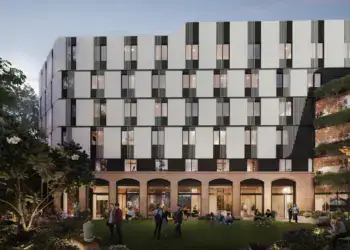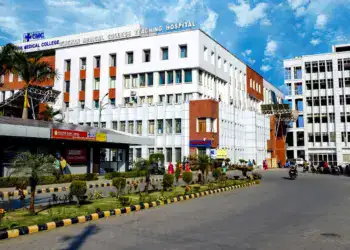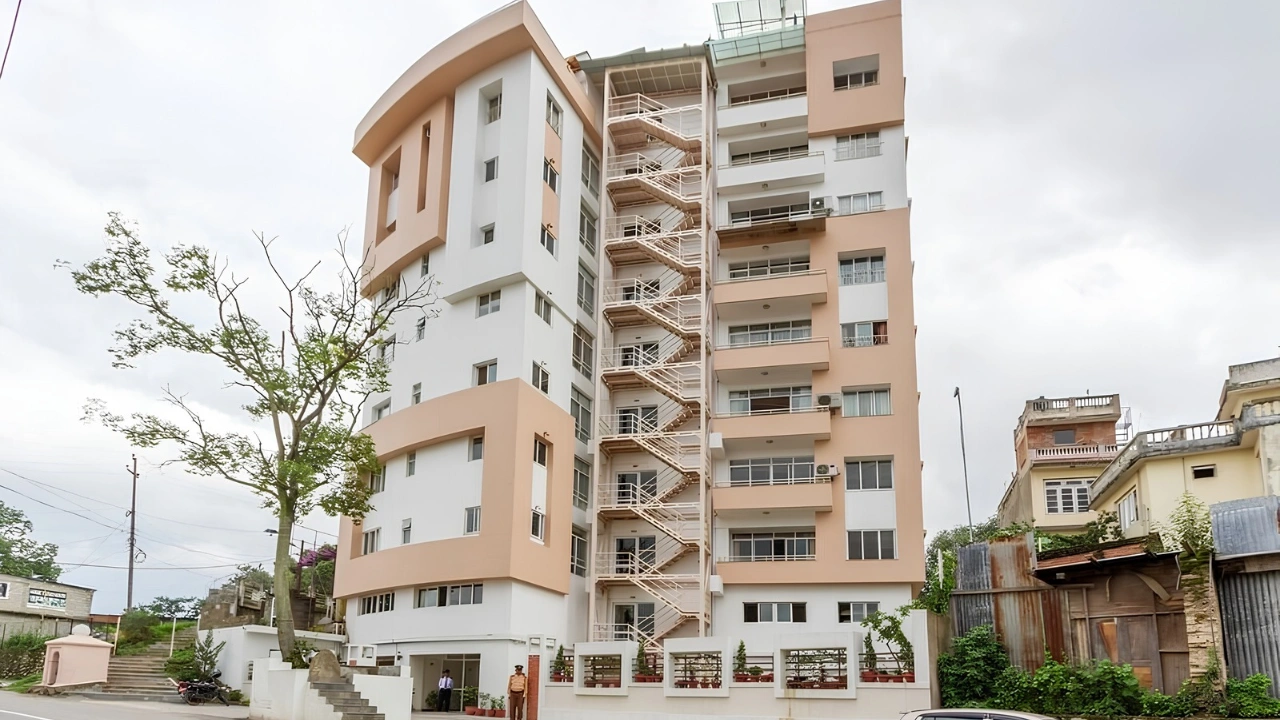
In mid-2024 the International Finance Corporation, the private-sector arm of the World Bank Group, approved a loan of up to US$7 million for something Kathmandu’s property market had never financed at scale: a block of branded, long-stay serviced apartments. The money backs 56 units inside a 186-apartment complex in Maharajgunj that are to be operated under the Marriott name, with the remaining 130 apartments sold to private buyers. In a city that has poured billions into hotels and shopping malls, the deal is a quieter wager, that fully serviced housing let by the month is a commercial real estate asset class in its own right, not just an overflow category for tourists.
The pitch is easy to like. The harder question, the one that decides whether serviced apartments become a durable Kathmandu asset class or a handful of one-off projects, is who actually fills the rooms, and whether that pool is deep enough to justify the capital.
Key takeaways
- The IFC approved a loan of up to US$7 million, a 12-year term with a 4-year grace period, for 56 Marriott-operated serviced apartments in Maharajgunj, Kathmandu, part of a 186-unit complex developed by Good Karma Hospitality. As of the IFC’s July 2024 disclosure the facility was still pending disbursement.
- A serviced apartment sits between a hotel and a rental flat: furnished, housekept, let by the week or month, and priced for stays measured in weeks rather than nights.
- The core demand pool is narrow. Only about 2,300 foreign nationals from 74 countries held valid Nepal work permits (Department of Labour and Occupational Safety), and roughly 185 INGOs were registered with the Social Welfare Council in 2023, of which about 140 were active.
- Nepal’s tourist arrivals were essentially flat, 1,158,459 in 2025 against 1,147,548 in 2024 (Nepal Tourism Board), so the segment cannot lean on rising visitor volume the way the hotel sector tried to.
- Serviced apartments are an established class globally, more than 1.25 million units worldwide in the 2020/21 Global Serviced Apartments Industry Report, but Nepal is at the very start of that curve, with no REIT, strata, or institutional exit route yet in place.
What a serviced apartment actually is
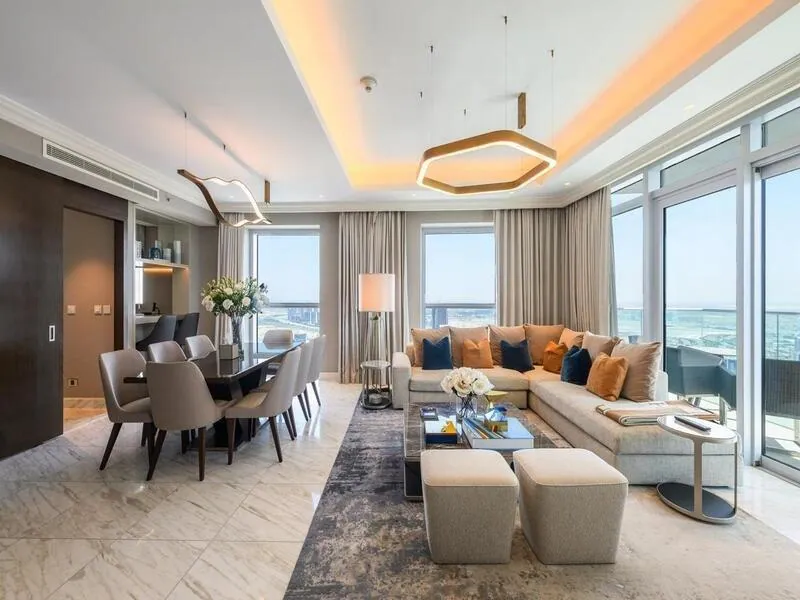
A serviced apartment is a self-contained flat, with its own kitchen and living space, rented out with hotel-style services layered on top: housekeeping, utilities, internet, security, and often a front desk. The contract looks like a lease but behaves like a hotel booking, usually billed monthly, sometimes weekly, rarely by the night. That middle position is the whole point. A business traveler on a three-month posting does not want to live out of a hotel room, and cannot practically sign a one-year unfurnished lease, pay a deposit, buy furniture, and arrange a cooking-gas connection for a stay that ends before the paperwork clears.
For an owner, the economics differ from both neighbors. Against a plain rental, the serviced model charges a premium for furnishing and services and can reprice far more often. Against a hotel, it carries lighter staffing and lower fit-out cost per square meter, and it targets longer, stickier stays that smooth out occupancy. That is why the asset class exists at all, and why the services sit between residential lending and hospitality lending in a way that neither Nepali banks nor regulators have a clean box for yet.
The demand side: real, dollar-linked, and thin

Serviced apartment demand in Kathmandu comes from a specific set of people rather than from tourist flow. It is the long-stay foreigner: development-agency staff on rotations, embassy and mission personnel, consultants attached to infrastructure and energy projects, corporate secondees, and a growing stream of non-resident Nepalis who spend months at a time in the city without wanting to furnish a flat. Medical travelers and their families, and visiting faculty, add a smaller trickle.
Count that pool honestly and it is small. The Department of Labour and Occupational Safety records about 2,300 foreign nationals from 74 countries holding valid work permits in Nepal, a stock figure that in FY 2024/25 broke down into roughly 700 new permits and 1,600 renewals. More than 22,000 permits have been issued over the years, but only a fraction are active residents at any time. On the aid side, the Social Welfare Council listed 185 registered INGOs in 2023 with about 140 active, down from a reported peak near 250, and those organizations spent on the order of Rs 21 billion a year according to Ministry of Finance data. A single Marriott-branded project in Maharajgunj does not need all of them. It needs a steady few hundred long-stay tenants who will pay a dollar-sensitive monthly rate. That is plausible. It is also a demand base that can soften fast when an aid cycle turns or a large project wraps up.
The upside of that same narrowness is pricing power. Corporate and institutional tenants value predictability, a single invoice, compliance-friendly contracts, and security more than they haggle on headline rate, and much of that budget is denominated in or benchmarked to foreign currency. A well-run serviced block can hold a higher effective rate per occupied unit than a mid-market hotel chasing the same clients, which is the commercial logic the IFC loan is underwriting.
The supply side: from informal to institutional
Until recently, Kathmandu’s serviced apartment supply was almost entirely informal. Operators such as Casa Deyra assembled furnished flats across Thamel, Patan, Jhamsikhel, and the valley’s suburbs and marketed them through booking platforms, effectively running a dispersed serviced apartment business one unit at a time. Plenty of individual landlords do a lighter version of the same thing, furnishing a flat and listing it for monthly stays. It works, but it is fragmented, hard to finance, and invisible to any institutional investor. Prospective tenants and buyers still mostly browse these through classifieds and marketplaces such as Basobaas’s apartment listings rather than through a branded operator.
The Maharajgunj project is the first attempt to do it the institutional way: a purpose-built complex, an international operator in Marriott, and a development-finance lender on the capital stack. Its financing structure is itself the interesting part. Only 56 of the 186 apartments run as serviced units; the other 130 are sold outright to private buyers. The sale proceeds help fund the build, while the serviced block generates the recurring, operator-managed income the IFC loan is secured against. That hybrid, sell-half to build the income-half, is a pragmatic answer to a market with no REIT and no deep pool of patient equity. The developer also says the building is the first residential apartment block in Nepal to use seismic damper walls, a construction choice that matters in a valley sitting on known earthquake and building-code risk.
The timing cuts both ways. It arrives after Kathmandu already learned what oversupply looks like. The city’s branded hotel rooms multiplied while occupancy sagged, built on arrival forecasts that never materialized. Serviced apartments chase a different, more defensible tenant, but the warning is the same: a thin market punishes the second and third entrant faster than the first.
The risks worth naming
The first risk is demand depth. A base of a few thousand foreign workers and a declining count of active INGOs is enough for one or two well-located projects, not for a wave of them. If several developers read the same IFC deal as a green light, the segment could repeat the hotel sector’s mistake in miniature.
The second is the exit. Nepal has no real estate investment trust framework and no established strata or fractional-ownership market for income property, so an investor in a serviced block has no clean way to sell down a stake. The capital is locked into the building and its operating income. The hybrid sale-and-serviced structure partly solves the build-cost problem but leaves the long-term holder exposed.
The third is regulatory and title ambiguity. A serviced apartment is taxed and regulated somewhere between a residential rental, a hotel, and a commercial lease, and the rules for each are not the same. Buyers of the sold units face the usual apartment questions around the ownership certificate, common areas, and maintenance fees, with the added wrinkle that part of their building operates as a commercial hospitality business. Rental tax treatment, service-charge VAT, and foreign-currency invoicing all sit in a gray zone that will get tested as the segment grows.
The fourth is that the broader property-and-tourism cycle is not doing the work. Arrivals are flat, and the office market shows the same split-screen the serviced sector will face, with newer grade-A space filling while older stock empties. Quality and brand concentrate demand; everything else struggles.
The global frame, and where Nepal sits
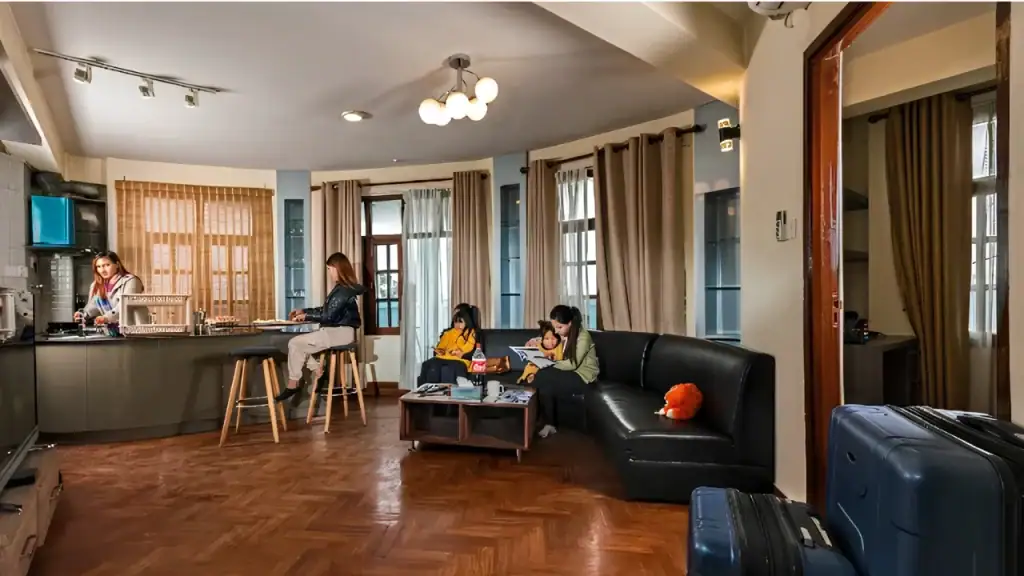
Elsewhere, serviced apartments are a mature, institutionally owned asset class. The 2020/21 Global Serviced Apartments Industry Report counted more than 1.25 million units worldwide, up almost 15 percent from 2018, built largely on steady corporate-relocation and project-based demand. Global hotel groups, Marriott among them, have spent a decade folding extended-stay and serviced-residence brands into their portfolios precisely because the longer stays and lighter operating cost produce steadier returns than nightly-rate hotels.
Nepal is at the bottom of that curve, not on it yet. One IFC-backed, Marriott-operated project does not make an asset class, but it does three useful things: it puts an international operating standard and a development-finance lender into the market, it creates a reference transaction other developers and banks can price against, and it tests whether Kathmandu’s long-stay demand is bankable rather than anecdotal. If the Maharajgunj block leases up and services its loan on schedule, expect a second and third project within a few years. If it struggles to fill 56 units, that will be the clearest signal yet that the demand pool, real as it is, is simply too shallow to carry more.
The bottom line
Serviced apartments are a genuinely new commercial real estate category for Kathmandu, with real, dollar-linked, recurring demand and a credible first mover. They are also a bet on a narrow, cyclical tenant base in a market with no institutional exit and unsettled rules. For a developer with the right location, operator, and patient capital, that can work. For anyone treating the IFC deal as proof the segment is deep, the numbers counsel caution. The asset class is real. The demand pool is thinner than the pitch.
Frequently asked questions
What is a serviced apartment?
A serviced apartment is a fully furnished, self-contained flat rented with hotel-style services such as housekeeping, utilities, internet, and security. It is typically billed monthly or weekly rather than nightly, which makes it suited to stays of a few weeks to several months. It sits commercially between a hotel room and an unfurnished rental.
Who rents serviced apartments in Kathmandu?
The main tenants are long-stay foreigners and returning Nepalis: development-agency and embassy staff, consultants on infrastructure and energy projects, corporate secondees, non-resident Nepalis, and some medical travelers and visiting faculty. Nepal records about 2,300 foreign nationals holding valid work permits, so the paying pool is specific and relatively small rather than driven by tourist arrivals.
How is a serviced apartment different from a hotel or a regular rental?
Against a hotel, a serviced apartment offers more space, a kitchen, lower per-unit staffing cost, and longer stays, which smooths occupancy. Against a regular rental, it is furnished, serviced, repriced more often, and let for shorter commitments without the tenant having to furnish the flat or arrange utilities. The tradeoff is a higher monthly cost than a bare lease.
Is the Marriott serviced apartment project in Kathmandu open?
The Maharajgunj complex is under development. The International Finance Corporation approved and signed a loan of up to US$7 million for its 56 Marriott-operated serviced units in June 2024, and the facility was still listed as pending disbursement in the IFC’s July 2024 disclosure. The project is greenfield, so an opening date depends on construction progress rather than being already in operation.
Are serviced apartments a good investment in Nepal?
They can offer steady, partly dollar-linked income with pricing power over mid-market hotels, but the risks are real: a narrow and cyclical tenant base, no REIT or strata exit to sell down a stake, and tax and regulatory treatment that still sits in a gray zone between residential, hospitality, and commercial use. This is general information, not investment advice; location, operator quality, and the strength of long-stay demand decide each case.