Barcelona is spending the next three years erasing short-term rentals from its housing map. By November 2028 the city will scrap the licenses of all 10,101 apartments currently approved as tourist flats, a plan Mayor Jaume Collboni announced in June 2024 after rents rose 68 percent in a decade. Nepal is doing close to the opposite. It is not deleting its short-term rentals. It has barely started counting them.
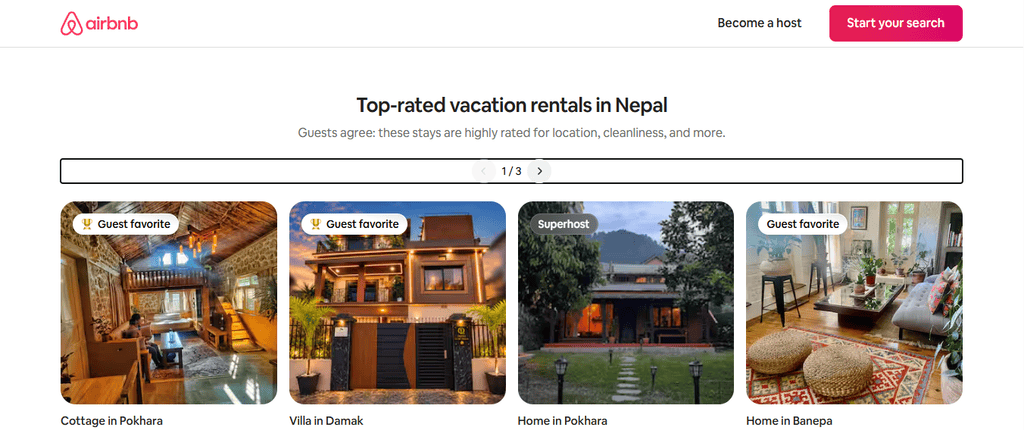
That gap is the story. Short-term rentals in Nepal, listed through platforms like Airbnb, sit in a regulatory blind spot while governments from New York to Tokyo are writing the rulebook that Nepal has not opened. Nepal’s market is small today, which is exactly why the lessons from abroad are cheap to learn now and expensive to learn later. With Pokhara’s international airport finally flying and tourist arrivals climbing back toward their pre-pandemic peak, the quiet question for Kathmandu, Pokhara and the valley towns is not whether to copy Barcelona, but whether to register and tax what already exists before it scales.
Key Takeaways
- Nepal welcomed 1,158,459 foreign tourists in 2025, a fraction above 2024’s 1,147,548 and still short of the 2019 record of 1,197,191, according to Nepal Tourism Board data.
- Nepal has no short-term-rental-specific law. Airbnb-style stays fall under the Tourism Act 2035, municipal and ward registration, and the Income Tax Act 2058, the same framework that governs guesthouses.
- Abroad, the clampdown is well underway: New York’s Local Law 18 cut short-term listings by more than 80 percent after September 2023, Japan caps home-sharing at 180 nights a year, and Paris allows primary residences only 90 nights a year.
- Airbnb takes about a 5 percent commission from Nepali hosts, who cluster in Kathmandu, Bhaktapur, Lalitpur and Pokhara.
- The core Nepali problem is not housing scarcity, as in Europe, but invisibility: unregistered, untaxed rentals that compete with hotels bound by registration, tax and safety rules.
Nepal’s rules already exist. Enforcement is the missing piece.
It is a common misreading to say short-term rentals are unregulated in Nepal. On paper, they are not. Anyone offering paid lodging for short stays operates as a commercial hospitality service under the Tourism Act 2035, the Local Government Operation Act 2074 and the Income Tax Act 2058. In practice that means a host is expected to register the business with the ward office or municipality, hold a PAN, sit in a residential or mixed-use zone cleared for commercial use, meet fire and earthquake-safety standards, and declare the income. Larger units can be classified by the Department of Tourism, and higher-turnover operators may cross the VAT threshold. Registration, where it happens, typically takes 7 to 25 working days, according to legal guidance on short-term accommodation registration.
The gap is between the statute and the street. Hotels follow the registration path because they are visible, licensed and periodically inspected. A spare apartment in Thamel or a homestay in Bhaktapur listed online is far harder for a municipality to see, and the enforcement machinery to find it does not really exist. The Hotel Association of Nepal has argued for years that this creates an unlevel field: registered hotels carry tax and compliance costs that platform listings often avoid. That complaint, aired when Airbnb first gained traction in Nepal, has not been answered with policy. The rules are written. The counting is not done.
Why the rest of the world is cracking down
The global backlash is not about tidiness. It is about housing. In cities where short-term rentals grew fast, whole apartments shifted out of the long-term market and into nightly letting, tightening supply and pushing up rents. The policy responses fall on a spectrum from registration to near-prohibition, and they are worth reading as a menu rather than a verdict.
New York took the registration route and made it bite. Local Law 18, fully enforced from September 5, 2023, requires short-term rental hosts to register with the city, bars whole-unit rentals, and allows a stay only when the host is present and no more than two guests share the home. The effect was close to a ban in practice: an analysis by the vacation-rental software firm Lodgify found short-term listings under 30 days fell by more than 80 percent, from over 22,000 in August 2023 to roughly 4,000 the following spring. Tokyo and the rest of Japan chose a softer cap. Under the Private Lodging Business Act in force since June 2018, a private home may be rented to guests for a maximum of 180 nights per year, with notification to local government.
Europe has gone further. Paris, long Airbnb’s single largest market, cut the annual limit for letting a primary residence from 120 nights to 90 nights in October 2024, and this year fined two owners who failed to register their listings 80,000 and 150,000 euros. Barcelona chose the blunt instrument, deciding to withdraw every one of its 10,101 tourist-flat licenses by 2028. Even Airbnb’s own commissioned research concedes the honest counterpoint: it argues that strict rules in Amsterdam and Barcelona have not measurably improved housing affordability. The tool is contested. What is not contested is that every one of these cities first knew how many listings it had. Nepal does not.
Nepal’s problem is invisibility, not scarcity
Here is where framing matters. The European and American crackdowns are a response to short-term rentals eating a scarce housing stock in dense, expensive cities. Kathmandu has a housing-cost problem, but it is driven far more by land speculation and construction finance than by a few hundred apartments on Airbnb. Importing Barcelona’s ban would be solving a problem Nepal does not yet have, while ignoring the one it does.
Nepal’s actual issue is fiscal and competitive. Rental and hospitality income is taxable under the Income Tax Act 2058, the same obligation that applies to any landlord who declares rent, as covered in our guide to renting out property in Nepal. When a slice of the lodging market sits outside that net, two things happen. The state loses revenue it is legally owed, and licensed hotels, which already face an oversupply of rooms against thin arrivals, compete against a cost structure they are not allowed to match. For an individual owner the math is simple and rational: nightly income during the September-to-December peak, when demand is strongest, can beat a year of long-term rent found through a marketplace like Basobaas. The incentive to list is real. The incentive to register is weak. That asymmetry, not a housing shortage, is what Nepal has to fix.
The Pokhara variable
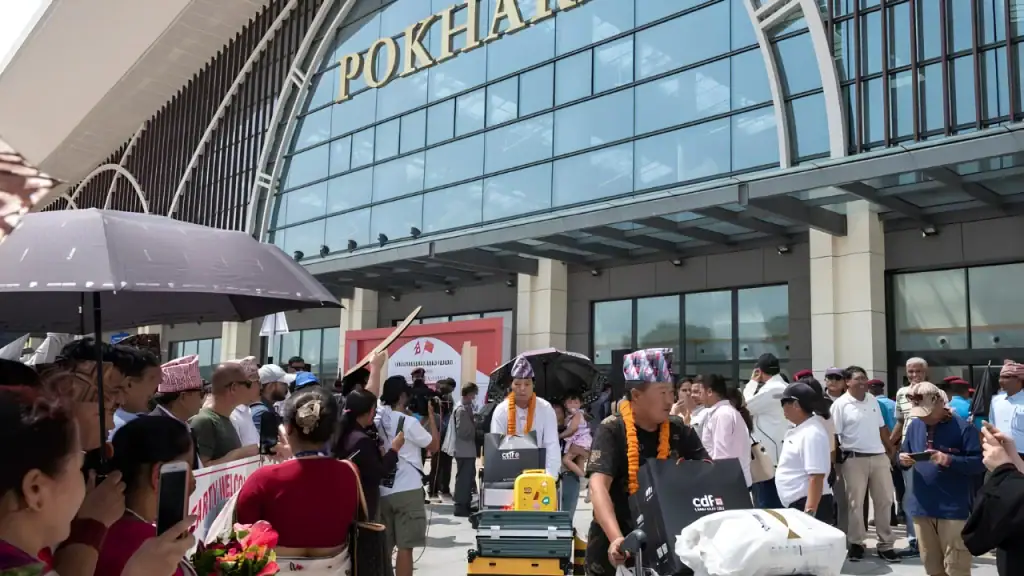
The reason this stops being a niche debate is Pokhara. The city absorbed enormous tourism-linked real estate investment on the promise of its international airport, a bet detailed in our analysis of Pokhara’s Rs 600 billion tourism gamble. As that airport builds up international traffic and arrivals trend upward, mid-range and group travelers, exactly the segment Nepali hosts say books apartments for 10 to 15 nights at a time, will grow. Short-term rentals scale with precisely this kind of demand, because they fill the gap between a budget guesthouse and a branded hotel.
That is the trigger the rulebook abroad was written to handle. A listing count that is a rounding error today can become a visible share of Pokhara’s lodging supply within a few tourist seasons. The cities that regulated early, by registration rather than panic, retained the tax base and the data. The cities that waited ended up reaching for bans because they had lost track of the market. Nepal is at the early fork, with the rare luxury of choosing before the problem is acute.
What tightening without banning could look like
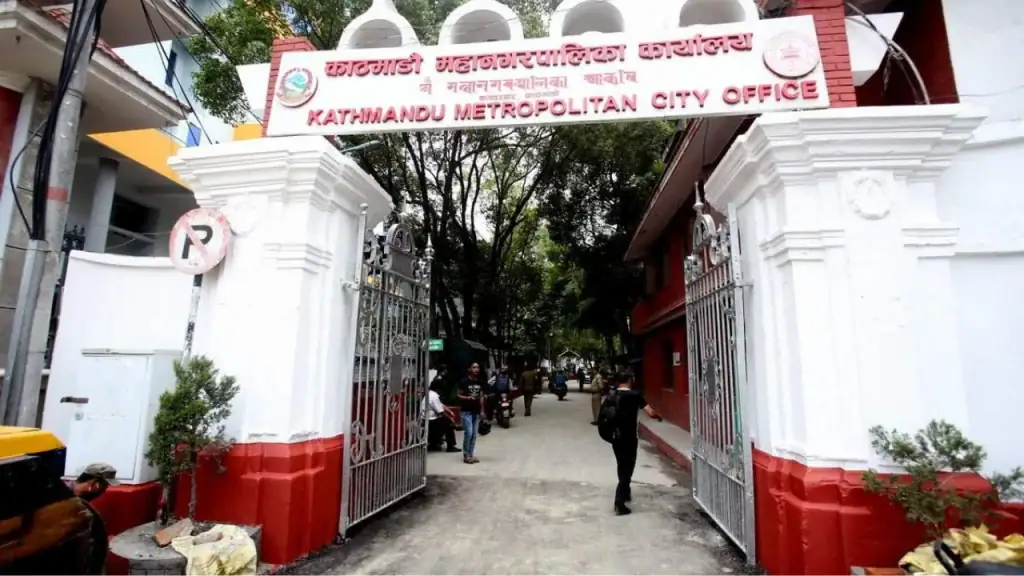
The proportionate path for Nepal is not Barcelona’s. It is closer to the registration model, adapted to a market this early. A workable version would make municipal registration and a PAN a genuine precondition for listing, not a formality ignored after the fact; require platforms to surface a registration number on each listing, as several jurisdictions now do; and fold short-term rental income into the same tax treatment hotels and landlords already face, so the playing field levels upward rather than down. None of that requires a new law. The Tourism Act, the Local Government Operation Act and the Income Tax Act already supply the hooks. What is missing is the administrative will to enforce them and a platform-reporting mechanism to make the market visible.
There is a real cost to overreaching, and it deserves to be stated plainly. Short-term rentals channel tourist spending directly to households, support a layer of small hospitality entrepreneurs, and add flexible mid-tier capacity that Nepal’s hotel stock does not fully cover. A heavy-handed crackdown would suppress that income for a housing benefit Nepal would barely register, which is close to the verdict Airbnb’s own research reaches about Europe. The balance Nepal should aim for is narrow and achievable: visible, taxed, safety-compliant short-term rentals that compete fairly with hotels, without pretending the sector is either a crisis or a free lunch. Getting the counting done is the first move, and it is the cheapest one Nepal will ever get.
Frequently Asked Questions
Are Airbnb and short-term rentals legal in Nepal?
Yes. Short-term rentals are legal, but operators are expected to register the business with their ward office or municipality, hold a PAN, sit in a commercially approved zone, meet fire and earthquake-safety standards, and declare the income under the Income Tax Act 2058. There is no separate short-term-rental law; the activity is governed by the Tourism Act 2035 and local-government rules that also cover guesthouses.
How big is Nepal’s tourism market, and why does it matter for short-term rentals?
Nepal recorded 1,158,459 foreign arrivals in 2025, just above 2024 and still below the 2019 record of 1,197,191, per Nepal Tourism Board figures. Demand concentrates in the September-to-December peak. Short-term rentals scale with rising arrivals, so the expansion of Pokhara’s international airport and continued growth in visitors are the factors most likely to enlarge the sector.
What are other countries doing about Airbnb?
Policies range from registration to near-bans. New York’s Local Law 18 (September 2023) requires host registration and bars whole-unit rentals, cutting short-term listings by more than 80 percent. Japan caps private-home sharing at 180 nights a year. Paris limits primary residences to 90 nights a year and fines unregistered hosts heavily. Barcelona plans to eliminate all 10,101 of its tourist-flat licenses by 2028.
Do short-term rentals pay tax in Nepal?
They are legally required to. Rental and hospitality income is taxable under the Income Tax Act 2058, and higher-turnover operators may also need to register for VAT. In practice, many short-term rental hosts remain unregistered and untaxed, which is the central complaint from registered hotels that carry the full tax and compliance burden.
Should Nepal ban Airbnb like Barcelona?
The evidence does not support a ban in Nepal’s current situation. European crackdowns targeted short-term rentals displacing scarce housing in dense cities, and even Airbnb’s own research argues those bans have not clearly improved affordability. Nepal’s listing density is low, so the more proportionate step is enforcing existing registration and tax rules to level the field with hotels, rather than prohibition.