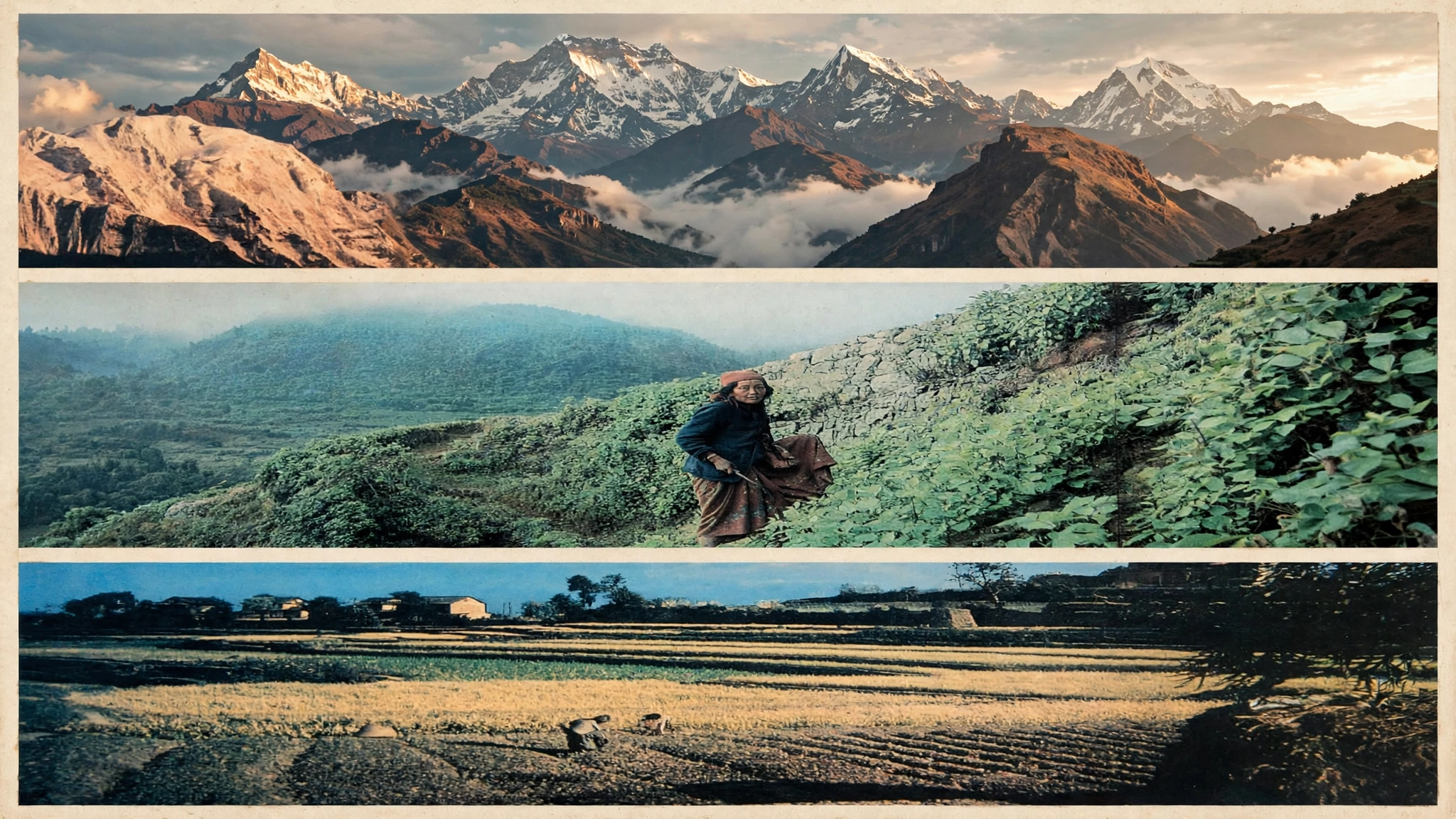
Every time you look at a modern Nepali land certificate, you see the word Raikar. Today, we take individual property rights entirely for granted. You can buy, sell, or inherit a plot of land with ease.
However, Nepal’s journey to a unified private property registry was highly complex. For centuries, the country operated under a fragmented feudal land system. Rulers used soil as political currency, rewarding elites with vast estates or negotiating communal territories with indigenous tribes.
This is the fascinating historical story of how Nepal transitioned from the privileged world of Birta and communal Kipat into the modern Raikar system we use today.
The Feudal Starting Point: State Landlordism
To understand modern real estate in Nepal, we must look back to the 18th and 19th centuries. Historically, the state operated under the absolute principle of state landlordism. The reigning monarch owned all the land within the kingdom’s territory.
The common citizens who actually plowed the soil were not considered landowners. Instead, they were merely temporary tenants. Rulers routinely divided this vast state property into various sub-tenure categories to collect revenue, fund military campaigns, and maintain strict political control.
What was the Birta Land System?
The word Birta originates from the traditional Sanskrit term Vritti, which translates to “livelihood.” The Birta system was a tool of ultimate political patronage. The King or the ruling Rana Prime Ministers deliberately gave away massive tracts of state-owned land to specific favored individuals, including:
- High-ranking military generals and loyal soldiers.
- Royal courtiers and powerful noble families.
- Influential religious priests and traditional teachers.
The Ultimate Economic Privilege
The defining feature of Birta land was its extraordinary tax status. These properties were almost entirely exempt from paying regular land revenue to the state. The elite Birta owners kept all the agricultural rents and profits for themselves. By the middle of the 20th century, at least one-third of all agricultural land in Nepal was tied up in this tax-free feudal web.
What was the Kipat Land System?
While the western and central regions of Nepal saw widespread Birta grants, the eastern hills operated under a completely different model known as Kipat. This was an ancient, communal landownership system deeply tied to indigenous ethnic groups, most notably the Kirat peoples, including the Limbu and Rai communities.
A Legacy of Strategic Unification
The preservation of the Kipat system was a critical geopolitical compromise. During the unification campaign of Nepal in the late 18th century, King Prithvi Narayan Shah encountered fierce resistance in the eastern regions. Rather than engaging in a prolonged war, the King chose diplomacy. He signed royal decrees guaranteeing that the Kirat communities could retain their ancestral, communal land rights if they joined the unified kingdom peacefully.
How Communal Property Functioned
- No Individual Sales: A Kipat holder could never sell ancestral land to anyone outside their specific ethnic community.
- Membership Rights: An individual derived their legal right to cultivate a plot solely through birthright and membership within the clan.
- Community Reversion: If a family died out without leaving a direct heir, the land returned safely to the local community rather than the state.
Other Historical Tenures
To fully appreciate the eventual transition to a unified system, we must also acknowledge two other temporary land structures that existed during the feudal era.
1. The Jagir System
Rulers used the Jagir system to pay government employees and military officers without spending actual cash from the treasury. The state assigned specific plots of land to an official, who collected the agricultural rents as their salary. The moment the official retired, the state reclaimed the land.
2. The Rakam System
The Rakam system was a form of compulsory, unpaid labor tenure. The state permitted a family to cultivate a small plot of land tax-free. In exchange, the family had to perform specific services for the rulers, such as carrying official mail, cutting firewood for the military, or maintaining remote mountain trails.
The Winds of Change: The 1951 Democratic Revolution
The complex coexistence of Birta, Kipat, Jagir, and Rakam created massive economic instability. The state treasury remained empty because the wealthy elites paid zero taxes, while the actual tenant farmers suffered from extreme exploitation.
The historic democratic revolution of 1951 shattered this entrenched feudal status quo. With the overthrow of the Rana regime, the newly established government recognized that building a modern nation was impossible without comprehensive land reform.
The Death of Privilege: The Birta Abolition Act of 1959
The first major legal blow to the feudal system came under the leadership of Nepal’s first popularly elected Prime Minister, B.P. Koirala. His government introduced a revolutionary piece of legislation: the Birta Abolition Act of 1959.
The act legally terminated the Birta system overnight. It stripped the aristocracy of their tax-exempt status and converted all Birta lands into Raikar. The former landlords had to register their properties openly and pay regular land taxes to the state. Most importantly, the act gave millions of tenant farmers the legal right to claim occupancy rights over the soil they had farmed for generations.
Dismantling the Communal Model: The Lands Act of 1964
While eliminating the elite Birta system enjoyed broad political consensus, addressing the communal Kipat system required much more caution. The process of uniform integration culminated with the introduction of the landmark Lands Act of 1964. This comprehensive law introduced strict landholding ceilings and systematically regulated tenancy rights across the entire country.
Finally, through the Second Amendment of the Lands Act in 1968, the state formally abolished the Kipat tenure system. The government converted all remaining Kipat communal lands into standard, taxable Raikar property, making the eastern lands fully salable on the open market for the first time in history.
Summary of Historical Land Tenures
| Historical Land Tenure | Original Characteristics | Final Legal Status Today |
| Birta | Tax-free land given to elites and nobles. | Abolished in 1959; converted fully into Raikar. |
| Kipat | Communal, non-salable ethnic territory. | Abolished in 1968; converted fully into Raikar. |
| Jagir | Temporary land assignment used as official salary. | Abolished in 1950s; converted fully into Raikar. |
| Rakam | Land granted in exchange for compulsory labor. | Abolished in 1960s; converted fully into Raikar. |
| Raikar | Taxable land with individual transfer rights. | The dominant system used across Nepal today. |
Understanding Raikar: The Foundation of Modern Real Estate
The systematic collapse of the old feudal systems left one definitive survivor: Raikar. The term Raikar is widely believed by historians to derive from the traditional Sanskrit words Rajya (State) and Kara (Tax), meaning land on which individuals pay a standard tax to the state.
Today, Raikar represents the ultimate manifestation of secure, modern private property rights in Nepal. When you purchase land now, you are buying a Raikar parcel. This designation gives you the legal right to sell, mortgage, gift, or pass the property to your heirs, provided you pay your annual property taxes to the local municipality.
Conclusion
Nepal’s journey from a fractured feudal landscape into a unified property market is a powerful story of national modernization. The elimination of elite Birta grants removed a deeply unfair tax privilege, while the sunset of the communal Kipat system integrated diverse regional territories into a single economic framework.
The modern Raikar system represents a hard-fought victory for individual property rights. It ensures that ownership depends on transparent legal registration rather than royal favor or ethnic heritage, protecting your real estate investment today.
Frequently Asked Questions (FAQ)
What is the historical difference between Birta and Raikar land?
Birta land was a tax-free property grant given by the rulers to priests, generals, and nobles as a special political privilege. Raikar land is state-regulated, taxable private property where the owner must pay regular revenue to the government.
When was the Birta land system officially abolished in Nepal?
The feudal system was formally terminated by the first democratically elected government through the passage of the historic Birta Abolition Act in 2016 B.S. (1959).
What made the Kipat land system unique compared to other tenures?
The Kipat system was an ancient form of communal landownership preserved by the indigenous Kirat communities of eastern Nepal. Unlike other lands, Kipat property could never be sold to anyone outside that specific ethnic group.
How did Kipat land eventually transform into modern Raikar land?
The government systematically dismantled the communal system using the Second Amendment of the Lands Act in 1968. This law converted all Kipat holdings into taxable, freely salable Raikar property to standardize the national economy.
Why did the historical state use the Jagir land system?
The state utilized the temporary Jagir system to pay the salaries of military officers and government officials without spending cash. The officials were permitted to collect agricultural rents from assigned plots during their time in active service.
What is the legal status of land tenures in Nepal today?
With the historical exception of Guthi land (which accounts for a tiny percentage dedicated to religious and charitable trusts), virtually all land tenure systems in Nepal have been completely unified under the modern Raikar private ownership framework.