The reinforcement is not the expensive part. Tying the walls of a house together with proper bands and bars makes a Nepali home roughly 80 percent safer and adds only about 5 percent to the building cost, according to the National Society for Earthquake Technology (NSET). Yet most homes that collapsed in 2015 skipped those details entirely. Earthquake-resistant construction in Nepal is cheaper than almost every buyer assumes, and the real gap is not money. It is knowing what the building code asks for and insisting that your contractor actually delivers it.
Key Takeaways
- Roughly 5 percent extra, about 80 percent safer. NSET estimates that adding seismic bands, buttresses and steel bars to a typical stone-and-mud house raises the cost by only around 5 percent while cutting collapse risk sharply.
- Code compliance is mandatory for a permit. Local municipalities issue building permits and will not approve plans that ignore the Nepal National Building Code, first introduced in 1994 and strengthened for seismic safety as NBC 105:2020.
- The 2015 quake was the warning. The 7.8-magnitude Gorkha earthquake killed close to 9,000 people, destroyed more than 500,000 houses and caused around US$7 billion in losses, close to a third of Nepal’s economy at the time.
- Compliance works when it is enforced. More than 700,000 earthquake-resilient houses were rebuilt after 2015, with grant money released only after inspectors confirmed the work met safer-construction standards.
- Permit fees are small. Building permit costs typically run about 0.5 to 2 percent of total construction expenses, a fraction of what a non-compliant home risks in a major shake.
What the building code actually requires
Nepal has had a National Building Code since 1994, a set of standards covering structural safety, seismic resistance, fire, electrical work and sanitation. The code did not fail in 2015 because it was weak on paper. It failed because almost nobody enforced it. The heart of the seismic requirement is NBC 105, the standard for seismic design of buildings, which the Department of Urban Development and Building Construction (DUDBC) overhauled in August 2020. The revision, labeled NBC 105:2020, folded in lessons from the Gorkha earthquake and 25 years of global seismic research, and it ties design standards to earthquake-risk zoning maps so that a house in a higher-hazard belt faces stricter demands than one in a lower-hazard area. You can see the current list of code documents on the DUDBC building code page.
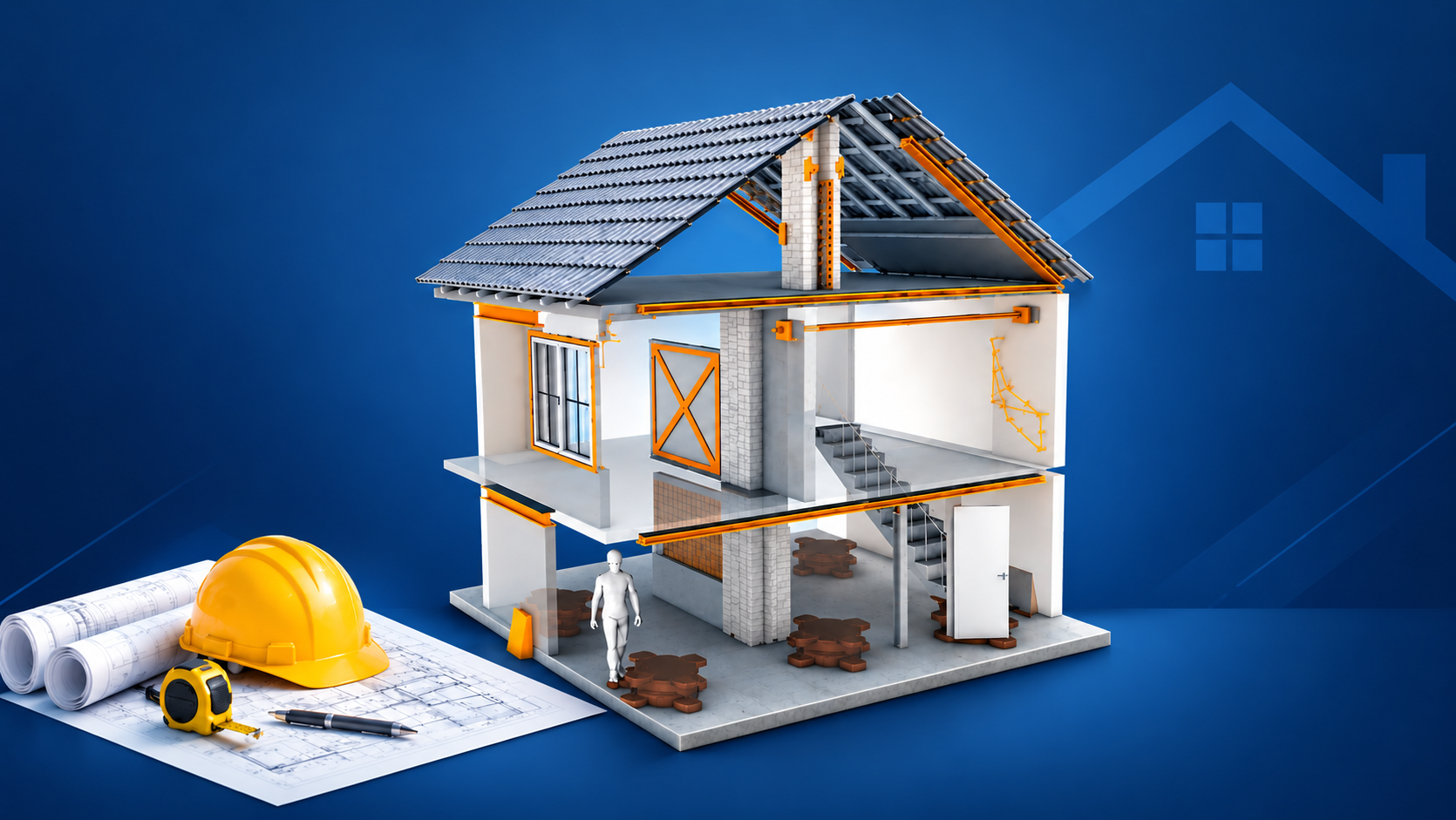
The code recognizes that most Nepali homes are not designed by structural engineers. For small, owner-built masonry and low reinforced-concrete houses, it offers simplified “Mandatory Rules of Thumb”: prescriptive rules on wall thickness, column size, reinforcement and seismic bands that a competent builder can follow without a full structural analysis. Larger and taller buildings move up to professionally engineered design. Either way, compliance is not optional paperwork. As the DUDBC notes, structural provisions “are critical for obtaining building permits and must be incorporated into the building design and construction process.”
The permit is where the code bites
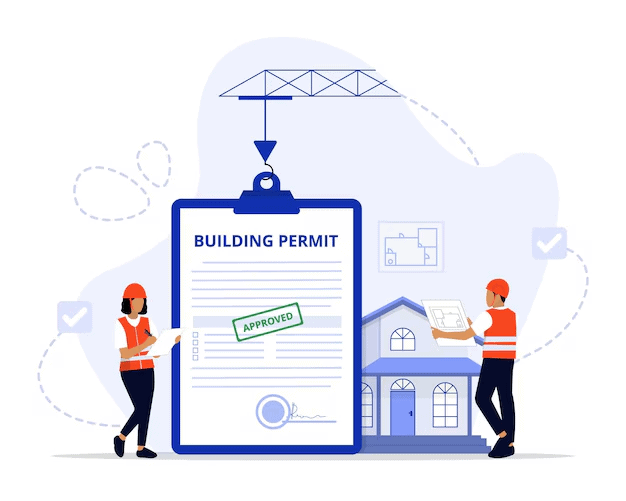
Building permits in Nepal are issued by local municipalities and rural municipalities, with DUDBC providing technical oversight. The process runs from a pre-application consultation to detailed plans prepared by licensed architects and engineers, plan review by the local authority (commonly one to three months), and a permit to begin construction. Permit fees typically fall in the range of 0.5 to 2 percent of total construction expenses, bundling application, plan-approval, infrastructure and inspection charges. On paper, no plan that violates the seismic code should clear this gate. In practice the gate is only as strong as the municipality staffing it, which is exactly where compliance still leaks.
What compliance costs, and why the fear is overblown

Ask a prospective homeowner why they skipped the engineer and the seismic detailing, and the answer is usually cost. The numbers do not support the fear. NSET’s deputy executive director Ramesh Guragain has put it plainly for rural stone-and-mud buildings: simple ways of tying the walls together with wood or concrete elements “can make them around 80 percent safer and adds only 5 percent to the building cost.” Field research on Nepali construction points the same way. A study across rural rebuilding found that horizontal seismic bands, buttresses and steel bars are “not that expensive,” with the biggest single cost driver being the upgrade from mud mortar to cement mortar, not the seismic features themselves.
For an engineered reinforced-concrete home, the premium sits higher because you are paying for design, better detailing at beam-column joints and closer supervision, but it is still a modest share of a project that will stand for decades. Set that against the alternative. A non-compliant house is not cheaper in any honest accounting. It is a deferred cost that comes due, with interest, the next time the ground moves. If you are financing construction, build the compliance cost into your loan from the start rather than cutting it later; our guide to the home loan ceiling and rates covers what to check before you borrow.
The proof is in the rebuild
The strongest evidence that code-compliant construction is achievable in Nepal is that the country already did it at scale. After the 2015 Gorkha earthquake, which the Post Disaster Needs Assessment tallied at nearly 9,000 deaths, more than 100,000 injuries, over 500,000 houses destroyed and around US$7 billion in damage, Nepal ran one of the largest owner-driven reconstruction programs in the world. According to the World Bank, more than 700,000 earthquake-resilient houses were rebuilt under the national housing reconstruction effort. Crucially, the grant money was conditional: as the Bank puts it, “the enforcement of safety guidelines and compliance of safer construction practices were tied to the release of grant support.” Homeowners received funds in stages, and each stage unlocked only after inspectors verified the work met the standard.
That experiment answered the central question. When inspection is tied to money, owners build to code, and they do it without ruinous cost. The lesson for anyone building privately today is to recreate that discipline voluntarily: hire the engineer, follow the drawings, and do not pay the final installment to a contractor until the structural work has been checked.
A buyer and builder checklist

Whether you are building new or buying an existing home, a few documents separate a safe purchase from a gamble. Ask for the municipal building permit and confirm the approved drawings match what was actually built, because DUDBC itself warns that “constructions have been different from building design drawings in many cases.” Ask for the structural design and the engineer’s details. Ask for the completion certificate, which the municipality issues only after a final check. When you are scanning listings on a marketplace like Basobaas, treat the absence of these papers as a price signal, not a paperwork nuisance. Finally, look at the ground the house stands on, not just the house: our explainer on landslide and liquefaction risk shows why a well-built home on bad soil is still a bad buy, and our property safety assessment guide walks through the wider checks.
The honest caveat: the code is only as good as enforcement
None of this means the system works everywhere. The DUDBC, with support from Japan’s development agency JICA, is still running a dedicated project to strengthen code compliance across seven Kathmandu Valley municipalities, which tells you the problem is far from solved. Awareness among owners and contractors remains thin, municipal technical capacity is uneven, and buildings still drift from their approved drawings during construction. Compliance also concentrates in formal, permitted projects; a large share of Nepal’s housing stock is older, informal or built before 2015, and the code cannot retroactively protect what was never designed to it. The takeaway is not that Nepal’s buildings are now safe. It is that safe construction is cheap and well-defined enough that there is no good reason to skip it on anything you build today.
For more on Nepal’s property market, law and financing, see the full BiznesVue real estate coverage.
Frequently Asked Questions
Is earthquake-resistant construction mandatory in Nepal?
Yes. Compliance with the Nepal National Building Code, including its seismic design standard NBC 105:2020, is mandatory for obtaining a building permit. Local municipalities issue permits and are expected to reject plans that do not meet structural and seismic requirements, with DUDBC providing technical oversight.
How much more does earthquake-resistant construction cost in Nepal?
Less than most people expect. NSET estimates that adding seismic bands, buttresses and reinforcement to a typical rural house raises the cost by only about 5 percent while making it roughly 80 percent safer. For engineered concrete homes the premium is somewhat higher because of design and supervision, but it remains a modest share of total project cost.
What is NBC 105:2020?
NBC 105:2020 is the updated seismic design standard within Nepal’s National Building Code, revised by DUDBC in August 2020. It replaced the 1994 version, incorporated lessons from the 2015 Gorkha earthquake and modern seismic research, and linked design requirements to earthquake-risk zoning maps so that buildings in higher-hazard areas face stricter rules.
Do I need a building permit to build a house in Nepal?
Yes. A permit from your local municipality or rural municipality is required before construction. The process involves plans prepared by licensed architects and engineers, a plan review that commonly takes one to three months, and permit fees that typically run about 0.5 to 2 percent of total construction cost.
How can I check if a house I am buying is built to code?
Ask for three documents: the municipal building permit, the approved structural drawings with the engineer’s details, and the completion certificate issued after final inspection. Confirm that what was built matches the approved drawings, since DUDBC warns that actual construction often diverges from the design. Also assess the soil and site stability, not just the structure.
What happens if I build without following the building code?
You risk a rejected permit, difficulty getting a completion certificate, problems with financing and resale, and most seriously a structure far more likely to fail in an earthquake. Nepal’s reconstruction experience showed that tying inspection to funding produced hundreds of thousands of compliant homes, which underlines that the main cost of non-compliance is safety, not savings.