A hospital is a building before it is anything else. In Nepal that fact is now driving billions of rupees into steel, concrete, and specialized medical floors, as a wave of private operators treats patient care less like a public service and more like a commercial real estate play. In Kathmandu’s Tinkune, a 300-bed cancer hospital is rising on 100 ropanis of land with an investment of more than Rs 12 billion, built to be run by India’s Medanta chain. In Lalitpur, the state-run Patan Hospital is being doubled to 1,200 beds in a 10-story tower. The question for anyone watching Nepal’s property market is whether hospital real estate is a durable asset class or the next oversupply story.
Key Takeaways
- The build-out is real and large. Chitwan Medical College’s CMC Kathmandu in Tinkune is a 300-bed, Rs 12 billion-plus cancer hospital on 100 ropanis, slated to be managed from day one by Medanta of India. Its promoters call it the largest private-sector hospital built with Nepali investment.
- Public hospitals are expanding too. Patan Hospital is being rebuilt into a 1,200-bed facility, up from 600, at an estimated Rs 10.73 billion, with a built-up area of roughly 72,920 square meters across 10 floors.
- Capital markets are entering the ward. HAMS Hospital in Dhumbarahi is doubling to 200 beds in an 8-story annex for about Rs 50 crore, part funded by what it says is the first hospital IPO application ever accepted by Nepal’s securities regulator.
- The demand case rests on a leak abroad. Nepal has roughly 0.54 hospital beds per 1,000 people, and an estimated 600 Nepalis travel to Delhi for treatment every day, carrying billions of rupees out of the country each year.
- The oversupply risk is already visible. Thousands of mandated free beds sit empty, private occupancy at some hospitals has slid from above 90 percent to 50 to 60 percent, and the thing that sends patients abroad is trust and specialist capability, not a shortage of floor space.
The build-out: billions of rupees in new hospital floors
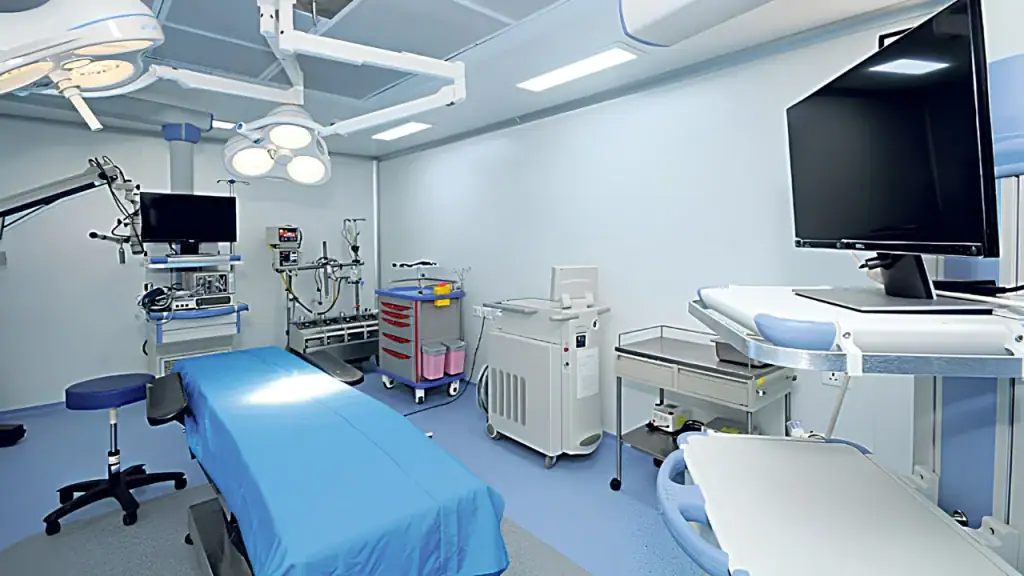
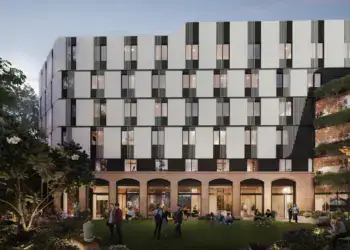
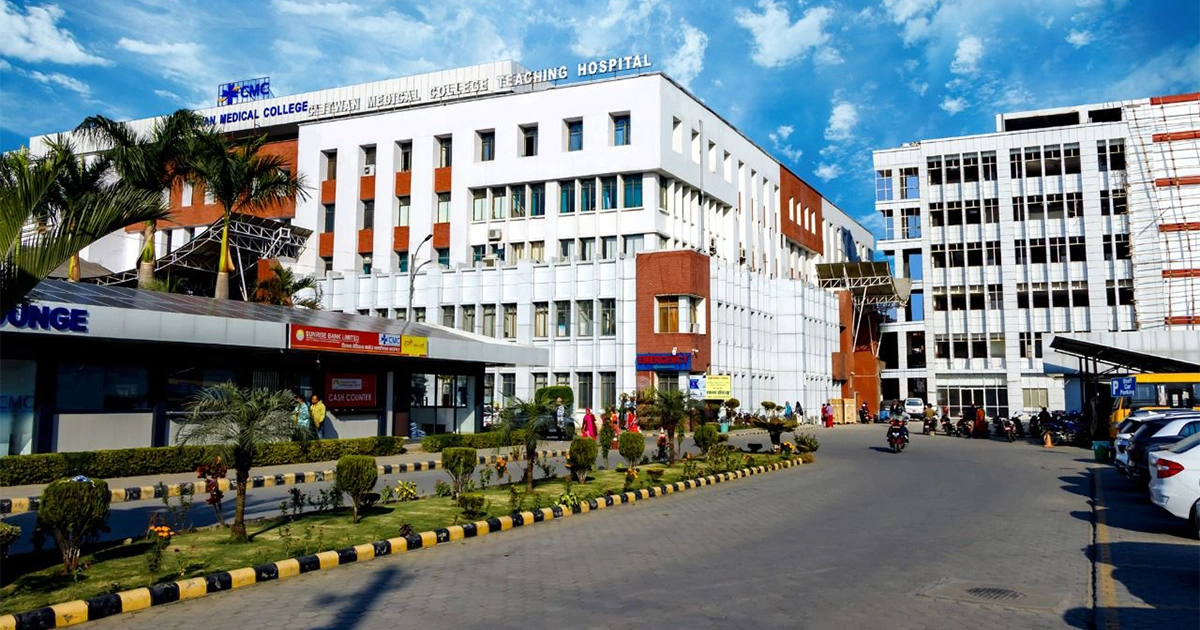
The clearest signal that hospitals have become a property bet is the scale of the projects now under construction. Chitwan Medical College (CMC), established about two decades ago in Bharatpur where it already runs 700 beds, is building two new facilities at once. The flagship is CMC Kathmandu in Tinkune: a 300-bed hospital on 100 ropanis of land, with an investment put at more than Rs 12 billion, focused on cancer and other super-specialty services. CMC says Medanta Hospital of India will manage the facility from the start, and that it will be the largest private-sector hospital built with Nepali capital. The second project, CMC Hetauda, is a 100-bed super-specialty hospital on 19 kattha beside the highway in Hetauda Sub-Metropolitan City-4, estimated at around Rs 2.5 billion, with local residents taken on as partners and services targeted to begin in 2084 BS (around 2027).
The public sector is spending on the same scale. Patan Hospital, run under the Patan Academy of Health Sciences in Ward 5 of Lalitpur Metropolitan City, is being upgraded from 600 to 1,200 beds at an estimated cost of Rs 10.73 billion. The plan describes a building of about 72,920 square meters of built-up area, 35 meters tall, with 10 floors including two basement levels, plus parking for 500 motorcycles and 300 cars, on a three-year construction timeline. For a government facility, that is a commercial-grade real estate program in all but name.
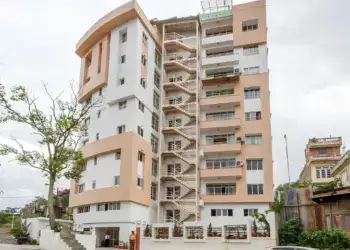
Smaller operators are extending vertically rather than outward. HAMS Hospital in Dhumbarahi is doubling its capacity from 100 to 200 beds by constructing an 8-story annex, with one underground basement, across nearly two ropanis, adding about 50,000 square feet. The chairman has said the point is to pull services currently scattered across leased buildings, including wellness, dermatology, physiotherapy, dental, and administration, under a single roof, and to house new technology such as medical robotics. The roughly Rs 50 crore cost splits into Rs 25 to 30 crore for the building and Rs 20 to 25 crore for equipment, with the equipment portion earmarked for a planned public share issue. HAMS says it is the first hospital in Nepal to meet the securities regulator’s criteria and file for an IPO, an application that has been pending for about two years.
Why the demand case looks real
On paper, the fundamentals that a property investor would look for are present. Nepal’s bed supply is thin by regional standards, at roughly 0.54 hospital beds per 1,000 people in 2023, up from 0.39 in 2021, which places the country near the bottom of the comparison group tracked by Our World in Data. Low supply against a population of about 30 million is the kind of gap that normally justifies new capacity.
The sharper argument is the demand that currently leaks across the border. Reporting that cites a focal person at Delhi’s Max Hospital puts the number of Nepalis traveling to Delhi for treatment at around 600 a day, most of them cancer patients, with others seeking care that Nepali hospitals cannot yet provide, from pediatric bone marrow transplants to robotic surgery and post-biopsy genetic testing. There is no reliable official total for how much this costs the country, in part because the open border makes patients hard to separate from tourists, but estimates described as serious underestimates run to billions of rupees a year. A 300-bed cancer hospital in Kathmandu managed by an Indian chain is, in effect, an attempt to capture spending that already exists and recapture it at home. That is a coherent investment thesis, and it is the same logic that has drawn capital into Kathmandu’s office market: build the quality that demand is already paying for elsewhere.
Why the real estate bet is riskier than the beds suggest
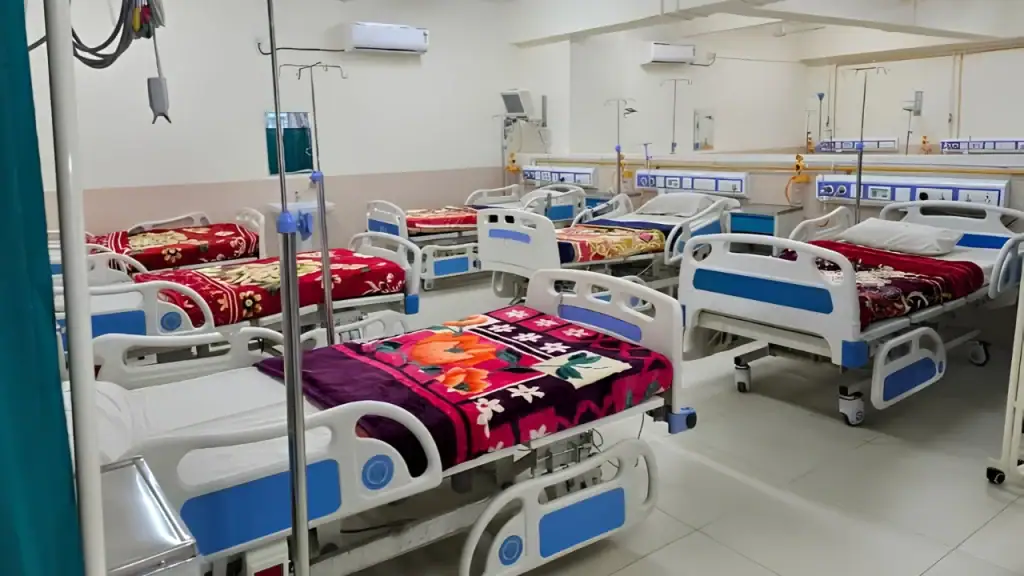
The counter-evidence is that Nepal has built ahead of usable demand before, and the warning signs are already in the data. Start with the beds that are supposed to be full and are not. Private, community, and public hospitals are required to reserve 10 percent of their beds for free treatment of economically disadvantaged patients, a right rooted in Article 35 of the constitution. As of mid-2026, of about 23,200 beds nationwide, 2,671 were designated free, yet only 341 were occupied, leaving roughly 2,330 empty, close to 87 percent vacant. At Nepal Medical College, none of the 84 free beds were in use. Bir Hospital had five of 65 occupied. The Health Insurance Board had reimbursed hospitals more than Rs 273.78 million for free treatment, so the money is moving even as the beds sit idle. Empty free beds do not prove the buildings are unneeded, but they do show that adding capacity does not automatically convert into care delivered. The binding constraints are awareness, paperwork, trust, and how beds are assigned department by department, none of which a new tower fixes.
Occupancy at paying private hospitals has also softened. Reporting from Lalitpur’s 100-bed Alka Hospital described its bed occupancy falling from more than 90 percent to between 50 and 60 percent, with income down by half, while a 100-bed hospital in Dang reported patient flow down as much as 40 percent. Those are single-hospital figures rather than a national index, but they point to a market where new beds compete for a patient pool that is not growing as fast as the floor space. Nepal has watched this film in other asset classes: the country poured capital into hotel rooms ahead of the tourists to fill them, and into shopping malls where the shutters often stay down. Undifferentiated general beds risk becoming the hospital version of the same mistake.
There is a second, subtler risk. The reason patients go to Delhi is not primarily that Nepal lacks beds. It is that they do not trust local diagnosis and treatment for complex disease, and that specific capabilities, from advanced oncology to certain transplants, are missing. Floor space does not buy trust or a specialist team. A hospital that opens 300 beds but cannot recruit the oncologists, retain them, and build a track record will not reverse the outflow by its square footage alone. That is what makes hospital real estate different from a warehouse or an apartment block: the building is the smaller part of the asset.
What makes hospital real estate its own asset class
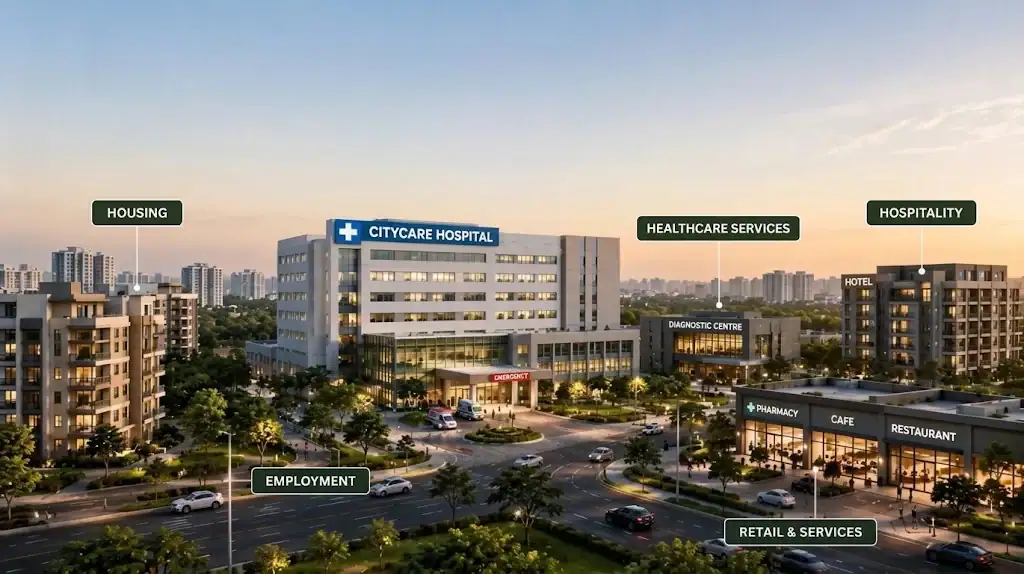
For investors and developers weighing this sector, hospital property behaves differently from the commercial real estate categories Nepal knows better. Three features stand out. First, the operator is part of the asset. CMC Kathmandu’s value proposition is not the 100 ropanis in Tinkune but the Medanta management contract attached to it; a foreign operator agreement can do more for occupancy than another floor. Second, the specialty mix determines the economics. Cancer care, cardiac work, and transplants command different volumes and margins from a general ward, and they are also the services that keep patients from flying out, which is why the new projects lead with super-specialty labels rather than bed counts alone.
Third, a major hospital is an anchor that reshapes the property around it. A 300-bed facility pulls in attendant families, visiting doctors, pharmacies, diagnostic labs, and medical suppliers, which supports demand for nearby rental housing, serviced apartments, and retail space. That spillover is one reason land near large new hospitals tends to hold value even when wider markets cool, and it is a factor worth checking in listings and price trends on platforms such as Basobaas when assessing plots in areas like Tinkune or around the Patan expansion. The flip side is concentration risk: if a flagship hospital stalls or half-fills, the surrounding commercial bets built on its footfall are exposed with it.
Financing is changing too. HAMS turning to the stock market for equipment capital signals that hospital operators are beginning to tap public funds rather than relying only on promoter money and bank loans. If that IPO clears the regulator, it would give the sector a price signal it has never had, and open hospital real estate to ordinary investors. It would also import the discipline of public disclosure into an industry that has largely operated behind closed books.
The public hand on the market
Private capital is not building in isolation. The federal government allocated about Rs 96.38 billion to the Ministry of Health and Food Safety for the current fiscal year, equivalent to 4.44 percent of the national budget, with the wider health-sector figure cited in the budget speech at Rs 101.95 billion once insurance and other programs are counted. The budget included roughly Rs 9.40 billion for an integrated health infrastructure program and about Rs 5.90 billion to finish 336 basic hospitals that remain under construction, several of them years behind schedule. That public pipeline matters for the private bet in two ways. Where the state eventually delivers functioning basic and referral hospitals, it relieves pressure that private operators are currently pricing in; where it does not, it leaves room the private sector will try to fill. Either way, the health budget is a variable in the real estate model, not a bystander. Readers tracking these projects alongside the rest of the market can follow updates in the BiznesVue real estate section.
The honest read is that Nepal’s hospital build-out is a reasonable bet made in a market that punishes reasonable bets executed poorly. The demand that leaks to Delhi is real, the bed supply is genuinely thin, and a well-run specialty hospital with a credible operator can capture both. But beds alone have never been the constraint, and the country’s record with empty free beds, softening private occupancy, and overbuilt hotels and malls is a caution that floor space is the easy part. The hospitals that pay off as real estate will be the ones that solve for trust, specialists, and operations, not just square meters.
Frequently Asked Questions
How much is being invested in new private hospitals in Nepal?
Individual projects now run into billions of rupees. CMC Kathmandu in Tinkune is a 300-bed cancer hospital with an investment of more than Rs 12 billion, CMC Hetauda is estimated at around Rs 2.5 billion, and HAMS Hospital’s expansion to 200 beds is budgeted at about Rs 50 crore. On the public side, Patan Hospital’s upgrade to 1,200 beds is estimated at Rs 10.73 billion.
Why are Nepali hospitals being treated as a real estate asset class?
Because the projects are large, land-intensive, and increasingly financed like property developments, with foreign management contracts, planned public share issues, and spillover effects on surrounding land and rental values. A 300-bed hospital on 100 ropanis functions as an anchor asset that reshapes demand around it, the same way an office tower or a mall does.
Is there enough demand to fill all these new hospital beds?
The demand case is mixed. Nepal has only about 0.54 beds per 1,000 people, and an estimated 600 Nepalis travel to Delhi daily for treatment, which argues for more capacity. But thousands of mandated free beds sit empty, and occupancy at some private hospitals has fallen from above 90 percent to 50 to 60 percent, which suggests new general beds may struggle to fill.
What is the biggest risk to the hospital building boom?
Oversupply of undifferentiated beds, and the fact that floor space does not solve the real problem. Patients go abroad mainly because they do not trust local care for complex disease and because specific specialties are missing. A hospital that cannot recruit and retain specialists or build a track record will not reverse that outflow, whatever its size.
Can ordinary investors buy into Nepal’s hospital sector?
Not yet through the stock market, but that may change. HAMS Hospital says it is the first hospital in Nepal to file an IPO application that met the securities regulator’s criteria, pending for about two years. If it clears, it would let retail investors take a stake in a hospital operator and give the sector its first public price signal.
How does the government budget affect private hospital investment?
The state allocated about Rs 96.38 billion to the health ministry this fiscal year, including roughly Rs 5.90 billion to complete 336 under-construction basic hospitals. Where the government delivers working hospitals, it relieves pressure private operators are pricing in; where it falls short, it leaves gaps the private sector will try to fill. The health budget is an input to the real estate model, not a separate story.