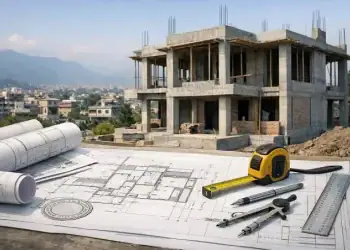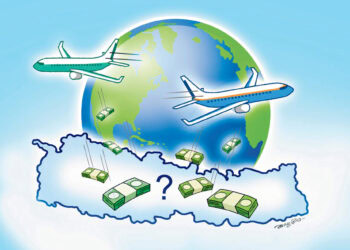
Rs 650 billion is now sunk into Nepal’s hotel sector, and the buildings it paid for can house roughly 4 million tourists a year. In 2025, 1,158,459 showed up. That gap, capacity for nearly four visitors for every one who actually arrives, is the single most important number in Nepali commercial real estate right now, and it explains why the country’s luxury hotel boom is better understood as a bet than a sure thing.
Key Takeaways
- Total hotel investment in Nepal has reached Rs 650 billion, per the Department of Tourism, built up from Rs 543 billion two years earlier plus about Rs 100 billion since.
- The Hotel Association Nepal puts national accommodation capacity at nearly 4 million tourists a year against about 1.2 million foreign arrivals, a supply-to-demand ratio of roughly 3 to 1.
- Nepal drew 1,158,459 international visitors in 2025, up just 0.96 percent from 1,147,548 in 2024 and still about 97 percent of the pre-pandemic peak, according to the Nepal Tourism Board.
- Average hotel occupancy in Bagmati Province was 57 percent in FY 2081/82, up from 51.9 percent, peaking at 67.8 percent in Kartik and falling to 44.7 percent in Magh, per Nepal Rastra Bank’s Economic Activities Study.
- The Department of Tourism classifies over 350 star hotels, including 3 five-star deluxe, 28 five-star, and 40 four-star properties, with the Rs 15 billion, 150-room Ritz-Carlton Kathmandu and a Westin still to come.
- September 2025 arrivals fell 18.85 percent year over year during the Gen Z protests, a reminder that Nepali hotel demand carries political as well as seasonal risk.
The math behind the boom

Start with supply. The Department of Tourism counts more than 350 classified hotels: 3 five-star deluxe, 28 five-star, 40 four-star, 37 three-star, 49 two-star, and 44 one-star properties, alongside a much larger pool of unclassified rooms. Hotel Association Nepal President Binayak Shah has said the total stock can accommodate close to 4 million guests annually. Investment tracks that build-out. Department of Tourism figures cited by myRepublica put cumulative hotel investment at Rs 650 billion, with roughly Rs 100 billion added over the past two years.
Now the demand side. The Nepal Tourism Board recorded 1,158,459 international arrivals in 2025, a record in absolute terms but only 0.96 percent above 2024’s 1,147,548 and still shy of the pre-pandemic high. India led with 292,438 visitors (25.2 percent), followed by the United States at 112,316 and China at 95,480. Growth, in other words, has effectively flatlined at just over a million a year while rooms keep coming online. When a market builds four seats for every diner who walks in, the pressure lands on price and occupancy.
Occupancy is rising, but not fast enough to justify the top end
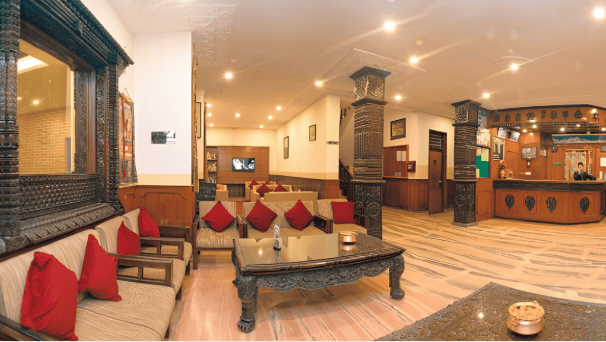
Here is the part that complicates the bearish case. Occupancy is improving. Nepal Rastra Bank’s Economic Activities Study for FY 2081/82 found average hotel occupancy in Bagmati Province, which contains Kathmandu, at 57 percent, up from 51.9 percent the year before. The season peaked at 67.8 percent in Kartik (October to November) and bottomed at 44.7 percent in Magh (January to February), with Mangsir at 63.7 percent, Falgun at 60.5 percent, and Chaitra at 63.6 percent. Those numbers, reported by Fiscal Nepal, describe a sector in genuine recovery.
The problem is what that occupancy level means for a five-star property. Luxury hotels carry the heaviest fixed costs in the industry: financing on a Rs 10 billion to Rs 15 billion build, international brand fees, and large payrolls. As a rule of thumb, full-service luxury assets need annualized occupancy in the mid-60s or higher, at healthy room rates, to comfortably service debt and clear a return. A 57 percent provincial average that swings down to 44.7 percent for a full winter quarter leaves thin margin, and it is an average across all star tiers, not the premium segment alone. The hotels adding rooms fastest are precisely the ones that need the market to run hottest.
The luxury pipeline keeps filling
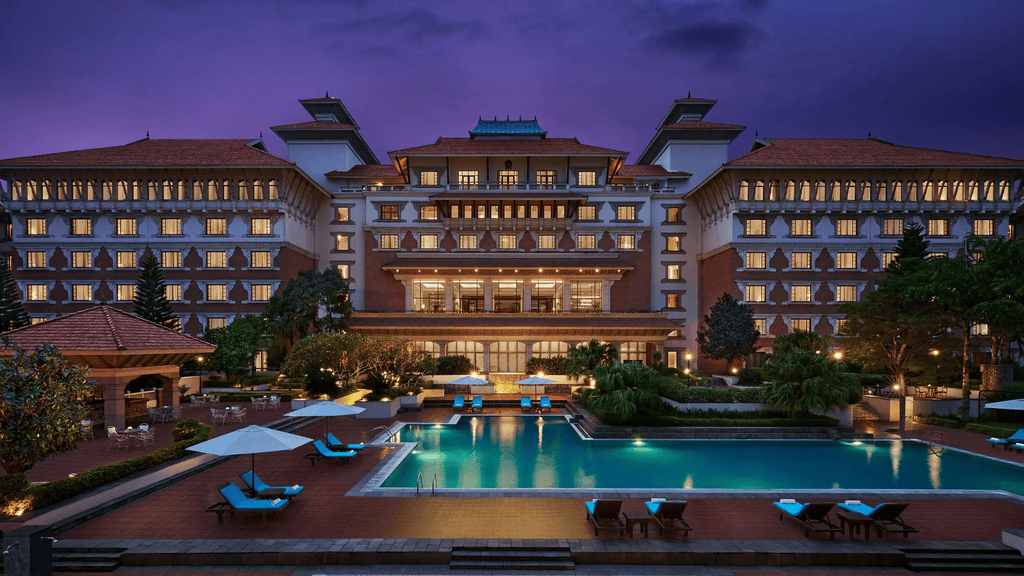
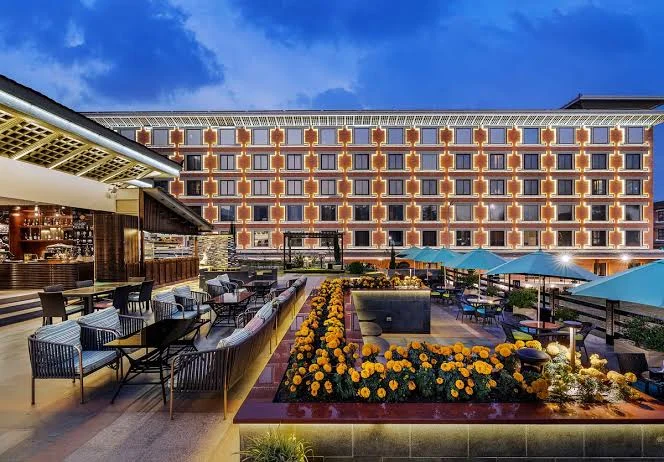
Supply is still expanding at the top. The Ritz-Carlton Kathmandu, a Marriott International partnership with CG Hospitality, is under construction in Thamel with 150 rooms and an investment of about Rs 15 billion. A Westin Kathmandu is also in the pipeline, joining a five-star roster that already includes Kathmandu Marriott, Hyatt Regency, Hyatt Place, Aloft, Radisson, Sheraton-affiliated and domestic flagships such as Soaltee, Yak and Yeti, and Dwarika’s, per the Hotel Association Nepal directory. Each new branded tower raises the aggregate room count faster than arrivals are growing.
This is not automatically a mistake. International brands widen Nepal’s appeal to higher-spending travelers, MICE (meetings, incentives, conferences, exhibitions) business, and regional weekenders, demand that domestic hotels historically struggled to capture. A deeper luxury bench can lift average spend per visitor even if headcount stays flat, and rising domestic tourism has propped up occupancy in pockets like Mustang and Pokhara. The bet is that Nepal grows into its rooms. The risk is timing: the rooms are here now, and the visitors are arriving at roughly the same pace as five years ago.
Where the risk actually sits
The exposure is not only the hotel owners’. Much of this construction is debt-financed, which routes the risk straight into the banking system. Nepal’s banks are already carrying heavy real estate and construction exposure, a vulnerability detailed in BiznesVue’s breakdown of Nepal’s Rs 2 trillion in bank property exposure. A cluster of large hotels running below break-even occupancy would strain loan servicing at exactly the lenders already concentrated in property.
Demand is also more fragile than the annual totals suggest. September 2025 arrivals dropped 18.85 percent year over year during the Gen Z protests before recovering, a clean illustration of how quickly political shocks hit occupancy in a country where tourism is a single, weather-and-headline-sensitive revenue line. Layer that on top of a winter trough near 45 percent and the case for adding premium supply on the current demand curve gets harder, not easier. For investors weighing commercial property, the office and retail segment, browsable on marketplaces such as Basobaas, may offer steadier yield than a hospitality market betting on tourist growth that has not yet materialized.
What to watch
The number that settles this debate is arrivals growth, not room count. If Nepal can push past 1.5 million and then 2 million visitors while holding average room rates, the 4 million capacity starts to look like foresight. If arrivals stay pinned near 1.2 million, the excess rooms become a drag on rates, a test of owners’ balance sheets, and a live question for the banks behind them. Occupancy climbing from 51.9 to 57 percent is a real signal in the right direction. It is not yet fast enough to retire the word “gamble.” For the wider market context, see how property stacks up against equities in real estate versus NEPSE and browse more analysis in our real estate coverage.
Frequently Asked Questions
How much has been invested in Nepal’s hotel sector?
Cumulative hotel investment in Nepal has reached about Rs 650 billion, according to the Department of Tourism, up from Rs 543 billion roughly two years earlier plus around Rs 100 billion added since.
How many tourists can Nepal’s hotels accommodate versus how many arrive?
Hotel Association Nepal estimates national capacity at close to 4 million tourists a year, while the Nepal Tourism Board recorded 1,158,459 international arrivals in 2025, a supply-to-demand ratio of roughly 3 to 1.
What is the current hotel occupancy rate in Kathmandu?
Average occupancy in Bagmati Province, which includes Kathmandu, was 57 percent in FY 2081/82 per Nepal Rastra Bank, up from 51.9 percent, ranging from a 67.8 percent peak in Kartik to a 44.7 percent low in Magh.
Which major luxury hotels are being built in Kathmandu?
The Ritz-Carlton Kathmandu (a Marriott and CG Hospitality partnership) is under construction in Thamel with 150 rooms and about Rs 15 billion of investment, and a Westin Kathmandu is also in the pipeline.
Is Nepal’s hotel building boom a risk to banks?
Potentially. Much hotel construction is debt-financed, so hotels running below break-even occupancy could strain loan servicing at lenders already heavily exposed to real estate and construction across the banking system.
How did the September 2025 protests affect tourism?
Arrivals fell 18.85 percent year over year in September 2025 during the Gen Z protests before recovering in later months, underscoring how sensitive Nepali hotel demand is to political disruption.