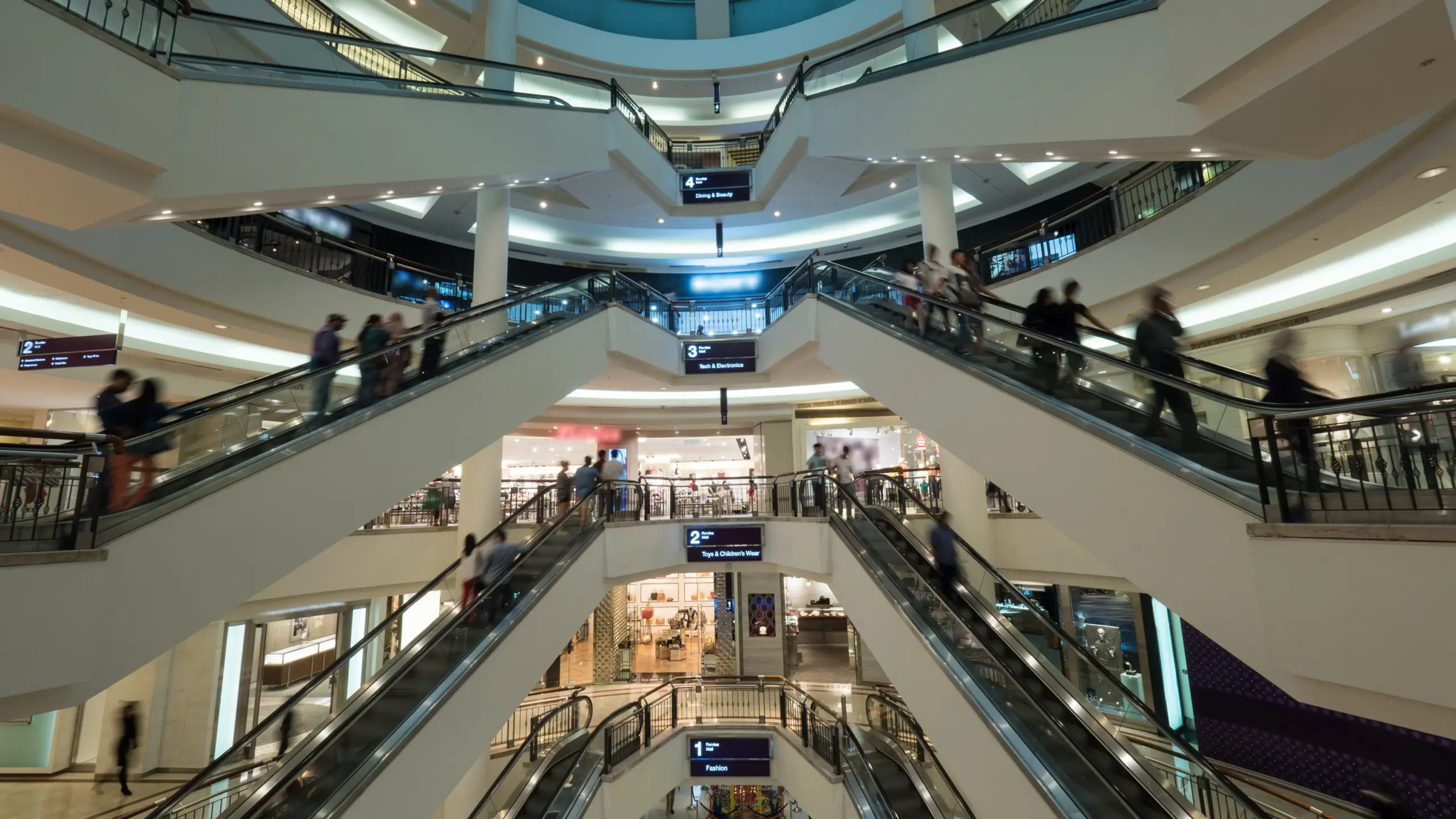
Step onto the escalator inside a mall off Thamel and the first thing you notice is not the shops but the shutters. Rows of them, pulled down, papered over with faded “To-Let” notices, climbing floor after floor above a busy ground level. Kathmandu has spent more than a decade pouring money into enclosed shopping malls. The floor space keeps rising. The shoppers, increasingly, do not.
Key Takeaways
- Kathmandu Valley holds at least a dozen enclosed malls, yet the most detailed public count, a 2020 floor-by-floor survey by the Kathmandu Post, found the flagship Chhaya Center only about 39 percent occupied, with 100 of 258 retail spaces leased.
- Chhaya Center opened in December 2018 at a reported cost of around Rs 5 billion and roughly 860,000 square feet of space. CTC Mall (2013, about 320,000 sq ft) and the National Business Trade Center (2014, 523,767 sq ft) added hundreds of thousands more.
- No Nepali agency measures mall occupancy or footfall. Kathmandu Metropolitan City has issued permits for 832 commercial buildings since 2016 but does not track malls as a category.
- Vacancy widened in the 2022 to 2023 downturn: Bishwajyoti Mall was reported more than half empty, and New Baneshwor shop owners put street-level vacancy at 25 to 30 percent.
- Asking rents have not cleared the market. Mall units have carried rents of Rs 210,000 to Rs 275,000 a month even as tenants walked away, and the wholesale and retail trade sector, about 15 percent of GDP, contracted 2.96 percent in FY 2022/23.
A decade of building on the supply side
The mall wave in Kathmandu is recent and concentrated. CTC Mall in Sundhara, nine storeys, went up in 2013. The National Business Trade Center followed in 2014 with 523,767 square feet. Chhaya Center in Thamel, one of the largest, opened on December 25, 2018, at a reported cost near Rs 5 billion and roughly 860,000 square feet across its retail floors, per compiled mall records and contemporaneous reporting. Star Mall in Putalisadak had opened two years earlier, in 2016.
Nobody counts the total. Kathmandu Metropolitan City has approved 832 commercial buildings since 2016, including malls, but its building division does not separate malls from other commercial permits. In the year before the 2020 survey, the city issued 15 permits for commercial structures above 10,000 square feet, and 16 the year before that. Each of those projects adds leasable retail area to a market that, by every public account, already struggles to fill what exists.
Empty before the paint dries
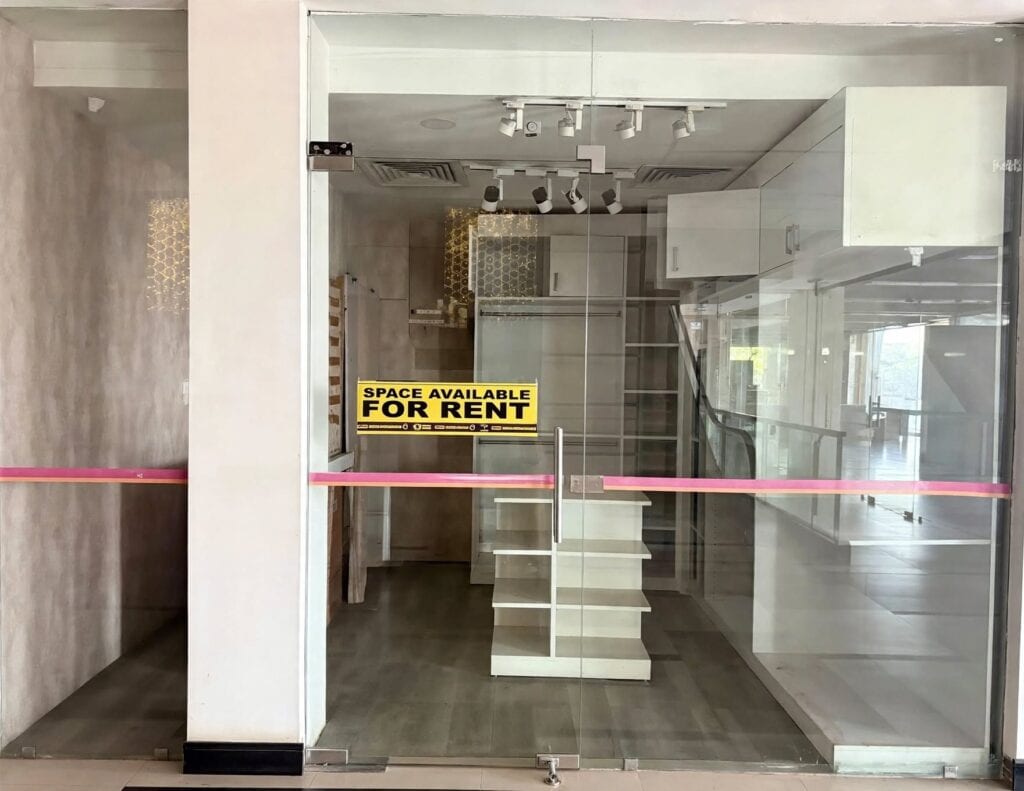
The demand side tells a harder story. When the Kathmandu Post walked nearly a dozen Valley malls over two weeks in early 2020, only a handful had steady customers. At Chhaya Center, the marketing manager put occupancy at about 100 of 258 spaces. The ground floor alone had 53 of 82 units empty; the second floor, 38 of 76. The one space that reliably drew crowds was the top-floor cinema. You can read the full account in the Kathmandu Post’s 2020 survey.
Other buildings quietly stopped being malls at all. CTC Mall, by 2020, had no retail shops: its floors had been leased to a bank and two cinema halls. Star Mall filled six of its seven floors with education consultancies rather than stores. This is the pattern that matters for anyone underwriting a project. A mall that cannot lease to retailers does not sit empty forever. It converts, floor by floor, into offices, classrooms, restaurants and screens, which is a different and usually lower-yielding business than the one the developer financed.
The 2022 to 2023 liquidity crunch deepened the gaps. By mid-2023, Bishwajyoti Mall was described as more than half vacant, and the chair of the New Baneshwor Business Association estimated 25 to 30 percent of street-level shutters in his area stood empty. The Confederation of Nepalese Industries, citing its own market observation rather than a formal census, said roughly 35 percent of businesses had closed during the squeeze.
Rents that will not clear
Price is where the oversupply becomes visible on a balance sheet. A clothing store at Kathmandu Mall was paying Rs 210,000 a month before its owner abandoned it after Rs 10 million in losses. Some mall units carried asking rents near Rs 275,000 a month while sitting unlet. In Mangalbazar, a businessman described landlords who once refused offers above Rs 1.5 million now ready to leave at around Rs 500,000. Prime street shops in areas like Koteshwor and New Road ran at least Rs 40,000 a month and had been climbing roughly 10 percent a year into the downturn.
Sticky rents are not irrational. Many of these buildings are leveraged, and a landlord who cuts the rent crystallizes a lower valuation and may breach loan covenants. So shutters stay down and notices stay up rather than rents resetting to what tenants will pay. For a prospective tenant comparing commercial listings on marketplaces such as Basobaas, the gap between asking rents and achievable sales is the single number worth stress-testing before signing.
The macro squeeze and the online shift

Two forces sit underneath the empty floors. The first is the broad consumption cycle. Wholesale and retail trade, together with vehicle repair, make up about 15.39 percent of Nepal’s GDP, and that sector contracted 2.96 percent in FY 2022/23 after growing 7.46 percent the year before. The wider economy has since recovered, with real GDP growth estimated at 4.61 percent in FY 2024/25 by the National Statistics Office, according to Nepal Rastra Bank data, but a recovery in output is not the same as foot traffic returning to a specific mall.
The second force is structural. Shoppers who can afford mall brands increasingly buy abroad or online, while middle and lower-income buyers never shifted to malls in the first place. E-commerce is not a clean winner either: Thulo.com reported online demand falling 40 percent in the 2023 slump, Daraz cut 11 percent of its workforce, and Sastodeal, which claimed 10 million users, shut down. The takeaway for real estate is not that online killed the mall. It is that total retail demand is thin and fragmented, and a glossy enclosed format is an expensive way to chase it.
What it means for developers and investors
The honest reading is that Kathmandu has built retail floor space faster than it has built the spending to fill it, and that several named projects have struggled publicly. That does not make every mall a loss. The spaces that hold up share features: an anchor that pulls daily traffic, a strong cinema or food-and-beverage draw, a genuine catchment, and mixed-use income from offices or parking that does not depend on apparel tenants. Labim Mall in Lalitpur and supermarket-anchored formats have fared better than standalone retail towers precisely because they are destinations, not just leasable square feet.
The risks run in the other direction. Economists quoted over the years have pointed to a bandwagon effect, little or no market research before construction, and financing that leans on bank credit. That last point is not abstract: construction and real estate are where Nepal’s rising bad loans are concentrated. The same measurement vacuum that hides mall occupancy also hides office vacancy, as we found looking at Kathmandu’s office market, and it mirrors the capacity-versus-demand gap running through Nepal’s hotel oversupply. Across offices, hotels and malls, the common thread is commercial supply built on confidence rather than measured demand. For more on how these markets connect, see our Real Estate coverage.
Before committing capital to a mall, or a shutter inside one, the questions are concrete: who is the anchor, what is the realistic daily footfall, what rent will tenants actually pay rather than what the landlord asks, and how much of the income can come from uses that survive a weak retail year. Until Nepal starts measuring mall occupancy and footfall the way mature markets do, those answers come from walking the floors and counting shutters yourself.
Frequently Asked Questions
How many shopping malls does Kathmandu have?
There is no official register, but public records list at least a dozen enclosed malls in the Kathmandu Valley, including Chhaya Center, CTC Mall, the National Business Trade Center, Civil Mall, Bishwajyoti Mall, Star Mall and Labim Mall in Lalitpur. Kathmandu Metropolitan City has permitted 832 commercial buildings since 2016 but does not classify malls separately.
Why are so many Kathmandu mall spaces empty?
Developers added retail floor space faster than consumer spending grew. Higher-income shoppers buy abroad or online, middle-income buyers favor street shops and supermarkets, and the 2022 to 2023 liquidity crunch pushed many tenants out. Asking rents have stayed high even as sales fell, so units sit vacant rather than reletting at lower prices.
What occupancy do Kathmandu malls actually run at?
No agency measures it. The most detailed public figure is from a 2020 Kathmandu Post survey that found Chhaya Center about 39 percent occupied, with CTC Mall holding no retail tenants at all. In 2023, Bishwajyoti Mall was reported more than half empty and New Baneshwor street vacancy was put at 25 to 30 percent.
How much does mall retail space rent for in Kathmandu?
Reported asking rents for mall units have ranged from roughly Rs 210,000 to Rs 275,000 a month, with prime street shops starting around Rs 40,000. Many of these rents did not clear the market during the downturn, and landlords in some areas have signaled willingness to accept far less than they once demanded.
Are malls a good real estate investment in Nepal?
It depends entirely on the specific asset. Malls with a strong anchor, a cinema or food draw, a real catchment and mixed-use income have held up, while standalone retail towers built without market research have struggled. Because construction lending is where Nepal’s bad loans concentrate, a leveraged mall with weak footfall carries real financial risk.