Walk into Chhaya Center in Thamel on a weekday and the building tells two stories at once. Upstairs, the 167-room Aloft hotel runs its lobby and bar. Down on the retail floors, rows of shutters stay closed. The same structure that keeps a branded hotel busy cannot fill its shops. That split is the central puzzle of Kathmandu’s newest building type: the mixed-use, podium-and-tower complex that stacks a mall, offices, a hotel and apartments into one address.
Developers keep betting on the format anyway, and the timing is not accidental. Nepal’s property market is climbing out of a slump. Land revenue reached Rs 60.74 billion in fiscal year 2025-26, the highest in three years and well above the Rs 42.42 billion of 2023-24, according to Department of Land Management and Archives figures reported by the Kathmandu Post. Urban land is where the value concentrates: metropolitan and sub-metropolitan areas account for just 4.1 percent of transaction volume but 13 percent of market value, per Nepal Rastra Bank data. When land inside the Ring Road is scarce and expensive, building up and combining uses is the obvious response. Whether it pays off is a separate question.
Key Takeaways
- Kathmandu’s largest mixed-use complexes fold retail, offices, hotels and serviced apartments into a single structure. Chhaya Center in Thamel spans 431,150 sq ft and includes a 167-room Aloft hotel, three cinemas, a mall and office space.
- Stacking uses diversifies income but does not guarantee tenants. In 2020 only about 100 of Chhaya Center’s 258 retail units were occupied even while the hotel operated, a warning that a strong anchor does not fill the podium below it.
- Height is capped. The Civil Aviation Authority’s Obstacle Limitation Surface rule limits buildings within 10 km of Tribhuvan International Airport to 19 stories, which forced Durbar Marg’s Annapurna Square to scale back a planned 25-story tower.
- Annapurna Square, budgeted at over Rs 6 billion and billed as Nepal’s largest hotel project, pairs a 330-room ITC-managed hotel with 40 serviced apartments and a business complex, with completion targeted for 2028.
- Building code raises the entry cost. Kathmandu Metropolitan City’s Building Construction Standards 2080 require parking on 20 percent of the plot and mandatory geotechnical investigation for any structure above 17 meters or 10,000 sq ft.
- Civil Trade Centre in Sundhara shows the smaller, squatter version: a nine-story block with 240 shops on its lower four floors and 190 offices above, built for a claimed Rs 2.5 billion.
What “Podium-and-Tower” Means in Kathmandu
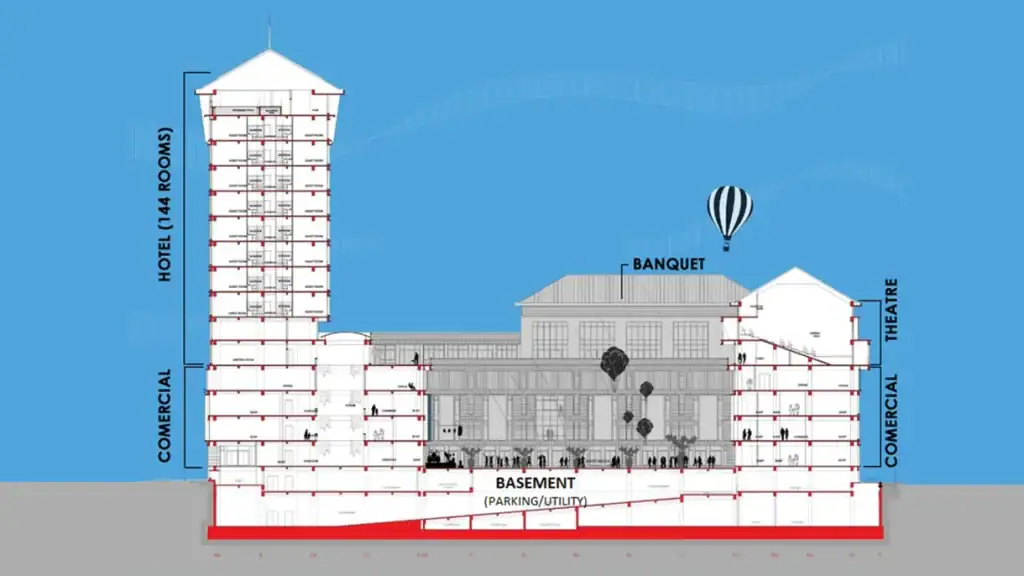
In global commercial real estate, podium-and-tower describes a wide, low base of a few floors, the podium, usually holding retail, a lobby and parking, topped by one or more slim towers of offices, hotel rooms or apartments. The podium captures street-level footfall and ground value; the towers multiply the rentable area on a constrained plot. In Dubai or Singapore the towers can run 40 or 50 stories. In Kathmandu they cannot, and that single fact reshapes the economics.
The binding constraint is aviation safety. The Civil Aviation Authority of Nepal assesses tall buildings against its Obstacle Limitation Surface guideline and caps structures within 10 km of an airport at 19 stories, a rule that covers most of the Kathmandu Valley given the airport’s central location. Kathmandu Metropolitan City requires aviation clearance before it approves tall-building designs, and non-compliant structures can be ordered demolished. The result is a squatter form than the term usually implies: a broad commercial podium carrying towers that top out in the teens, not the dozens, of floors.
The Projects That Define the Format
Chhaya Center, Thamel

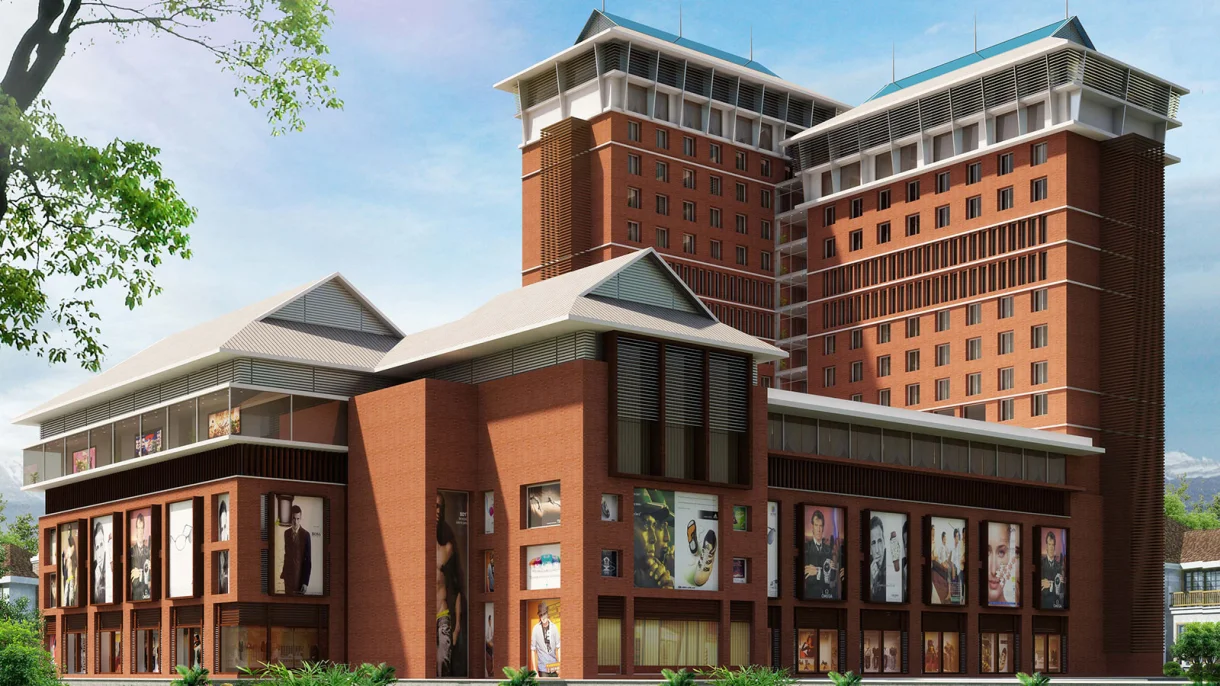
Chhaya Center is the clearest built example of the type. The complex covers 431,150 sq ft of built-up area on roughly 14 ropani in the heart of Thamel, combining a mall, office space, three cinema screens, an art gallery, a central courtyard for events and a five-star Aloft hotel with 167 rooms. It is the kind of single-site diversification the model promises: a tourist hotel, entertainment and shopping under one roof in Nepal’s densest visitor district.
The retail performance has been the weak link. A 2020 Kathmandu Post survey found just over 100 of the center’s 258 retail spaces occupied, with the top-floor cinema the most reliable draw. Many units had been bought but never opened. This is the cautionary half of the story and it connects directly to a broader pattern covered in our report on Kathmandu’s mall glut: adding a hotel or offices above a mall does not, on its own, generate shoppers for the floors below.
Annapurna Square, Durbar Marg
Rising on the site of the demolished Hotel Annapurna, Annapurna Square is the most ambitious mixed-use project in the pipeline and a direct illustration of the height ceiling. Its backers planned 25 stories; the Civil Aviation Authority blocked that, and the design was brought within the 19-story limit. The program combines a 330-room luxury hotel to be run under ITC Hotels’ Welcome brand, a business complex and 40 serviced apartments. Budgeted at more than Rs 6 billion and chaired by Min Bahadur Gurung, it is described as Nepal’s largest hotel project and is scheduled to open by 2028.
The 40 serviced apartments are worth noting. They point to a wider diversification beyond the hotel room and the retail unit, and they sit alongside the broader hotel supply question we examine in our coverage of Nepal’s growing luxury hotel pipeline, where star-category occupancy has run near a third. A mixed-use complex spreads that risk across uses, but it does not remove it: a 330-room hotel still has to find guests.
Civil Trade Centre and Labim Mall
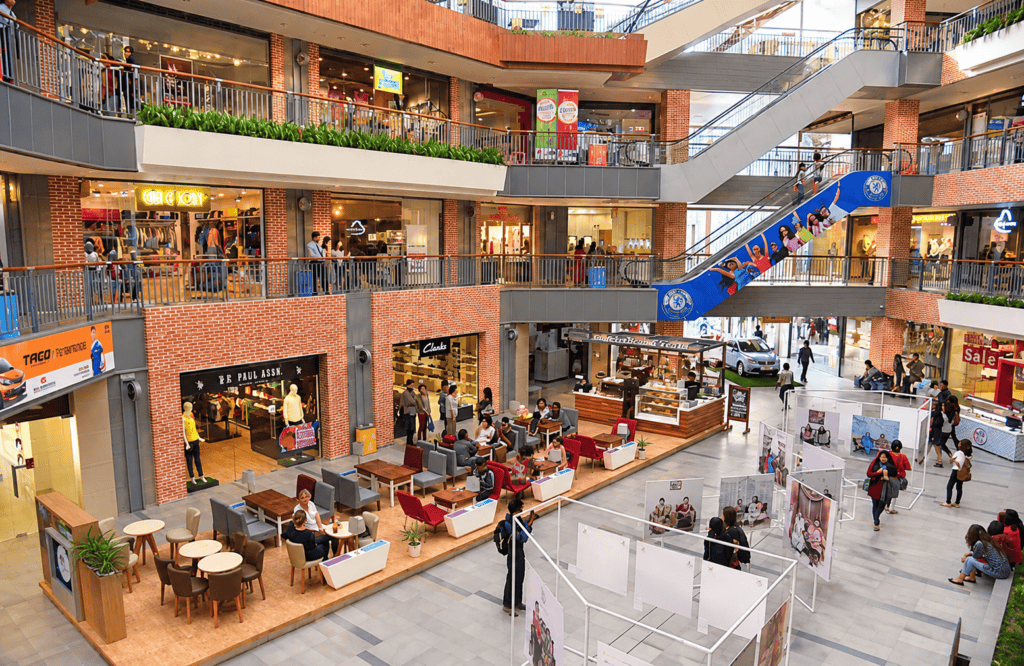
Not every mixed-use building reaches for a tower. Civil Trade Centre in Sundhara, built by the Civil Group for a claimed Rs 2.5 billion, is a nine-story block on about six ropani: 240 shops across the lower four floors, 190 offices on floors five through eight, two cinema halls and rooftop dining. It is a vertical stack of retail and offices rather than a hotel play. Labim Mall in Pulchowk, Lalitpur, built across roughly 200,000 sq ft, took the opposite tack and stayed almost purely retail and entertainment, and reported its lots fully leased after opening. The contrast matters: the more uses a developer stacks, the more complex the financing, leasing and management become.
Why Developers Keep Stacking Uses
The logic is sound on paper. Prime Valley land is costly and scarce, so spreading its cost across more sellable and rentable floors improves the return per square foot of ground. Different uses also smooth income: a hotel earns through tourist seasons, offices lock in multi-year leases, and retail and dining draw daily traffic that benefits the whole building. The office side of this has genuine momentum, as our report on Kathmandu office space documents, with IT and corporate tenants seeking modern, serviced floors that older standalone buildings cannot offer. A complex that puts a hotel’s footfall, parking and services beneath an office tower can command a premium that a bare office block cannot.
There is a capital-markets angle too. Large mixed-use projects are easier to finance as anchored, diversified assets than as single-use malls, which lenders and the central bank have grown wary of after years of weak mall absorption. A hotel operator’s brand and a signed office tenant give a bank something to underwrite beyond speculative retail demand.
The Costs and Risks Behind the Model
Against that upside sit real constraints. The first is the height cap: at 19 stories, Kathmandu’s towers cannot spread fixed land and foundation costs over as many floors as peers abroad, which thins the margin that makes podium-and-tower attractive in the first place. The second is code. Kathmandu Metropolitan City’s Building Construction Standards 2080 require parking on 20 percent of the plot, a mandatory geotechnical investigation for any structure above 17 meters or 10,000 sq ft, and a formal appraisal for large commercial buildings. In a seismic zone, that engineering is not optional; the cost of getting it right is covered in our guide to earthquake-resistant construction in Nepal.
The third risk is the one Chhaya Center already demonstrates: demand for the podium is not automatic. Mixed-use succeeds when each use genuinely supports the others, not when uses are simply piled up to justify the land price. When retail units are pre-sold to individual owners rather than leased to coordinated tenants, the result is the fragmented, half-shuttered mall floor that hurts the whole building’s reputation. Buyers of apartments or strata-titled units in these complexes face the same common-area and service-charge questions we lay out for anyone buying an apartment in Nepal, and those obligations run for the life of the building.
What It Means for Investors and the Market
Podium-and-tower is a rational answer to Kathmandu’s land scarcity, and the recovery in transactions and revenue gives developers a reason to build now. The format’s diversification is a real advantage over the standalone mall, whose record in the Valley has been poor. But the evidence counsels caution rather than enthusiasm. A hotel brand and an office anchor can carry a project; a speculative retail podium sold off unit by unit can sink its reputation even when the rest of the building works. For anyone evaluating space in these complexes, whether an office floor, a retail unit or a serviced apartment, the questions to ask are concrete: who manages the leasing, how is the podium tenanted, what are the recurring service charges, and does the engineering meet code. Comparing current office and retail listings on a marketplace like Basobaas is a useful starting point for gauging real asking rents against a project’s pitch.
The next few years will test the model. If Annapurna Square opens on time and leases its office and serviced-apartment space, it will validate the vertical, branded approach. If its retail and apartment floors follow Chhaya Center’s early path, it will confirm that stacking uses is no substitute for filling them. For more on the Valley’s commercial property shifts, see our full real estate coverage.
Frequently Asked Questions
What is a mixed-use podium-and-tower development?
It is a building that combines several uses in one structure, typically a wide low base (the podium) holding retail, parking and a lobby, topped by one or more towers of offices, hotel rooms or apartments. In Kathmandu, examples include Chhaya Center in Thamel and Civil Trade Centre in Sundhara, which stack malls, offices, cinemas and hotels into a single address.
How tall can buildings be in Kathmandu?
The Civil Aviation Authority of Nepal limits buildings within 10 km of an airport to 19 stories under its Obstacle Limitation Surface guideline, and that zone covers most of the Kathmandu Valley. Tall-building designs need aviation clearance before Kathmandu Metropolitan City approves them. The Durbar Marg project Annapurna Square was scaled back from a planned 25 stories to comply.
Are mixed-use complexes a safer investment than malls in Nepal?
They can be, because combining a hotel, offices and retail spreads income across uses with different demand cycles, which is harder for a standalone mall to match. But diversification does not guarantee tenants. Chhaya Center’s hotel operated while only about 100 of its 258 retail units were occupied in 2020, showing that each use still has to be leased and managed on its own merits.
What does building code add to the cost of these projects?
Under Kathmandu Metropolitan City’s Building Construction Standards 2080, developers must set aside 20 percent of the plot for parking, commission a mandatory geotechnical investigation for any structure above 17 meters or 10,000 sq ft, and pass a formal appraisal for large commercial buildings. In a seismic area, this engineering is essential and adds materially to upfront cost.
What is Annapurna Square and when will it open?
Annapurna Square is a mixed-use complex on Durbar Marg, built on the former Hotel Annapurna site. It is budgeted at more than Rs 6 billion and combines a 330-room hotel under ITC Hotels’ Welcome brand, a business complex and 40 serviced apartments. It is described as Nepal’s largest hotel project and is targeted to open by 2028.