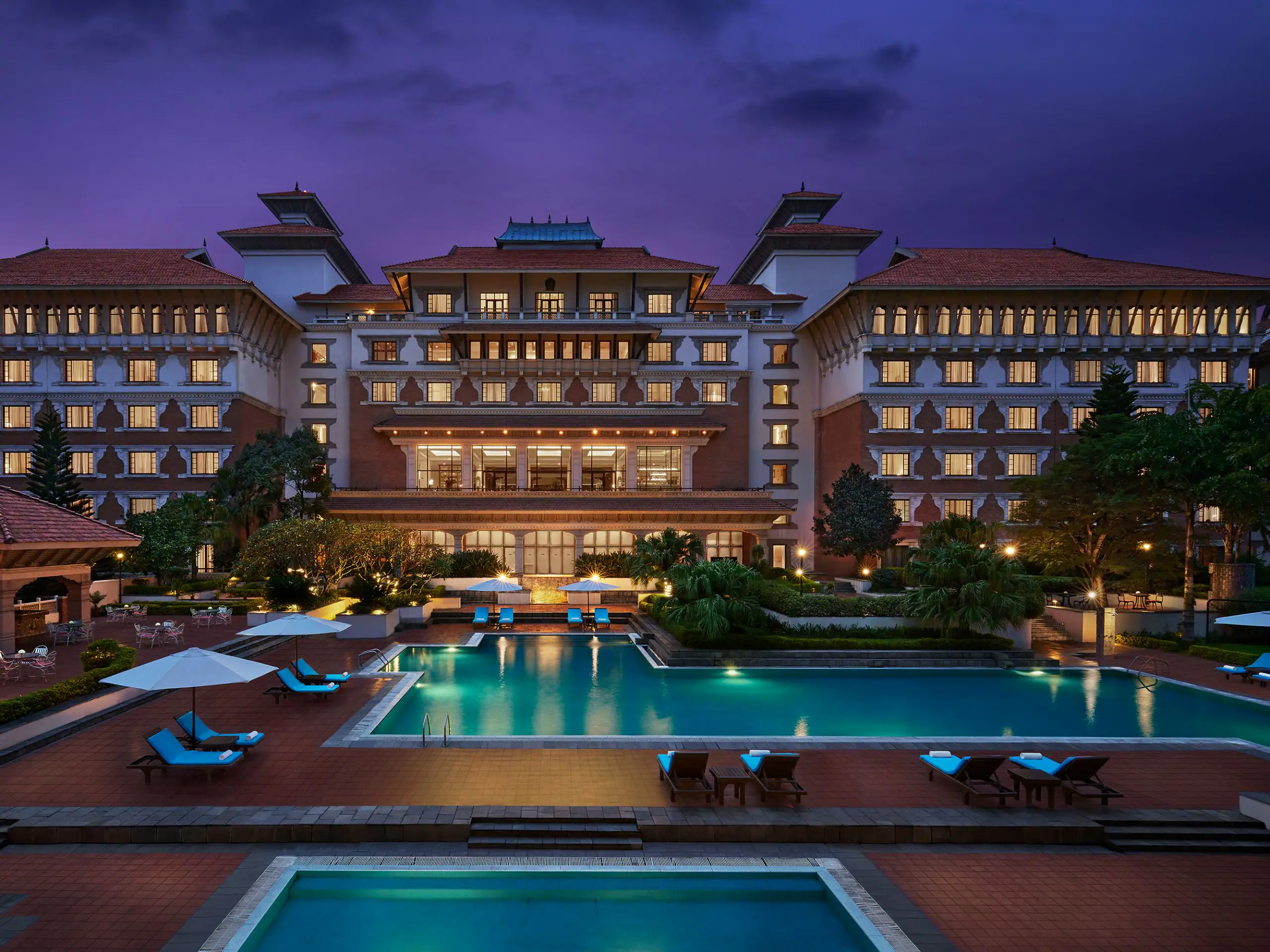
In September 2025, protesters set fire to the Hilton Kathmandu, a 174-room five-star tower in Naxal that Shankar Group had opened barely 14 months earlier after a roughly Rs 8 billion build. A year on, the cranes have not stopped. Marriott’s Luxury Collection is scheduled to open a 225-room property at Kesharmahal in October 2026, and Chaudhary Group’s CG Hospitality is developing a combined 300 rooms of Ritz-Carlton and Westin space slated for 2031. Nepal is adding branded luxury supply at the fastest pace in its history. The uncomfortable question for anyone lending against these towers is who fills the rooms, because star-hotel occupancy sat near 30 percent through late 2025.
Key Takeaways
- Nepal received 1,158,459 international tourists in 2025, up 0.96 percent from 2024 but still below the 2019 record of 1,197,191, according to Nepal Tourism Board data.
- Star-hotel occupancy among Hotel Association Nepal members was around 30 percent in October 2025, which the association’s president says is too low to cover operating costs and loan repayments.
- The Department of Tourism registered 20 new star hotels in three years (four five-star and 16 four-star), and international brands including the Luxury Collection, Ritz-Carlton, and Westin are still in the pipeline.
- Nepal Tourism Board estimates Kathmandu Valley’s hotels can host roughly 3 million visitors a year, nearly triple the current national arrivals, a gap that is compressing room rates.
- Five-star room rates in the Valley fell from Rs 15,000 to 20,000 down to Rs 8,000 to 10,000 with meals during the early-2025 slow season.
- Political and security risk is now a line item: around 30 hotels, including the Hilton and Hyatt, were damaged in the September 2025 unrest.
The supply side is running ahead of the country
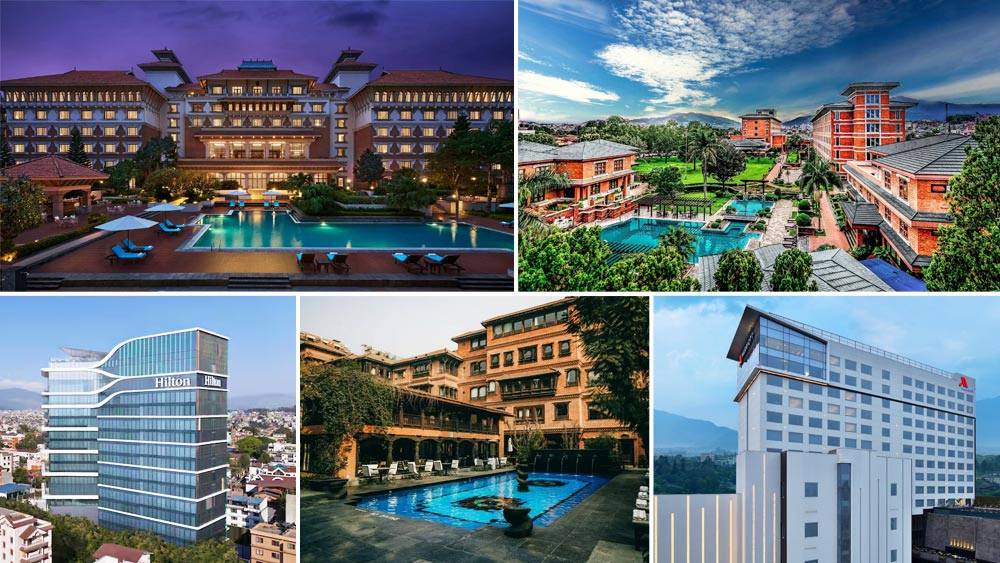
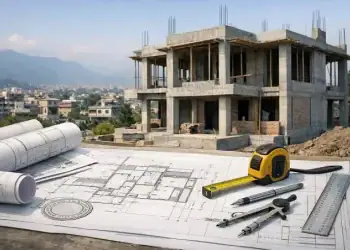
The scale of new construction is easy to document. Nepal’s Department of Tourism registered 20 star hotels over three years, split between four five-star and 16 four-star properties, according to myRepublica. Notably, only one of those 16 four-star hotels opened inside Kathmandu, with the rest spreading to Birtamod, Simara, and other secondary markets. That geographic spread matters, because it shows capital chasing tourism corridors well beyond the traditional Thamel core.
The marquee projects are concentrated in the capital. Marriott’s Luxury Collection, developed by former Non-Resident Nepali Association president Shesh Ghale on 13 ropanis at Kesharmahal, is a 17-storey, 225-room property expected to begin operations in October 2026, per Himal Press. The site was originally laid as a Sheraton in 2014 before the agreement lapsed. Separately, CG Hospitality is building a Ritz-Carlton (150 rooms) and a Westin (150 rooms) in Thamel, together adding 300 high-end rooms by 2031, as reported by Nepali Times. These follow the July 2024 opening of the Hilton Kathmandu, Shankar Group’s Rs 8 billion, 174-room tower in Naxal.
For investors tracking commercial real estate rather than just hospitality, the pattern rhymes with Nepal’s broader building cycle. As with the office and retail supply now listed on platforms such as Basobaas, the risk is not that demand is absent but that new stock is being delivered faster than absorption.
Demand is recovering, but slowly and unevenly
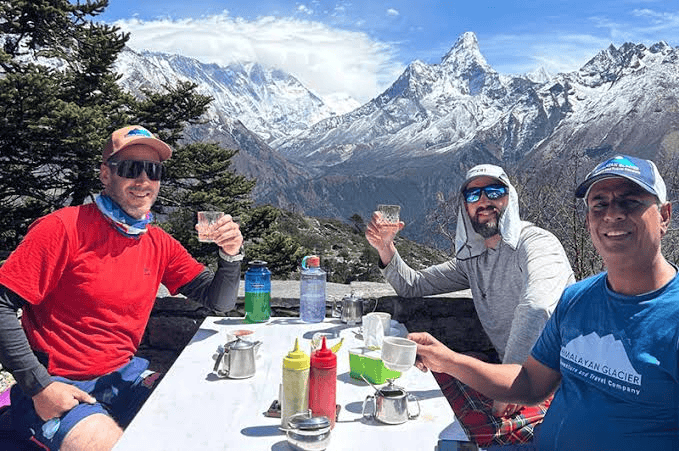
Nepal welcomed 1,158,459 foreign tourists in 2025, a 0.96 percent gain over the 1,147,548 recorded in 2024, according to figures from the Nepal Tourism Board reported by Tourism Info Nepal. That is still short of the 2019 peak of 1,197,191 and far below the long-standing government aspiration of 2 million annual visitors. Arrivals are also concentrated: India alone accounted for 292,438 visitors, or about a quarter of the total, followed by the United States (112,316), China (95,480), the United Kingdom (58,684), and Bangladesh (57,545). A hotel base sized for high-end long-haul travelers depends heavily on markets that make up a minority of the count.
The recovery is fragile at the edges. The September 2025 protest movement cut that month’s arrivals by 18.85 percent year over year, though the trade rebounded, with October, November, and December 2025 each running ahead of 2024. October 2025 drew 128,443 visitors, up 3.3 percent. The headline direction is positive. The problem is the denominator.
The occupancy gap is the whole story

Binayak Shah, president of Hotel Association Nepal, told New Spotlight that occupancy among member hotels was only about 30 percent in October 2025, a level he described as “insufficient to cover expenses and repay loans.” He noted that even as 128,443 tourists arrived that month, the increase “has not translated into higher revenues for formal hotels,” because much of the volume flows to informal accommodation. Earlier in the year the picture was worse at the top end: five-star hotels in Kathmandu Valley averaged roughly 20 percent occupancy after the 2025 New Year period, according to Tourism Info Nepal.
These figures need context, and the fuller picture is less alarming than the 30 percent headline alone. Nepal Rastra Bank’s Economic Activity Study for fiscal year 2024/25 put average hotel occupancy in Bagmati Province at 57 percent, up from 51.9 percent the year before, with a seasonal peak of 67.8 percent between mid-October and mid-November 2024 and a trough of 44.7 percent in the mid-January to mid-February window. The gap between NRB’s provincial average and the association’s star-hotel number is not a contradiction. It reflects the difference between all registered accommodation across a full fiscal year and branded star properties measured in a specific, post-unrest month. Both can be true, and together they show a market where the premium segment carries the most fixed cost and the thinnest occupancy cushion.
The Nepal Tourism Board has estimated that Kathmandu Valley’s hotel infrastructure can accommodate about 3 million tourists a year. With national arrivals at roughly 1.15 million, the structural oversupply is visible in pricing. During the early-2025 slow season, Valley five-star rates fell from Rs 15,000 to 20,000 into the Rs 8,000 to 10,000 range with meals included, a discount that pulls guests down from mid-tier hotels and squeezes the entire chain scale at once.
The risks lenders should price
Hotel development in Nepal is heavily debt-financed, which ties the sector directly to the banking system. BiznesVue’s own analysis of central bank data found that Nepal’s banks are carrying roughly Rs 2 trillion in property exposure, and hospitality loans sit inside that number. When flagship properties run at 30 percent occupancy, debt service becomes the binding constraint, not construction quality.
Political and security risk is no longer theoretical either. During the September 2025 unrest, protesters burned the Hilton Kathmandu and damaged the Hyatt, part of roughly 30 hotels harmed across Kathmandu and Pokhara, according to Hotel Association Nepal. For international operators weighing management contracts, that episode is a reminder that Nepal’s asset base can be exposed to sudden shocks that insurance and forecasting models rarely capture. The 2031 timelines on the Ritz-Carlton and Westin projects give those developers room to wait for demand, but they also lock capital into a market whose absorption curve remains unproven at the luxury tier.
Where the bull case still holds
The case for building is not empty. Branded operators bring booking systems, loyalty networks, and MICE (meetings, incentives, conferences, and exhibitions) demand that independent Nepali hotels have struggled to attract, and their arrival can lift average daily rates across a destination once occupancy stabilizes. Nepal’s arrivals have grown for consecutive years, climbing permits and adventure tourism continue to draw high-spending visitors, and the country remains structurally underpenetrated by global brands compared with regional peers. If arrivals push past the 2019 peak and toward the 2 million target, today’s oversupply becomes tomorrow’s inventory.
The honest read is that the timing risk is real and the reward is back-loaded. A hotel breaking ground for a 2031 opening is a bet that Nepal’s demand curve finally catches up with its supply curve. For investors comparing hospitality with other asset classes, the same discipline applies here as in any real estate versus equities decision: match the holding period to the absorption timeline, and stress-test the loan against a 30 percent occupancy year, not a 60 percent one.
Frequently Asked Questions
Is there a hotel oversupply in Nepal?
At the premium end, yes. Nepal Tourism Board estimates Kathmandu Valley alone can host about 3 million tourists a year, while the whole country received 1,158,459 in 2025. Star-hotel occupancy ran near 30 percent in October 2025, and five-star occupancy dropped to roughly 20 percent earlier in the year, both signs that branded supply is ahead of current demand.
How many tourists visited Nepal in 2025?
Nepal recorded 1,158,459 international tourist arrivals in 2025, a 0.96 percent increase over 2024 but still below the 2019 record of 1,197,191, according to Nepal Tourism Board data. India was the largest source market with 292,438 visitors.
What new luxury hotels are opening in Kathmandu?
Marriott’s Luxury Collection, a 225-room property at Kesharmahal developed by Shesh Ghale, is expected to open in October 2026. Chaudhary Group’s CG Hospitality is building a 150-room Ritz-Carlton and a 150-room Westin in Thamel, both slated for 2031. These follow the Hilton Kathmandu, which opened in July 2024.
What is the average hotel occupancy rate in Nepal?
It depends on the measure. Nepal Rastra Bank’s Economic Activity Study 2024/25 reported average occupancy of 57 percent across Bagmati Province for the fiscal year. Hotel Association Nepal, measuring branded star hotels in October 2025, cited about 30 percent. The star segment carries higher fixed costs, so its occupancy shortfall is more financially painful.
Why did hotel investment continue despite low occupancy?
Most projects were financed and started years before completion, so today’s openings reflect decisions made when arrivals were expected to reach 2 million. Developers are betting on long-term demand growth, brand-driven MICE business, and Nepal’s low penetration by global hotel chains. The tradeoff is timing risk, with several projects not opening until 2031.
How does hotel oversupply affect Nepal’s banks?
Hotel construction in Nepal is largely debt-financed, so it sits inside the banking system’s large property exposure. When flagship hotels operate near 30 percent occupancy, loan repayment becomes difficult, adding stress to lenders already heavily concentrated in real estate. The September 2025 damage to hotels including the Hilton added a further security-risk dimension.
This article is for information only and is not investment advice. For more on the sector, see BiznesVue’s Real Estate coverage.