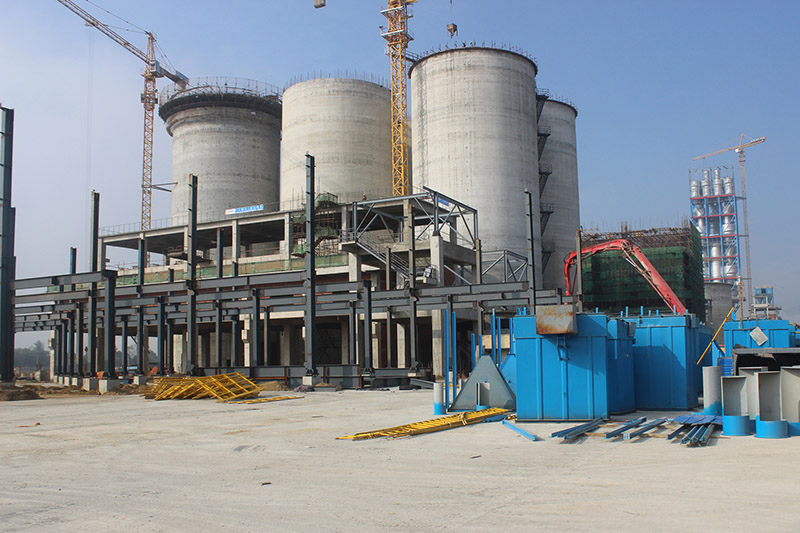
A cement plant cannot pretend. A kiln either runs hot and turns limestone into clinker, or it sits idle and burns money. A rolling mill either pulls billet into reinforcement bar, or its furnace cools. That is what makes cement and steel the most honest reading of Nepal’s property market: they are consumed the moment a foundation is poured and a column is tied, and there is almost no way to fake the demand. Right now the reading is bleak. Nepal’s cement industry can produce roughly 25 million tonnes a year and sells only about 7 to 8 million. Its steel mills hold 3.5 to 4 million tonnes of capacity against domestic demand estimated near 1.2 million. Both industries are running at a fraction of what they built for, and that gap is the clearest physical confirmation of the real estate stagnation that Nepal Rastra Bank now describes in its own macroeconomic data.
Key Takeaways
- Cement runs near one-third of capacity. Installed capacity is about 25 million tonnes a year against domestic demand of roughly 7 to 8 million. Ratings agency CareEdge put average utilization at 30 to 40 percent across FY 2022/23 and FY 2023/24.
- Steel is no better. About 32 operating steel industries hold 3.5 to 4 million tonnes of capacity, while UNDP pegs annual iron and steel demand near 1.2 million tonnes. Industry-wide utilization sits around 40 to 50 percent.
- The weakness tracks the property cycle. NRB’s report for FY 2082/83 flags a “current stagnation in the real estate sector,” and the construction sub-sector has contracted even as overall GDP grew 3.85 percent.
- The export escape valve is closing. India’s safeguard duty cut Nepal’s iron and steel exports by 68.67 percent, from Rs 15.42 billion to Rs 4.83 billion over 11 months, and an unofficial freeze on certification stamps has choked cement exports since 2024.
- This is a banking story too. Close to three-fifths of all bank loans in Nepal are secured against land and buildings, so a frozen building cycle reaches far beyond the two industries.
Why cement and steel read the market better than price surveys

Land prices in Nepal are slow, sticky and easy to misread. A seller can list a plot at an aspirational number and simply wait, so an asking price can stay high for years while almost nothing changes hands. Transaction volumes are more useful, but they move through the land revenue offices with a lag and are shaped by tax rules as much as by appetite. Cement and steel skip all of that. They are bought for projects that are actually being built, in the quarter they are being built, and a bag of cement or a tonne of rebar that goes unsold cannot be stored indefinitely or willed into demand. When silos fill and furnaces idle, construction has slowed, whatever the listing prices say.
That is why the capacity numbers matter more than any single month’s sales. The industries expanded on a forecast of relentless growth. A 2021 Nepal Rastra Bank study on cement projected demand of 25.88 million tonnes by 2024/25, up from 9.05 million in 2018/19. Capacity was chased up to meet that number, roughly from 15 million tonnes then to about 25 million now. The demand never arrived. Actual consumption in 2024/25 was closer to 7 to 8 million tonnes, lower than it had been six years earlier, because the post-earthquake reconstruction wave had crested and the private building boom that was supposed to replace it stalled instead.
The cement glut, in numbers

Nepal reached cement self-sufficiency around 2019, a genuine achievement built on roughly Rs 300 billion of investment and more than a billion tonnes of domestic limestone reserves. The problem is that the country kept building plants after it no longer needed them. CareEdge Ratings found cement factories averaging 30 to 40 percent utilization across FY 2022/23 and FY 2023/24. In Koshi Province, 11 cement factories have shut and only three still operate. The pressure is concentrated in grinding-only units that buy clinker rather than make it, and in older, higher-cost plants that cannot compete on price.
Exports looked like the obvious relief. Nepali cement and clinker began flowing to grinding units in Uttar Pradesh and Bihar from July 2022, and cement export revenue reached about Rs 3.85 billion in FY 2023/24. Then the door narrowed. From 2024, Indian authorities effectively stopped issuing the certification stamps Nepali cement needs to sell across the border, an unofficial embargo that producers have struggled to work around. Cement exports in the first four months of FY 2024/25 slipped to Rs 496 million, down from Rs 585.78 million a year earlier. An industry that overbuilt for domestic demand it does not have is now losing the foreign demand it briefly found.
Steel: the same signal, a sharper shock

Steel tells a parallel story with a harder recent jolt. Nepal has about 83 registered iron and steel factories, including 54 thermo-mechanically treated bar plants, and steel melting capacity crossed 2 million tonnes back in 2022. Against that sits annual demand that the UNDP puts near 1.2 million tonnes, of which rebar is roughly 500,000 tonnes, with domestic makers already supplying about 80 percent. Some producers argue demand runs higher, toward 2 to 2.5 million tonnes in better years, but even the optimistic figure leaves installed capacity far ahead of the market. Premier Steels reported demand falling about 25 percent a year recently, against an industry that had planned for 20 percent annual growth. The direction, not the exact level, is the point.
Then came the border. India imposed a safeguard duty on steel of 12 percent in the first year, stepping down to 11.5 and 11 percent over three years from December 2025. Nepal’s iron and steel exports to India fell 68.67 percent, from Rs 15.42 billion to Rs 4.83 billion over the first 11 months of the fiscal year, wiping out more than Rs 10 billion in earnings in under a year. Nepali mills that leaned on India to absorb output they could not sell at home lost that outlet almost overnight. The result is the same as in cement: weak domestic construction and a shrinking export cushion, stacked on top of each other.
What the mills are confirming about property
Put beside the central bank’s data, the materials picture stops looking like a two-industry problem. In FY 2082/83, Nepal’s economy grew 3.85 percent, but the industrial expansion of 5.67 percent came largely from electricity and gas, which grew around 20 percent on the back of hydropower, not from buildings. NRB records that the construction sub-sector contracted, that private-sector credit growth slowed to about 6 percent against a 12 percent projection, and that the real estate sector is in “current stagnation.” Contractors, meanwhile, say the government owes them around Rs 45 billion, and capital expenditure has fallen to a five-year low. Cement and steel are simply the physical echo of all of that.
The banking exposure is what makes it consequential. NRB reports that close to three-fifths of total loans are secured by land and buildings, with real estate collateral behind 86.5 percent of development bank loans and 84.5 percent of finance company loans. When construction stalls, that collateral gets harder to value and harder to sell, which is why construction is where loan stress is showing first. It also explains the caution in the system’s heavy real estate loan book: lenders financed the building cycle, and the building cycle has gone quiet. Even demand for commercial space is uneven, with newer buildings filling while older stock empties out.
For buyers, the irony is that softer materials demand has not made finished homes cheaper. Listing prices on marketplaces such as Basobaas remain high in the Kathmandu Valley, because land, not cement or rebar, is the dominant cost in a Nepali home, and land sellers have not blinked. The slack is landing on the factories and their lenders, not on the price of a completed house.
The honest caveat
Materials data has limits worth naming. Cement and steel also feed roads, hydropower dams, irrigation and other infrastructure, so their demand is not a pure real estate gauge, and a surge in public works could lift the mills without the housing market moving at all. NRB’s own outlook for FY 2026/27 counts on exactly that, expecting reconstruction and energy projects to support industry. Capacity figures are self-reported and not always consistent across sources, and a single quarter of sales can mislead. But the broad signal is hard to argue with. Two industries that cannot hide idle capacity are both running well below what they built for, at the same time the central bank reports a stalled property market and a strained construction sector. When the kilns run cold and the furnaces idle, that is the building cycle telling the truth.
Frequently Asked Questions
Why are cement and steel good indicators of Nepal’s real estate market?
Both are consumed at the moment a building is actually constructed, not when a plot is listed or priced. Unlike asking prices, which can stay high while nothing sells, cement and steel demand reflects real projects breaking ground in real time. When plants run far below capacity, construction has slowed regardless of what listing prices suggest.
What is Nepal’s cement production capacity and how much is used?
Installed capacity is about 25 million tonnes a year, while domestic demand is only around 7 to 8 million tonnes. CareEdge Ratings estimated average utilization at 30 to 40 percent across FY 2022/23 and FY 2023/24, roughly one-third of what the industry can produce.
How much steel does Nepal consume each year?
A UNDP estimate puts annual iron and steel demand near 1.2 million tonnes, with rebar accounting for roughly 500,000 tonnes and domestic makers supplying about 80 percent. Some producers estimate higher demand, but installed capacity of 3.5 to 4 million tonnes leaves mills running at only about 40 to 50 percent utilization.
Why did Nepal’s steel and cement exports to India fall?
India imposed a safeguard duty on steel of 12 percent from December 2025, cutting Nepal’s iron and steel exports by 68.67 percent, from Rs 15.42 billion to Rs 4.83 billion over 11 months. For cement, Indian authorities effectively stopped issuing required certification stamps from 2024, an unofficial barrier that sharply reduced cement exports.
What does Nepal Rastra Bank say about the real estate slowdown?
In its FY 2082/83 macroeconomic report, NRB describes a “current stagnation in the real estate sector” and notes that the construction sub-sector contracted. It also reports that close to three-fifths of all bank loans are secured against land and buildings, which makes a stalled property market a system-wide concern.
Will cement and steel demand recover in 2026/27?
NRB’s outlook counts on reconstruction and energy projects to support industry in FY 2026/27. Because cement and steel also feed roads, dams and hydropower, a rise in public works could lift the mills even if the housing market stays flat. A durable recovery, however, would need private construction and the property cycle to turn, which the data does not yet show.