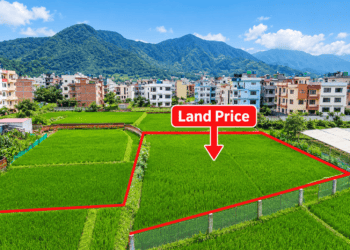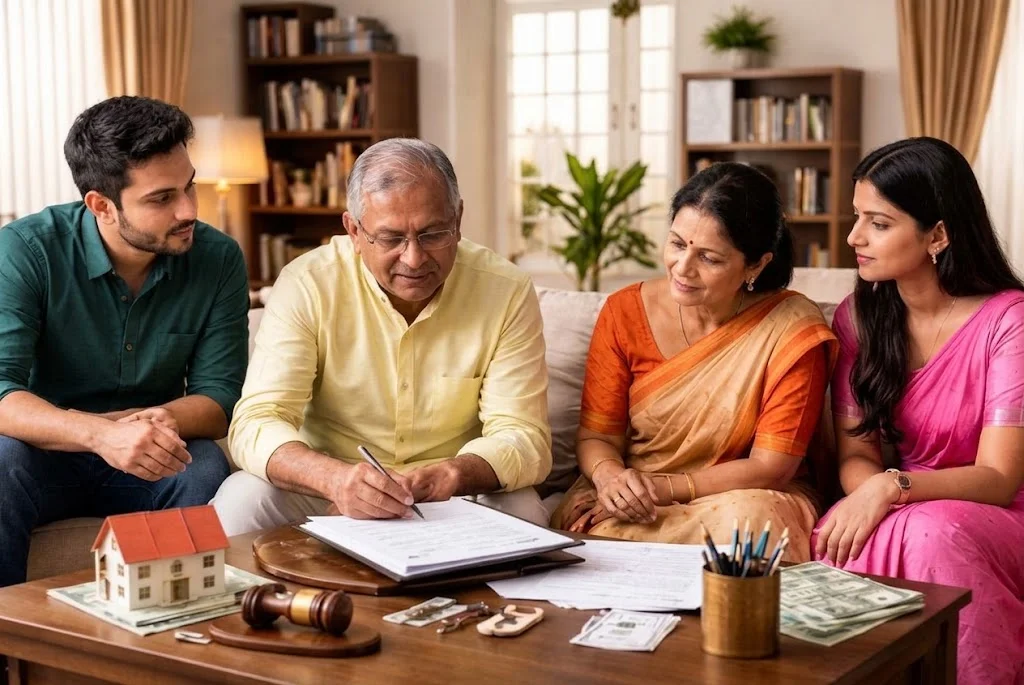
In Nepal, the lalpurja is the only proof of ownership that counts, and when you buy land on installment, you do not hold it until the final rupee clears. Everything before that moment is a promise written on paper. Thousands of buyers sign a bainapatra, hand over a deposit, and start paying in kista believing the plot is theirs. Legally, it is not. The seller still owns the land, and the gap between the first payment and the day a new lalpurja carries your name is where almost every installment and joint-ownership dispute in the country begins.
Key Takeaways
- Ownership in Nepal transfers only when a sale is registered at the Land Revenue Office (Malpot) and a new lalpurja is issued in the buyer’s name. A bainapatra, the sale agreement you sign on installment, is a contract, not title.
- While you pay in installments, the seller remains the legal owner and can mortgage the plot, let a court freeze (roka) attach to it, or, in the worst case, register a sale of the same land to someone else.
- Nepal has no real estate regulator equivalent to India’s RERA and no mandatory escrow, so installment money flows straight to the seller with no statutory refund if a housing project stalls.
- Jointly owned land cannot be sold or mortgaged without the written, notarized consent of every named owner. A single absent or unwilling co-owner can freeze the entire asset.
- Deposits in a bainapatra, often 10 to 20 percent of the price, can be forfeited if the buyer defaults, depending on the terms you sign.
- Registration fees run roughly 4 to 6 percent of the government-assessed value and are set by each municipality. The seller separately owes capital gains tax, which rose to 10 percent in 2026.
Why the lalpurja, not the agreement, is what you own

Nepal’s Civil Code treats a transfer of immovable property as valid only when it is made in writing and registered. Until that registration happens at the Malpot and the office issues a fresh lalpurja, the person named on the existing certificate is the owner, whatever side agreements exist. Court Marriage in Nepal, a legal services firm, puts the principle bluntly: without registration, the transfer “has no legal effect,” and the buyer “gains no enforceable ownership right.” The full text of the Civil Code is published by the Nepal Law Commission, and the registration itself runs through the Department of Land Management and Archive.
This single rule reshapes how you should read every installment or joint deal. A bainapatra can state the full price, the deposit, the balance, the exact kitta number, and what happens if either side backs out. It is still only a promise to transfer, enforceable in court if you can prove it, not ownership you can sell, mortgage, or build on. The document that lets you do those things is the lalpurja, and you do not get it until the deal is registered. For how to read and verify that certificate, see our guide to what a lalpurja is and how to read it.
Buying land on installment in Nepal: where the money is exposed
Installment buying is not a scam, and it is often the only route open to a salaried buyer or a diaspora family assembling funds over a year or two. The problem is that the structure leaves the buyer carrying the risk during the exact window when the seller holds all the legal cards. Four exposures stand out.
- The seller can sell the same plot twice. Because title has not moved, nothing in the land record stops the seller from registering a sale to a second buyer who pays in full. In a contest, the registered owner has the stronger legal position, and you are left suing over a bainapatra.
- The seller can mortgage the land while you pay. The plot still sits in the seller’s name, so a bank can accept it as collateral (dhito). A clean-looking plot can quietly acquire a loan or a court freeze (roka) between your installments.
- There is no escrow and no regulator. Your money goes directly to the seller or developer. Nepal has not enacted a buyer-protection law comparable to India’s RERA, a gap we covered in what India’s homebuyer law protects that Nepal’s does not. If an apartment or housing project stalls, no statutory body orders a refund.
- Default can cost you the deposit. If you miss payments, the forfeiture terms in the bainapatra govern. A deposit of 10 to 20 percent, common in these agreements, can be lost entirely depending on what you signed.
None of this makes installment buying irrational. It makes the terms of the agreement, and the speed with which you reach registration, the whole ballgame. The shorter the gap between your last payment and the day you register, the less time these risks have to materialize.
Buying jointly: consent is the whole game

Joint ownership is ordinary in Nepal. Siblings inherit a plot together, spouses register in both names, and friends or relatives pool money to afford a parcel none could buy alone. The Civil Code allows co-ownership, and a co-owner may separate their share, but only, in the words of one legal summary of the Code, “with the consent of all the owners.” That word, consent, is where joint deals succeed or collapse.
Three consequences follow. First, jointly owned land cannot be sold without the written, notarized consent of every named owner. The Malpot requires all co-owners’ agreement to register a transfer, so one sibling living abroad, one estranged relative, or one holdout can freeze the asset for everyone. Basobaas, in its land-buying guide, warns buyers on the other side of the same rule: if the lalpurja “names more than one owner,” every one of them must sign, and “one missing signature can void the whole deal.”
Second, most co-ownership in Nepal is by undivided share. You own a fraction of the whole plot, not a demarcated corner of it. You cannot point to “my part” and fence it; converting a share into a physical piece means a formal partition. That is a process with its own costs and delays, and it fragments the land, a dynamic we examined in land partition and amsabanda. Third, a bank will not lend against jointly owned land unless all co-owners sign as mortgagors, which turns a routine home loan into a negotiation among everyone on the certificate.
There is a quieter upside worth naming. Registering a plot in a woman co-owner’s name attracts a registration-fee concession, commonly cited at around 25 percent in urban municipalities and set by the local government. For a family deciding whose names go on the lalpurja, that is a real saving, not a rounding error.
The fees and taxes that apply either way

Whether you buy jointly or on installment, the closing math is the same at registration. The registration fee is charged on the government-assessed value of the land (the malpot mulyankan), which is usually lower than the price actually paid, and runs roughly 4 to 6 percent depending on the municipality. Transfers within a family are charged far less. A sensible planning habit, per Basobaas, is to set aside an extra 5 to 8 percent of the plot value for fees and closing costs, then confirm the real figures with the local office.
Capital gains tax is the seller’s responsibility, though sellers sometimes try to push it onto the buyer. That rate rose to 10 percent in 2026, which matters in an installment deal because a seller facing a larger tax bill at registration has a sharper incentive to renegotiate or stall. For the full list of charges buyers underestimate, see the true cost of buying property in Nepal. The tax rules themselves sit with the Inland Revenue Department.
How to protect yourself before you pay
- Run an encumbrance search, and repeat it. Ask the Malpot whether any loan, mortgage (dhito), court order, or roka is registered against the kitta, not once before signing but again before each major installment. On installment deals this is your only real-time protection against a seller borrowing against the plot you are buying.
- Write the bainapatra as if it will be litigated. Specify the full price, the deposit, the schedule, the exact kitta and plot area, the registration deadline, and precisely what happens if either side defaults. Get it notarized. A vague agreement protects the seller, not you.
- Close the gap to registration. The faster you move from final payment to registration and a new lalpurja, the less room the double-sale and mortgage risks have to appear. Treat a seller who keeps postponing registration as a warning.
- Pay by bank transfer. Release large sums through the banking system, not cash, so there is a documented trail of what you paid and when. This is standard practice in the step-by-step process Basobaas lays out in its guide to buying land in Nepal.
- For joint purchases, agree the exit first. Put the share split, who can sell, how a co-owner buys out another, and who pays which costs in writing before anyone transfers money. Verify every name already on the lalpurja, and plan for the reality that a co-owner’s death turns one signature into several heirs.
- Use a lawyer for anything complex. Joint-ownership land, inherited property, installment schedules, and any deal using a power of attorney (mukhtiyarnama) are the cases where legal review pays for itself. An expired or revoked power of attorney can make a transaction void.
The common thread is simple. In Nepal, the law rewards the registered owner and treats everything else as a claim you have to prove. Buying jointly or on installment is not the mistake. Paying real money for years while the lalpurja stays in someone else’s name, without the paperwork and checks to force the transfer, is.
Frequently Asked Questions
Do I own the land once I sign a bainapatra and pay a deposit?
No. A bainapatra is a sale agreement, not a transfer of ownership. In Nepal, title passes only when the sale is registered at the Land Revenue Office and a new lalpurja is issued in your name. Until then, the seller remains the legal owner, even if you have paid most of the price.
What is the biggest risk of buying land on installment in Nepal?
That the seller still holds the title while you pay. During the installment period the seller can mortgage the plot, have a court freeze (roka) attach to it, or register a sale to another buyer. There is no mandatory escrow and no RERA-style regulator, so your money is with the seller and your protection is the strength of your agreement and your encumbrance checks.
Can one co-owner sell jointly owned land without the others?
No. Jointly owned land requires the written, notarized consent of every named owner to be sold or mortgaged. One absent or unwilling co-owner can block the transaction for all of them. A co-owner can separate their own share, but doing so requires the consent of all owners and often a formal partition.
Will I lose my deposit if I stop paying installments?
Possibly. Forfeiture depends on the terms of the bainapatra you signed. Deposits are commonly 10 to 20 percent of the price, and an agreement can allow the seller to keep that amount if the buyer defaults. This is why the default clause deserves as much attention as the price.
What does it cost to register a land purchase in Nepal?
The registration fee is charged on the government-assessed value and runs roughly 4 to 6 percent, set by each municipality, with within-family transfers charged less. Budget an extra 5 to 8 percent of the plot value for total closing costs. Separately, the seller owes capital gains tax, which rose to 10 percent in 2026.
Is buying land on installment or jointly legal in Nepal?
Yes. Both are legal and common. Installment buying through a bainapatra is a normal contract, and joint ownership is recognized under the Civil Code. The caution is structural, not about legality: both arrangements leave specific windows of risk that a careful agreement, encumbrance checks, and prompt registration are designed to close.
More from our Real Estate coverage. This article is general information, not legal advice; confirm current fees and rules with your local Land Revenue Office and a qualified lawyer before any transaction.