In November 2025, Nepal’s Council of Ministers did something that reads less like industrial policy and more like a clearance sale: it cut the land rent at the Bhairahawa Special Economic Zone to Rs 5 per square meter per month. That zone opened charging Rs 150. The price of a plot in the country’s flagship export zone has fallen by nearly 97 percent, and only after that third cut did officials report every plot leased. The discount, not the occupancy, is the real signal about how much demand there is for industrial land in Nepal.
Key Takeaways
- Nepal has just two operating special economic zones, Bhairahawa in Rupandehi and Simara in Bara. A third, at Panchkhal, is still under study.
- Bhairahawa’s land rent was cut in stages from Rs 150 to Rs 20 to Rs 5 per square meter per month, a fall of nearly 97 percent, with the final cut approved on November 24, 2025.
- All 68 plots at Bhairahawa are now leased and 52 host operating units, but at least two firms have already closed, including Panchakanya SS Exports, which was removed for missing its export quota.
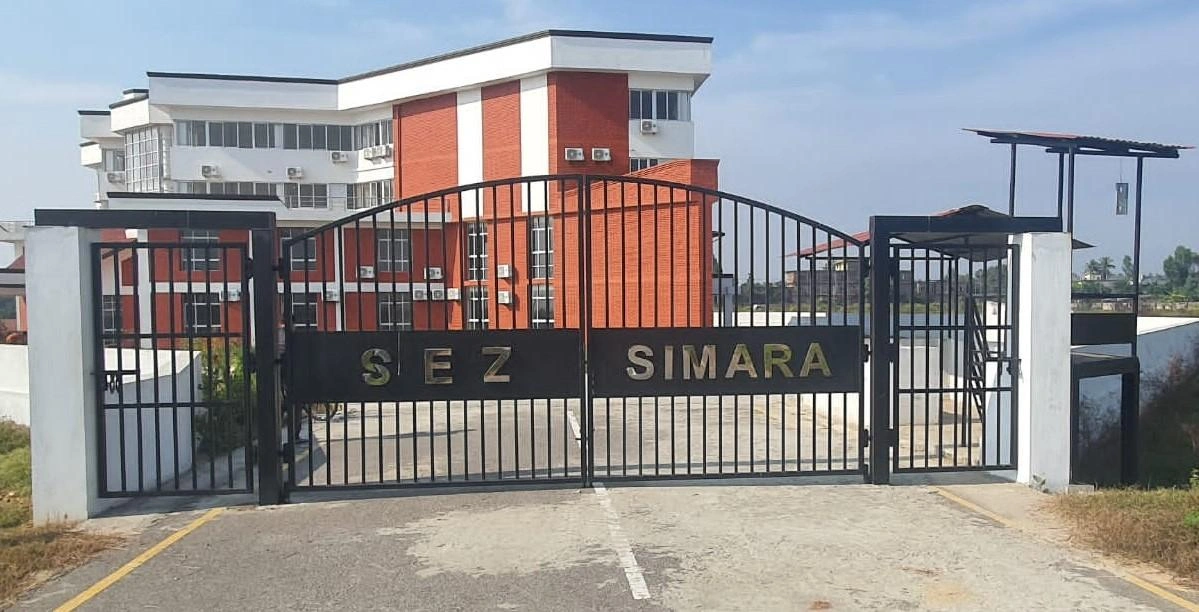
- Simara SEZ covers 833 bigha (about 564 hectares). Twenty-one industries are registered, six have begun commercial production employing roughly 700 people, and more than a dozen are under construction after its rent was also cut to Rs 5.
- The export obligation was eased in April 2024 to at least 15 percent of output for four years and 30 percent after that, down from an original 75 percent.
- Outside the SEZs, Nepal’s 10 industrial districts hold 706 industries running at 58.47 percent capacity utilization (CNI, Q3 FY 2023-24).
- About 8,542 bigha is allocated across seven more provincial SEZs, none of them operational yet.
Why the price of a plot keeps falling
Nepal built its SEZ program on a simple premise: give exporters serviced land, duty-free imports of raw materials, and reliable power and water, and manufacturing will follow. The legal scaffolding came together over a decade, with the Special Economic Zone Act passed in 2016 (2073 BS), amended in 2019, and administered by the Special Economic Zone Authority (SEZA). The land was the easy part. Filling it was not.
The clearest evidence is the rent itself. Bhairahawa opened at Rs 150 per square meter per month, found almost no takers, dropped to Rs 20, and in November 2025 was cut again to Rs 5, according to Business 360. Simara followed, cutting its own rate from Rs 20 to Rs 5 in the budget. When a government has to discount its product by 97 percent to move it, the lesson is not that industrial land is suddenly popular. It is that the asking price was always ahead of what the market would bear, and that the demand which does exist is highly sensitive to the cost of occupancy.
Bhairahawa: full on paper, fragile in practice
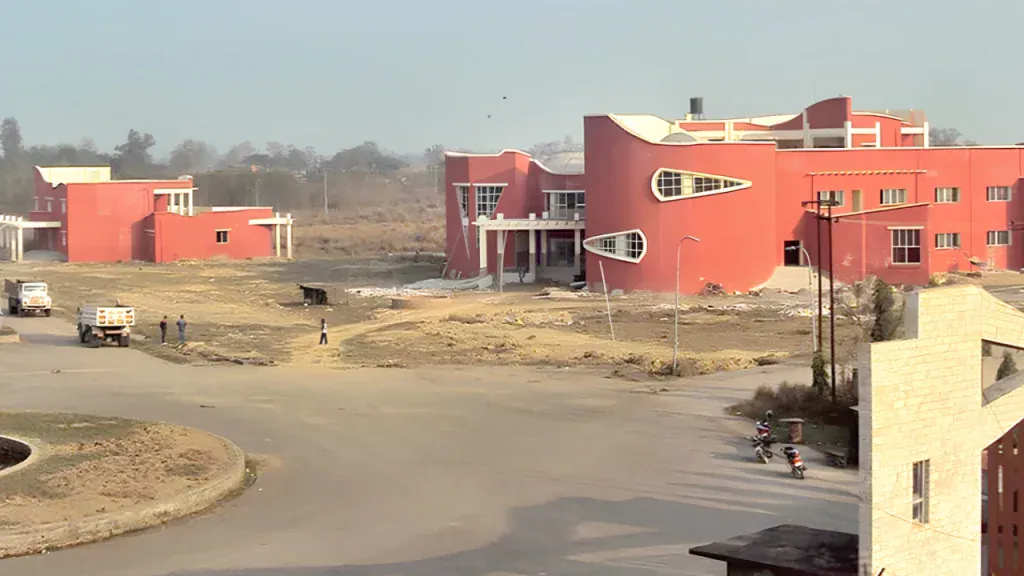
Bhairahawa is now fully leased. On a footprint of about 52 bighas divided into 68 plots, officials say not a single plot sits empty: 52 are occupied by operating units and the remaining 16 are under construction. That is a genuine turnaround for a zone that spent years as a cautionary tale about empty sheds.
The fragility shows up at the level of individual tenants. Panchakanya SS Exports, a stainless steel tank maker, was removed from the zone for failing to export the required share of its output and has been dismantling its own plant, according to Farsight Nepal. Its exports to India had been disrupted by Bureau of Indian Standards certification hurdles, and because SEZ rules block the transfer of built infrastructure, the company expects to recover only about Rs 2 million from an installation that cost around Rs 40 million. Jay Buddha Metal Craft has also closed. A fully leased zone with closures inside it is a reminder that occupancy is a snapshot, not a verdict on viability.
Simara: the rent cut that is working, so far
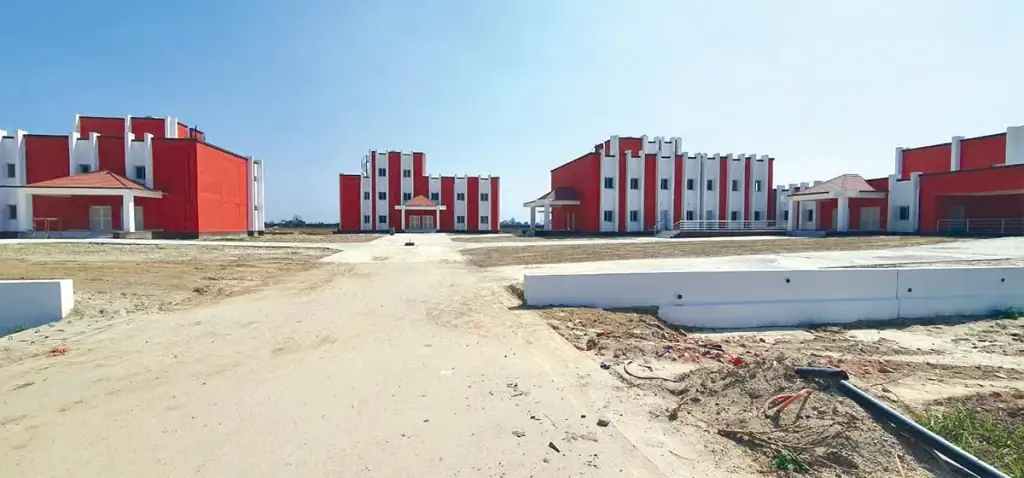
Simara, in Bara, is the larger and more active of the two. It spans 833 bigha (roughly 564 hectares) across five blocks labeled A to E, held on 30-year leases. Twenty-one industries are registered, six have begun commercial production, including Pashupati Ceramics, Brilliant Shoes and Nepal Agro Tools, and more than a dozen are under construction, the Kathmandu Post reported in May 2026. The operating units employ about 700 people directly, and more than half the new projects involve Indian or Chinese investors, among them a Rs 5 billion ceramics joint venture.
Even here the demand is concentrated and shallow. Most of the activity sits in Block A, the first developed tranche, where roughly 165 of 343 bigha are built out or under construction, close to half. The other four blocks are largely waiting. The rent cut pulled forward investment that had been sitting on the fence, which is a real result, but it has not yet produced the kind of waiting list that would let the government raise prices again.
The export rule that keeps emptying the zones
A special economic zone is a bargain with a condition attached. Firms get cheap land and tax relief; in return they must export. Nepal’s original rule required 75 percent of production to be exported, which proved punishing for manufacturers whose natural market is the domestic one or who struggle with non-tariff barriers at the Indian border. The obligation was revised down to 60 percent, and then, in an April 2024 amendment, to at least 15 percent of output for the first four years and 30 percent after that. The window for selling domestically was stretched from one year to three.
That is a meaningful relaxation, and it is why some units that would otherwise have failed their quotas are still standing. But it also hollows out the original logic. If a zone that exists to generate exports has to let tenants sell mostly at home to keep them, the distinction between an SEZ and an ordinary industrial estate narrows to the tax exemptions. The Panchakanya exit shows the other edge of the rule: enforce it strictly and firms leave; relax it further and the export case weakens.
A pipeline of allocated land, waiting for industries
On paper, Nepal’s industrial-land ambitions are far larger than two zones. SEZA has allocated land for additional zones in every province: 2,600 bigha at Damak in Jhapa, 1,877 bigha across Lumbini sites, 1,565 bigha at Murtiha in Sarlahi, 1,000 bigha in Surkhet, 900 bigha at Daiji in Kanchanpur, and smaller parcels in Makawanpur and Gorkha, roughly 8,542 bigha in total. None of it is operating.
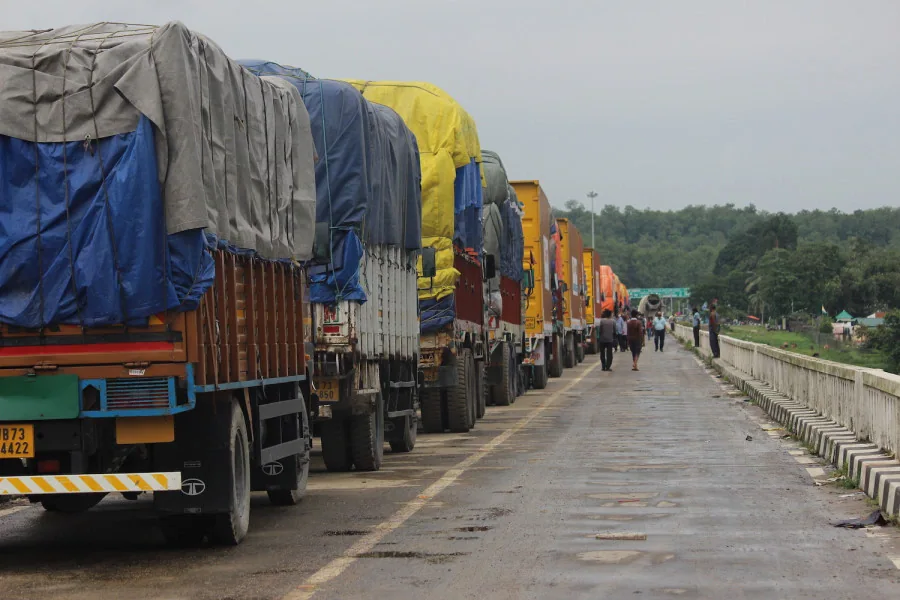
This is where the demand question matters most. When two developed zones need 97 percent rent cuts to fill, committing thousands more bigha to greenfield SEZs risks repeating the Bhairahawa pattern at larger scale: serviced land built ahead of the industries meant to use it, then discounted to attract whoever is willing. The land itself is rarely the binding constraint in Nepal. Reliable power, predictable border logistics for raw materials and finished goods, and access to the Indian market are. Those sit mostly outside SEZA’s control, which is why cutting rent is the lever the state reaches for most often.
The older model: industrial districts running half-full
SEZs are the newer, export-focused layer on top of Nepal’s original industrial-land system, the industrial districts. There are 10 of them, from Balaju and Patan to Hetauda, and they tell a more grounded story about how much manufacturing land Nepal actually absorbs. According to the Confederation of Nepalese Industries’ status report for the third quarter of FY 2023-24, the districts host 706 industries, of which 642 were operating, 45 under construction, and 19 closed. Total investment stood at Rs 75.66 billion and the districts employed 18,366 people, as the Kathmandu Post reported.
The revealing number is capacity utilization: 58.47 percent, down from 62.31 percent the quarter before. Even with land already allocated and factories already built, the installed base is running barely above half speed. That is the backdrop against which new industrial-land supply should be read. Demand for plots is real but modest, and a chunk of existing capacity sits idle. Privately run estates such as the Chaudhary Group’s CG Industrial Park are cited as better managed, which points to operations and tenant services, not just cheap land, as what makes industrial property work. For businesses that need commercial or industrial space outside the zones, most transactions still happen through the private market and listing platforms rather than through government allocation.
What actually drives demand for industrial land
The case for pushing industrial land is the trade gap. Nepal’s merchandise exports reached about Rs 277 billion (Rs 2.77 kharba) in FY 2081/82, up more than 80 percent on the prior year, while the trade deficit still ran to roughly Rs 1.53 trillion (Rs 15.27 kharba), per ShareSansar’s reading of Nepal Rastra Bank data. Every zone that substitutes a domestic product for an import, or ships goods abroad, chips at that gap. The export surge is encouraging, but it starts from a small base, and a single-digit share of imports.
For investors and developers, the practical read is this. Industrial land demand in Nepal is cost-elastic and policy-driven, not a steady upward curve. It responds sharply to rent, tax treatment and export rules, and it concentrates near the Indian border and existing infrastructure corridors, which is why the Terai dominates the map. That pattern connects to the broader shift in where Nepal’s economic weight is moving, covered in our look at Terai urbanization and hill depopulation, and it overlaps with the separate but related squeeze in warehousing and logistics land, where private demand has been firmer than in the export zones. The government’s own revenue from land transactions, detailed in our analysis of land registration fees, shows how much of the public interest in land is fiscal rather than industrial.
The honest conclusion is that cheap land is necessary but not sufficient. Bhairahawa filling up at Rs 5 is a success worth noting. Whether those tenants export, stay solvent, and justify another 8,500 bigha of public land is the question the rent cut cannot answer. For more on Nepal’s property and land markets, see our full Real Estate coverage.
Frequently Asked Questions
How many special economic zones does Nepal have?
Nepal has two operating special economic zones: Bhairahawa in Rupandehi and Simara in Bara. A third zone at Panchkhal is under study, and land for roughly seven more has been allocated across the provinces, totaling about 8,542 bigha, though none of those are yet operational.
What is the land rent in Nepal’s SEZs?
As of late 2025 and 2026, both Bhairahawa and Simara charge Rs 5 per square meter per month. Bhairahawa’s rate was cut in stages from an original Rs 150 to Rs 20 and then to Rs 5, with the final cut approved by the Council of Ministers on November 24, 2025. Simara’s rent was reduced from Rs 20 to Rs 5 in the budget.
What is the export requirement for firms in a Nepali SEZ?
Under the April 2024 amendment, firms must export at least 15 percent of their production for the first four years after starting production and at least 30 percent afterward. This replaced a stricter rule that had required 60 percent, and originally 75 percent. The domestic-sales window was also extended from one year to three.
How big is Simara SEZ and how many factories operate there?
Simara SEZ covers 833 bigha, about 564 hectares, across five blocks. Twenty-one industries are registered, six have begun commercial production, and more than a dozen are under construction. The operating units employ roughly 700 people, with most of the activity concentrated in Block A.
Are Nepal’s industrial districts different from SEZs?
Yes. Industrial districts are the older model: general-purpose industrial estates serving mainly the domestic market, without the export obligations and duty exemptions of an SEZ. Nepal has 10 industrial districts hosting 706 industries, which were running at 58.47 percent capacity utilization in the third quarter of FY 2023-24. SEZs are the newer, export-oriented layer on top of that system.
Why does the Nepal government keep cutting SEZ rent?
Rent is the main lever the state controls directly. The deeper constraints on industrial investment, such as unreliable power, border logistics and access to the Indian market, sit largely outside the SEZ Authority’s reach. Cutting rent is a fast, visible way to attract tenants, which is why both zones only filled after their rates fell to Rs 5 per square meter.