Nepal’s map is quietly being redrawn. Not by borders, but by people.
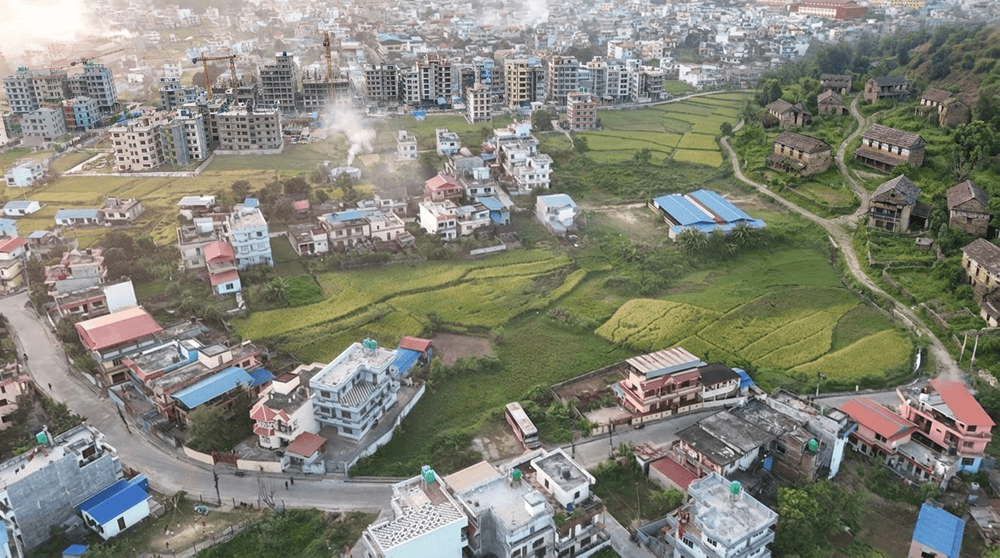
Millions are leaving the hills behind. They’re heading south, toward the flat, fertile plains of the Terai. This shift, known as Terai urbanization, is one of the most significant demographic changes in Nepal’s modern history.
As people move, so does money. Real estate demand is following the population, and the results are dramatic. Terai towns are booming, while many mid-hill communities are quietly emptying out.
In this article, we’ll explore the data behind this shift. We’ll also look at what it means for real estate prices, and why this trend deserves close, ongoing attention.
What Is Driving Terai Urbanization?
Terai urbanization refers to the rapid growth of towns and cities across Nepal’s southern plains. It’s fueled largely by migration from the hills and mountains.
Several forces are pushing this shift. First, the Terai offers flatter land, better infrastructure, and easier access to markets. Second, job opportunities are more concentrated in emerging Terai cities. Third, many hill areas simply lack basic services, schools, and healthcare access.
Consequently, families are choosing convenience over ancestral land. Once one household moves, others often follow, creating a snowball effect across entire villages.
The Numbers: How Fast Is the Shift Happening?
Let’s start with the census data, since it tells the clearest story.
According to Nepal’s 2021 census, 53.66% of the population now lives in the Terai. That’s up sharply from 50.27% in 2011. Meanwhile, the hill population share fell from 43.01% to 40.25% over the same decade. Mountain regions also shrank, dropping from 6.73% to 6.09%.
This isn’t just a percentage shift. It reflects real, physical movement of people and resources. Terai population density has now reached 461 people per square kilometer. Compare that to just 34 people per square kilometer in mountain regions, according to the Nepal Economic Forum.
Growth rates make the divide even clearer. Research published by Nepal’s National Human Rights Commission found that the Terai’s population growth rate stands at 1.56%. Meanwhile, combined mountain and hill growth sits at just 0.25%. At these rates, the Terai’s population will double in roughly 45 years. Hill and mountain regions, by contrast, would take 277 years to double.
Which Districts Are Emptying Out?
Some districts are experiencing outright depopulation, not just slower growth.
According to the Nepal Economic Forum, hill districts like Ramechhap, Khotang, Manang, and Bhojpur all recorded negative population growth between 2011 and 2021. Similarly, Gulmi, Arghakhanchi, and Palpa districts saw population declines of -1.23%, -1.05%, and -0.61% respectively, based on census research published in Unity Journal.
Altogether, 34 districts experienced negative or declining growth rates during this period, according to peer-reviewed migration research. Notably, nearly all of these depopulating districts belong to hill and mountain regions.
Meanwhile, Terai districts are surging in the opposite direction. Rupandehi grew by 2.33%. Chitwan grew by 2.3%. Even Bhaktapur, technically in the hills but adjacent to Kathmandu Valley’s urban sprawl, grew by 3.32%. These growth patterns aren’t random. They’re following jobs, infrastructure, and opportunity.
Real Estate Follows the People
Naturally, where people go, real estate demand follows. And Nepal’s property data confirms this clearly.
According to Nepal Rastra Bank’s first-ever real estate market report, released in 2026, Madhesh Province recorded the highest transaction volume of any province. Lumbini and Koshi followed closely behind. By contrast, Karnali and Sudurpaschim, both dominated by hill and mountain terrain, recorded the lowest transaction activity nationwide.
This pattern holds for transacted land area too. Madhesh Province accounted for the largest total area of land traded, again followed by Koshi and Lumbini. Meanwhile, mountainous Karnali and hill-heavy Gandaki ranked at the bottom.
Furthermore, real estate lending data supports this trend. Between fiscal years 2020/21 and 2024/25, real estate loans grew by 72.41%, while residential loans grew by 61.55%, according to NRB figures reported by the Kathmandu Post. Much of this lending activity is increasingly concentrated in Terai corridor cities.
Case Study: Bharatpur, Butwal, and the Terai Boom
Specific cities illustrate this trend vividly.
Take Bharatpur, in Chitwan district. According to Merokalam’s 2026 land price guide, Bharatpur has seen consistent demand growth from two sources. First, Kathmandu residents are seeking more affordable land outside the valley. Second, returning Terai workers from abroad are reinvesting savings into local property.
Butwal tells a similar story. Located in Rupandehi district, it has become one of Lumbini Province’s fastest-growing urban centers. Real estate listings across Butwal now feature dozens of active plot sales, reflecting sustained buyer interest.
Perhaps most dramatically, Nijgadh in Bara district has seen explosive growth. According to reporting from The Annapurna Express, land prices in Nijgadh rose nearly tenfold over five years. This surge was driven largely by speculation around the Kathmandu-Terai Fast Track highway project, which connects directly to the town.
Notably, Nepal Rastra Bank data also shows metropolitan cities like Bharatpur, Birgunj, and Pokhara punching above their weight in value. These cities represent just 4.1% of transactions, yet account for 13% of total declared value. That signals strong price premiums in fast-urbanizing Terai and near-Terai centers.
What’s Happening to Hill Town Real Estate?
While Terai corridors boom, many mid-hill towns face a very different reality.
As populations shrink in districts like Gulmi, Arghakhanchi, and Palpa, local housing and land markets naturally soften. Fewer buyers mean fewer transactions. Fewer transactions mean slower price appreciation, or in some cases, stagnation.
This creates a compounding problem. As young people leave for the Terai or for jobs abroad, hill towns lose not just population, but economic vitality. Local shops close. Schools consolidate. Property becomes harder to sell, since demand keeps shrinking.
Kathmandu Valley itself offers an interesting parallel. According to Expert Sewa’s 2026 market analysis, the Kathmandu Valley Development Authority approved just 9,800 ropani of new land plotting in FY 2024/25. That’s the lowest figure since FY 2009/10, and 55% below the ten-year average. Even in Nepal’s premier hill-valley urban center, supply growth is slowing sharply.
Why This Metric Matters for Nepal’s Future
Tracking real estate price growth across Terai corridors versus mid-hill towns isn’t just an academic exercise. It’s a leading indicator of deeper structural change.
First, it reflects where economic opportunity is concentrating. Rising Terai land values suggest businesses, jobs, and infrastructure investment are clustering there. Second, it reveals long-term risk for hill regions. Persistent depopulation threatens agricultural production, cultural heritage sites, and regional balance.
Additionally, this divergence has policy implications. Nepal’s government has invested heavily in projects like the Kathmandu-Terai Fast Track. These investments accelerate Terai urbanization further, potentially deepening the divide unless matched by parallel hill development efforts.
Finally, this metric helps investors and planners make smarter decisions. Understanding which regions are gaining momentum, and which are losing it, allows for better-targeted infrastructure spending and housing policy.
Can Hill Depopulation Be Reversed?
Slowing this trend won’t be easy, but it isn’t necessarily permanent either.
Improved road connectivity could help retain hill populations by reducing the isolation that pushes people toward the plains. Similarly, expanding healthcare and education access in hill districts could reduce one of the biggest push factors driving migration.
Additionally, targeted economic incentives, such as tourism development or agro-processing industries, could create local jobs. Nepal’s hill regions offer unique advantages, including cooler climates, scenic landscapes, and strong tourism potential, that remain underutilized.
However, without deliberate intervention, current trends suggest the gap will likely widen. Terai urbanization shows no signs of slowing, especially as infrastructure projects continue linking the plains more tightly to Kathmandu and international trade routes.
Conclusion
Terai urbanization is reshaping Nepal’s demographic and economic landscape at a striking pace. Census data confirms it. Real estate figures confirm it even more clearly.
From Bharatpur to Butwal to Nijgadh, Terai corridor cities are absorbing population, capital, and opportunity at rates hill towns simply can’t match. Meanwhile, districts like Gulmi, Arghakhanchi, and Palpa continue losing residents, year after year.
Ultimately, tracking real estate price growth in Terai corridors versus mid-hill towns offers one of the clearest windows into Nepal’s evolving geography. As this gap continues widening, understanding it will matter more than ever, for policymakers, investors, and families deciding where to build their future.
FAQ: Terai Urbanization and Hill Depopulation in Nepal
What is Terai urbanization?
Terai urbanization refers to the rapid growth of cities and towns across Nepal’s southern plains, driven largely by migration from hill and mountain regions.
What percentage of Nepal’s population lives in the Terai?
As of the 2021 census, 53.66% of Nepal’s population lives in the Terai region, up from 50.27% in 2011.
Which hill districts are losing population the fastest?
Districts like Gulmi, Arghakhanchi, Palpa, Ramechhap, Khotang, Manang, and Bhojpur have all recorded negative population growth.
How is real estate demand shifting between the Terai and the hills?
Madhesh, Lumbini, and Koshi provinces lead in real estate transaction volume, while hill-dominated Karnali and Sudurpaschim rank lowest.
Why are land prices rising so fast in places like Nijgadh?
Nijgadh’s land prices rose nearly tenfold in five years, largely due to speculation around the Kathmandu-Terai Fast Track highway.
Can hill depopulation in Nepal be reversed?
It’s possible, through improved connectivity, healthcare access, education, and targeted local job creation, though current trends show no signs of slowing yet.