
Nepal’s central bank has quietly rewritten the math of buying a home. The residential home loan ceiling is now Rs 30 million, up from Rs 20 million, first-time buyers can borrow up to 80 percent of a property’s value, and floating rates have drifted down to as low as 6.49 percent. For a household that has been priced out or waiting on the sidelines, this is the most borrower-friendly lending window in years. It is also the moment to read the fine print, because a bigger loan at a lower headline rate is not the same as a cheaper house.
Key Takeaways
- Nepal Rastra Bank raised the residential home loan limit to Rs 30 million (Rs 3 crore) from Rs 20 million, aimed at low and middle-income households.
- First-time home buyers can borrow up to an 80 percent loan-to-value ratio; buyers of an additional property are capped at 70 percent.
- Floating home loan rates run roughly 6.49 to 8.50 percent as of mid-2026, built on bank base rates of about 5.50 to 6.75 percent plus a premium.
- The policy rate was cut to 4.25 percent in the December 2025 review and held steady in the July 2026 policy, keeping borrowing costs low for now.
- The 80 percent applies to the bank’s appraised value, not the sticker price, so Nepal’s gap between market and assessed value can quietly raise your real down payment.
What actually changed

Two shifts matter most. First, the size of the loan you can take. Nepal Rastra Bank’s monetary policy for fiscal year 2082/83 lifted the residential home loan ceiling from Rs 20 million to Rs 30 million, with the stated goal of helping low and middle-income households buy or build. Second, how much of the price the bank will fund: first-time buyers qualify for up to an 80 percent loan-to-value ratio, while anyone buying a second or additional property is held to 70 percent (monetary policy summary).
The rate backdrop is friendly too. In its December 2025 review, Nepal Rastra Bank cut the policy rate from 4.50 percent to 4.25 percent and lowered the standing liquidity facility rate to 5.75 percent, while raising the personal overdraft limit to Rs 1 crore (ShareSansar). The annual policy for 2083/84, announced on July 8, 2026, kept the policy rate, cash reserve ratio, and statutory liquidity ratio unchanged, alongside a 7.0 percent growth target and an inflation ceiling of 5.5 percent (FY 2083/84 policy). In plain terms: the central bank is holding the door open, not slamming it. You can track the underlying rate data on Nepal Rastra Bank’s own site.
What rates actually look like right now

As of mid-2026 (Shrawan 2083), floating home loan rates across commercial banks sit between about 6.49 and 8.50 percent per year. Those rates are stacked on bank base rates of roughly 5.50 to 6.75 percent, with each bank adding a premium spread of 0.75 to 2.50 percent. State-owned lenders like Nepal Bank Limited and Rastriya Banijya Bank sit near the bottom around 6.50 percent, mid-tier private banks such as Nabil and Global IME hover near 7.25 percent, and Standard Chartered anchors the top around 8.50 percent. Fixed-rate options, locked for five to seven years, run roughly 6.99 to 8.25 percent, and processing fees range from 0.25 to 0.75 percent of the loan (bank rate comparison).
A one to two percentage point spread between the cheapest and priciest lender is not trivial. On a Rs 20 million loan over 20 years, the difference between 6.5 and 8.5 percent is well over Rs 5 million in total interest. Shopping the rate is the single highest-return hour of work in the entire process.
The catch most buyers miss: which value gets the 80 percent
An 80 percent loan-to-value ratio sounds like a 20 percent down payment. In practice it is often more, because the 80 percent is applied to the bank’s appraised value, not the price you agree with the seller. Nepal’s property market runs on two numbers at once: a lower government valuation used for registration and tax, and a higher market price that buyers actually pay. We unpacked that split in the valuation duplication trap. If a bank appraises a home below the negotiated price, your 80 percent loan covers 80 percent of the lower number, and you make up the rest in cash.
A worked example: you agree to buy at Rs 25 million, the bank appraises it at Rs 22 million, and you qualify for 80 percent. The loan is Rs 17.6 million, not Rs 20 million, so your out-of-pocket cash jumps from an expected Rs 5 million to Rs 7.4 million. The lesson is to ask for the bank’s valuation early, before you commit to a price, and to keep the collateral’s clean title in mind, since the loan rides on a mortgageable lalpurja.
Fixed or floating, and how to read the total cost
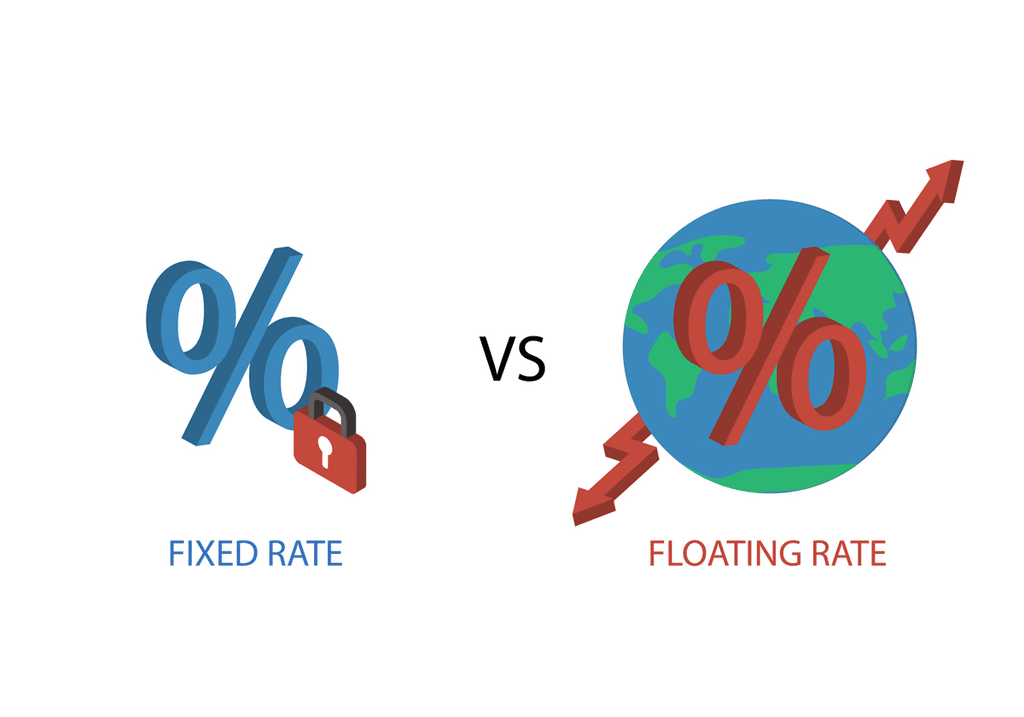
Floating rates are cheaper today because the policy rate is low, but they move with the bank’s base rate, which can climb when liquidity tightens, as it often does around Dashain. A fixed rate costs a little more upfront and buys certainty for five to seven years. Neither is universally right: a borrower stretching to the edge of affordability benefits from the predictability of a fixed rate, while a borrower with cushion can ride a floating rate and prepay when cash allows. Whatever you choose, compare the effective rate after the premium spread, not the advertised base rate, and factor in the processing fee and any prepayment penalty. The honest comparison is total rupees repaid over your real holding period, not the monthly EMI in year one.
Property is not the only place this money can go. If you are weighing a leveraged home purchase against liquid investments, we compared the two asset classes in real estate versus NEPSE, and the density question, which shapes apartment demand and resale, in Nepal’s slow shift into apartment living.
The risks nobody puts in the brochure
A higher ceiling and a higher LTV let you borrow more, which is not the same as being able to afford more. The 80 percent option is most valuable to disciplined first-time buyers, not to households maxing out a Rs 30 million loan on a thin income. Floating rates can rise: if base rates climb two points over your loan’s life, your EMI rises with them, and a budget built on 6.5 percent can strain at 8.5 percent. Banks weigh creditworthiness and income capacity, so approval is not guaranteed by the collateral alone.
There is a backstop worth knowing. Nepal Rastra Bank has allowed loan restructuring for borrowers in flood and landslide-affected districts, with a minimum 10 percent interest applied once, a reminder that disaster risk is a real line item, and that where you build matters as much as what you build. And the wider backdrop of bank lending against property, which we detailed in the Rs 2 trillion property exposure on bank balance sheets, is why the central bank keeps a hand on the LTV dial. Borrow for a home you can carry through a rate cycle, not just today’s rate. For more, see our full Real Estate coverage.
Frequently Asked Questions
What is the maximum home loan you can get in Nepal?
Nepal Rastra Bank raised the residential home loan ceiling to Rs 30 million (Rs 3 crore) from Rs 20 million under the FY 2082/83 monetary policy. The actual amount you receive still depends on the loan-to-value ratio, the bank’s appraised value, and your income capacity.
What is the loan-to-value ratio for a home loan in Nepal?
First-time home buyers can borrow up to 80 percent of the property’s value, while buyers of a second or additional property are capped at 70 percent. The percentage applies to the bank’s appraised value, not necessarily the price you negotiate with the seller.
What are current home loan interest rates in Nepal?
As of mid-2026, floating home loan rates range from about 6.49 to 8.50 percent per year, built on bank base rates of roughly 5.50 to 6.75 percent plus a premium spread. State-owned banks tend to offer the lowest rates, near 6.50 percent.
Should I choose a fixed or floating home loan rate?
Floating rates are cheaper today but move with the bank’s base rate and can rise when liquidity tightens. Fixed rates cost slightly more but lock in certainty for five to seven years. Borrowers stretched to the edge of affordability usually benefit from a fixed rate; those with financial cushion can ride a floating rate and prepay.
Why is my down payment higher than 20 percent?
Because the 80 percent loan-to-value applies to the bank’s appraised value, not the price you pay. If the bank appraises the property below your agreed price, your loan covers less than expected and you make up the difference in cash. Ask for the bank’s valuation before you commit to a price.
Did the July 2026 monetary policy change home loan rules?
The FY 2083/84 policy announced on July 8, 2026 kept the policy rate, cash reserve ratio, and statutory liquidity ratio unchanged, holding borrowing costs steady. The higher Rs 30 million home loan ceiling and the 80 percent first-home LTV introduced under the previous year’s policy remain in force.