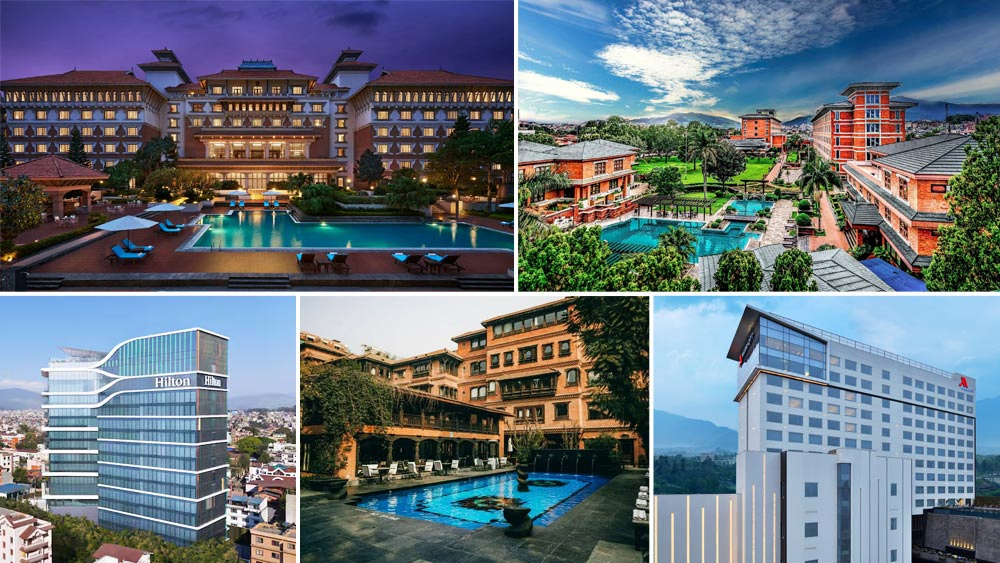
Nepal’s hotels can bed down roughly 3 million guests a year. In 2025 the country hosted 1.16 million foreign tourists. That gap, between the rooms built and the travelers who show up, is the central problem in Nepal’s commercial real estate story right now, and it is most visible at the top of the market, where at least 29 five-star properties are competing for a pool of guests that grew less than 1 percent last year.
Key Takeaways
- Nepal recorded 1,158,459 foreign tourist arrivals in 2025, up just 0.96 percent from 2024 and about 97 percent of the pre-pandemic peak, according to Nepal Tourism Board data.
- The Hotel Association of Nepal lists 29 five-star hotels as members, and the country now has roughly 126 star-rated hotels and resorts among more than 142,000 registered hospitality establishments.
- Average five-star occupancy was cited near 20 percent in early 2025, and newly built hotels were running at about one-third of capacity by April 2025, triggering a room-rate war.
- Bank lending to hotels and hospitality has plateaued around Rs 214 billion and slipped 3.9 percent in the year to mid-August 2025, even as broader tourism-service credit grew 12.6 percent.
- First-half 2026 arrivals reached 620,453, up 7.4 percent year on year, a recovery that helps but does not close the supply-demand gap.
The supply surge came faster than the guests
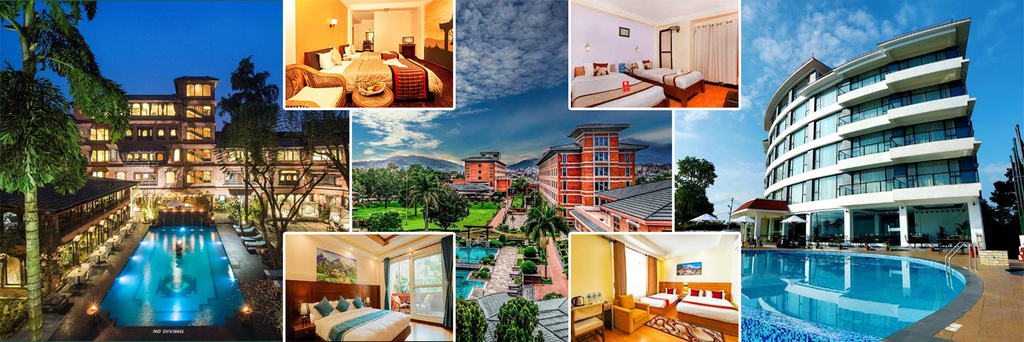
The building did not stop when the pandemic did. The Hotel Association of Nepal now counts 29 five-star hotels among its members, most clustered in the Kathmandu Valley, with others in Pokhara, Lumbini, Bhairahawa, Nepalgunj and Jhapa. A credit-rating study by Infomerics Credit Rating Nepal, published in August 2025, put the wider universe at about 126 star-rated hotels and resorts, sitting inside a hospitality sector of more than 142,000 registered establishments and an estimated 161,100 rooms across all accommodation types, based on the 2023/24 national accommodation survey.
The recent additions read like an international brand directory. Hilton Kathmandu opened in Naxal in July 2024 on a reported Rs 8.35 billion investment. Mercure Kathmandu opened in Sukedhara in January 2025 at around Rs 3 billion. Temple Bell Boutique Hotel and Spa opened on Pokhara’s lakeside in March 2025. Marriott, Hyatt Place, Dusit, Lemon Tree, Ramada and Holiday Inn all now appear on Nepal’s five-star roster or in its pipeline. The supply logic was straightforward: Nepal sits between two of the world’s largest outbound travel markets, and operators bet that arrivals would keep climbing.
Demand recovered, but only barely
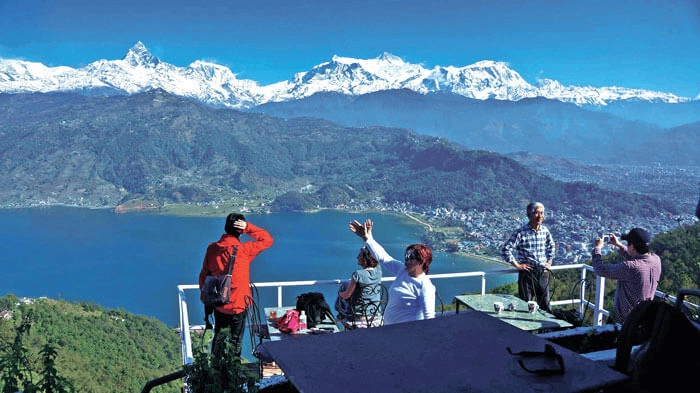
Arrivals did climb back, then flattened. Nepal welcomed 1,158,459 foreign tourists in 2025, according to Nepal Tourism Board figures, an increase of just 0.96 percent over the 1,147,548 recorded in 2024 and about 97 percent of the pre-pandemic benchmark. The year was knocked off course in September 2025, when Gen Z-led protests cut that month’s arrivals by 18.85 percent against the prior year before the sector rebounded in the final quarter. India (292,438 visitors), the United States (112,316) and China (95,480) remained the three largest source markets.
The 2026 numbers are firmer. Nepal drew 620,453 foreign tourists in the first six months, up 7.4 percent from 577,689 in the same period of 2025, with March the strongest month at 120,516. India alone accounted for close to half of June’s traffic. If the autumn trekking season holds, full-year 2026 should edge past 2025. That is real progress. It is also well short of the demand a 3-million-guest hotel base was built to serve.
The occupancy math does not work yet

This is where the oversupply stops being abstract. Industry officials put average five-star occupancy near 20 percent in early 2025, and by April 2025 the Hotel Association of Nepal said newly built hotels were filling only about one-third of their rooms. The predictable result was a price war: rates that once commanded Rs 15,000 to Rs 20,000 a night were being cut to Rs 8,000 to Rs 10,000, meals included. As one operator framed it, guests will not pay mid-tier prices for a mid-tier room when a new five-star bed costs the same.
Discounting fills rooms, but it does not fix the model. A five-star hotel carries heavy fixed costs, from financing to staffing to imported fittings, and rate cuts of 40 to 50 percent compress the margins that were supposed to service the debt. Rising arrivals help newer, better-located, brand-affiliated properties more than older independents, which means the pain is uneven. The headline that best captures 2025 and 2026 is not a boom or a bust: it is that more tourists arrived while occupancy at many hotels still slipped, because rooms were added faster than guests.
The lenders are already pulling back
Follow the money and the caution is clear. Infomerics estimated commercial-bank lending to tourism businesses at Rs 216.7 billion in mid-2024, with total fixed assets across the hotels and restaurants sector at about Rs 543 billion. But Nepal Rastra Bank’s sector-wise credit data, as reported for mid-August 2025, showed hotel and hospitality loans of about Rs 214.16 billion, down 3.9 percent, a drop of roughly Rs 8.7 billion from the prior month. Lenders cited high interest rates, rising operating costs and slow occupancy recovery. Notably, credit to other tourism services such as trekking, rafting and adventure operators grew 12.6 percent to Rs 29.55 billion over the same window. Banks are still backing tourism; they are getting selective about hotels.
That selectivity matters because Nepal’s banks are already heavily tied to property. As our analysis of NRB real estate data laid out, the banking system carries around Rs 2 trillion in property-linked exposure. Hotels are a concentrated, cyclical slice of that book: large single-borrower loans against assets whose cash flow depends on tourist arrivals no lender can control. A pullback in fresh hotel credit, alongside the central bank’s move to expand priority-sector lending toward tourism services more broadly, signals where the risk appetite now sits.
So why is anyone still building?
Three reasons keep the cranes up. First, international operators are playing a long game on a market they see as structurally under-branded, and a flagged hotel in Kathmandu is a strategic foothold as much as a yearly return. Second, location and brand still win: a well-run, well-placed property can hold rates while an older independent two kilometers away cannot, so the average occupancy figure hides wide dispersion. Third, some capital is chasing land appreciation and prestige rather than room revenue, a familiar pattern in Nepali real estate where the asset, not the operating business, is the point.
For developers weighing a new project, the harder question is whether a plot pencils out better as a hotel at all. Serviced apartments, office space and mixed-use formats carry different demand curves and are less exposed to a single volatile tourist season, and they show up as their own busy categories on property marketplaces like Basobaas. The choice between a hotel and an income-producing commercial building is now a live one, not a formality.
What to watch, and what it means for investors
The signals worth tracking are specific: monthly arrival data from the Nepal Tourism Board, especially the September-to-November peak; whether five-star occupancy climbs out of the low-to-mid range as the 2026 pipeline is absorbed; and NRB’s sector-wise credit reports for further hotel-loan contraction or non-performing loan stress. For an investor comparing options, the hotel trade today is a leveraged bet on a demand recovery that is real but slow, with rate pressure eating near-term returns. That risk profile sits at the far end of the spectrum from the steadier, more liquid alternatives we weighed in real estate versus NEPSE, and it belongs only in a portfolio that can wait out the absorption. The upside case is genuine if arrivals compound; the downside is a half-full luxury room financed at Nepali interest rates. Both are on the table. Readers can follow the sector in our Real Estate coverage.
Frequently Asked Questions
How many five-star hotels does Nepal have?
The Hotel Association of Nepal lists 29 five-star hotels among its members as of 2026, most in the Kathmandu Valley, with others in Pokhara, Lumbini, Bhairahawa, Nepalgunj and Jhapa. Nepal has roughly 126 star-rated hotels and resorts in total across all categories.
Is there a hotel oversupply in Nepal?
Yes, at the luxury end. Nepal’s hotels can host an estimated 3 million guests a year, but only 1.16 million foreign tourists arrived in 2025. Average five-star occupancy was cited near 20 percent in early 2025, and new hotels were running at about one-third of capacity, which points to more rooms than current demand can fill.
How many tourists visited Nepal in 2025 and 2026?
Nepal recorded 1,158,459 foreign tourist arrivals in 2025, up 0.96 percent from 2024. In the first half of 2026, arrivals reached 620,453, a 7.4 percent increase over the same period a year earlier, according to Nepal Tourism Board data.
Are Nepali banks still lending to hotels?
Selectively. Nepal Rastra Bank data reported for mid-August 2025 showed hotel and hospitality loans of about Rs 214.16 billion, down 3.9 percent, while credit to other tourism services grew 12.6 percent. Lenders cited high interest rates, rising costs and slow occupancy recovery as reasons for the pullback in hotel credit.
Is a hotel a good real estate investment in Nepal right now?
It is a high-risk, long-horizon bet today. Room-rate discounting is compressing margins while debt costs stay high, so near-term returns are thin. A well-located, brand-affiliated property can outperform, but investors who need liquidity or steady income may prefer income-producing commercial space or other assets until occupancy recovers.