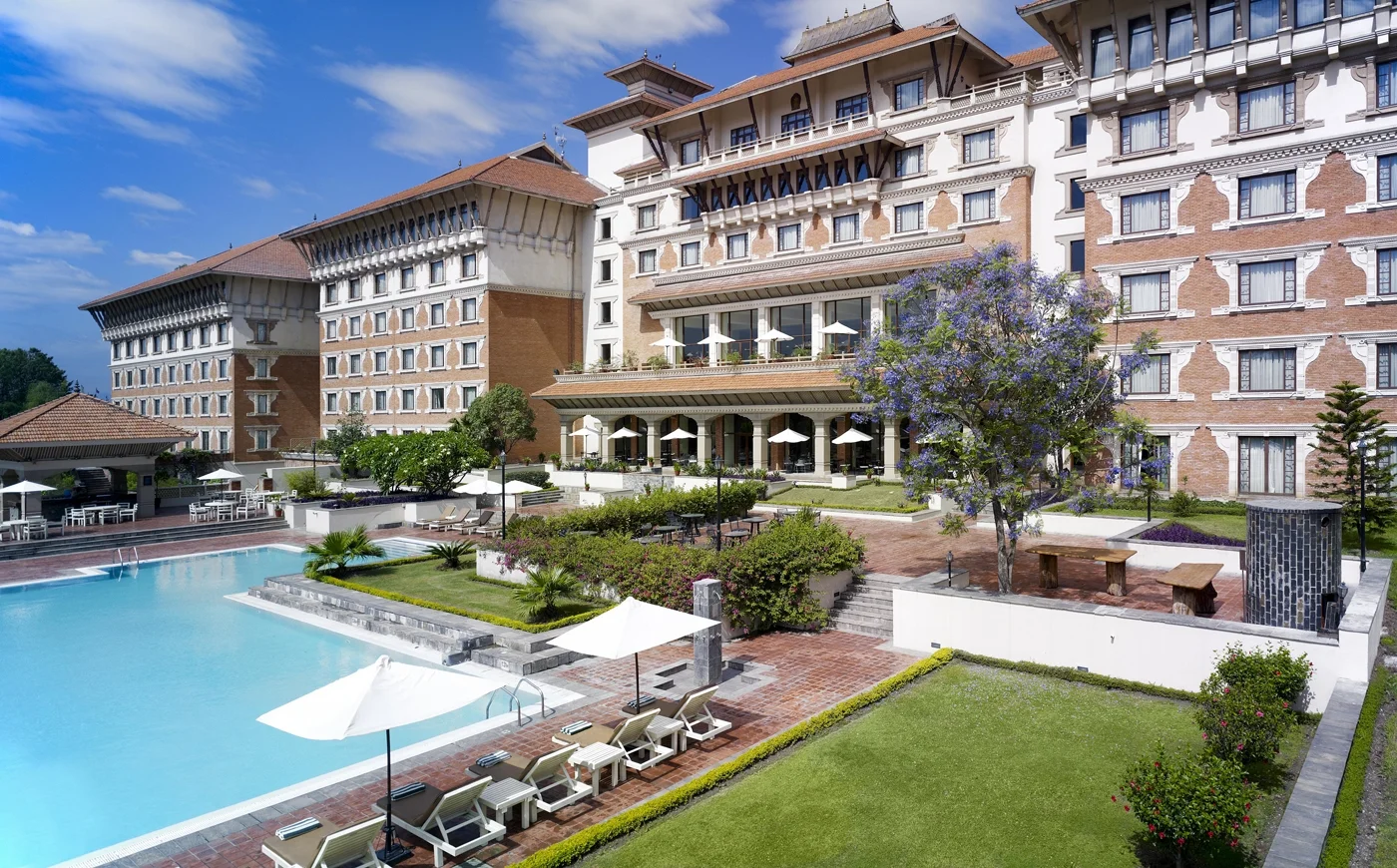
Walk through Durbar Marg or Lakeside in Pokhara this October and the lobbies will look busy. Peak season packs Nepal’s best-known hotels for six to eight weeks a year. Then look at the annual math. Nepal’s hospitality sector has absorbed more than Rs 650 billion in investment and can lodge close to 4 million visitors a year, yet only 1,209,357 foreign tourists arrived in the last fiscal year. The gap between what has been built and who shows up is the defining feature of Nepal’s commercial hotel real estate, and it is widening.
Hotel Association Nepal (HAN) president Binayak Shah put the operating reality bluntly in November 2025: occupancy across member hotels was “only around 30 percent” that October, one of the strongest months of the calendar. That is the number that should concern anyone underwriting a new tower in Kathmandu. Rooms are being added against a demand base that is growing slowly and spending less per head than almost anywhere in the region.
Key Takeaways
- Supply built for 4 million: Nepal’s hotel sector has drawn more than Rs 650 billion in investment and can accommodate nearly 4 million tourists annually.
- Demand near 1.2 million: Foreign arrivals were 1,158,459 in calendar 2025 and 1,209,357 in FY 2025/26, roughly a third of built capacity.
- Occupancy near 30 percent: Star hotel occupancy sat around 30 percent in October 2025, a peak month, according to HAN president Binayak Shah.
- Long stays, thin wallets: The average visitor stayed a record 16.34 days in 2025 but spent just $33.09 a day, among the lowest on record and far below the region’s $100 to $150.
- India leads the mix: India sent 311,531 visitors (25.76 percent) in FY 2025/26, a largely drive-in, lower-spend segment that shapes hotel economics.
- 2025 shock, 2026 rebound: September 2025 unrest cut that month’s arrivals 18.85 percent and damaged about 30 hotels, yet first-half 2026 arrivals still rose 7.4 percent to 620,453.
The supply side: Rs 650 billion and beds for 4 million
The scale of the buildout is not in dispute. Citing Department of Tourism figures, myRepublica reported in July 2024 that cumulative investment in Nepal’s hotels had passed Rs 650 billion, combining a roughly Rs 543 billion base measured by the National Statistics Office with about Rs 100 billion added since. The same reporting quoted Binayak Shah putting national accommodation capacity at close to 4 million tourists a year. The National Statistics Office counts more than 12,000 lodging establishments, of which the Department of Tourism classifies over 350 across the one-star to five-star deluxe range.
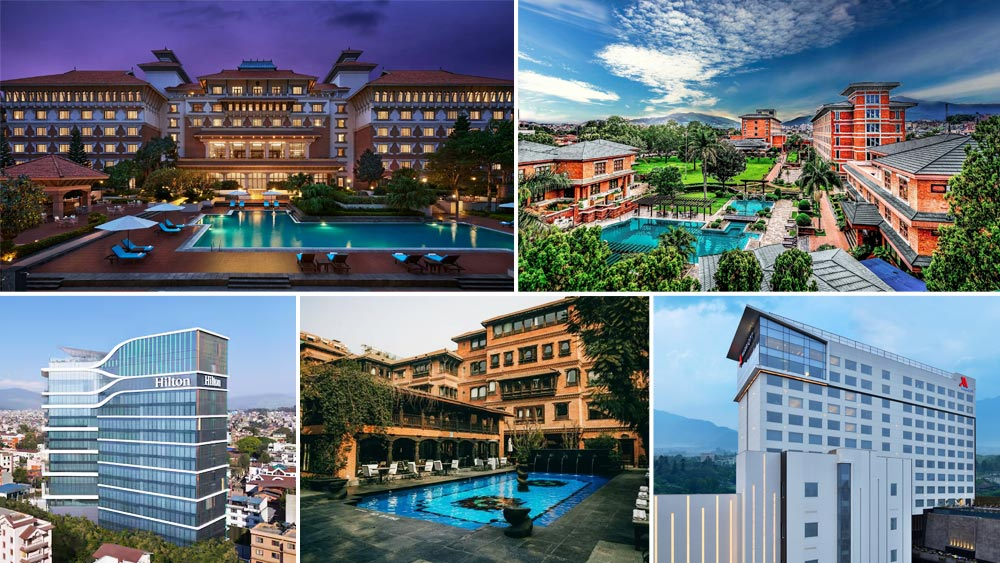
The premium end grew fastest. By early 2024, Nepal had 23 operating five-star hotels and 37 four-star ones, a count that included a wave of openings such as Hilton and Lemon Tree Premier, representing more than Rs 19 billion in fresh five-star investment. The pipeline has not stopped. The Sheraton Kathmandu, budgeted near Rs 12 billion, remains under construction, and international brands including Marriott’s Moxy line have been mapped to the valley. Each new flag raises the city’s service standards. Each also adds rooms to a market that already cannot fill the ones it has.
The demand side: 1.2 million guests who spend $33 a day
Nepal’s arrival numbers are healthy in isolation. The Nepal Tourism Board recorded 1,158,459 foreign tourists in calendar 2025, a 0.96 percent gain on 2024, and 1,209,357 across FY 2025/26. First-half 2026 arrivals reached 620,453, up 7.4 percent from 577,689 in the same months of 2025. Those are recovery numbers, not crisis numbers.
The problem is what each guest is worth. Nepal’s average daily spend per tourist was $33.09 in 2025, the second-lowest figure on record and a fraction of the $100 to $150 that competing South Asian and Southeast Asian destinations capture, as The Kathmandu Post reported in July 2026. Visitors did stay longer, a record 16.34 days, but a long, low-spend stay does not translate into hotel revenue when much of it is spent trekking or in budget lodges. India, the largest market at 311,531 arrivals in FY 2025/26, skews toward overland, price-sensitive travel rather than the long-haul luxury guest who pays for a five-star room.
Tourism still earns real foreign exchange. Travel service exports brought in Rs 88.66 billion in FY 2024/25, about 37 percent of the country’s total service exports. But that revenue is spread across airlines, trekking agencies, guides, and thousands of small operators, not concentrated in the balance sheets of the large hotels carrying the heaviest debt.
Why occupancy sits near 30 percent
Three forces keep formal occupancy low even as arrivals climb. The first is arithmetic: capacity near 4 million against arrivals near 1.2 million means the average bed is empty most of the year regardless of how any single hotel performs. The second is seasonality. October and November alone drew 124,829 visitors in the FY 2025/26 peak month, so the calendar is front-loaded into two strong seasons with long troughs on either side. A hotel financed on peak-season optimism still has to service its loan in July.
The third is leakage to informal supply. Shah has argued that rising arrivals are not reaching classified hotels because visitors increasingly choose homestays and guesthouses in neighborhoods like Boudha, Kapan, and Swayambhu. Some of that demand is also migrating toward serviced apartments and long-stay rentals, the commercial and residential inventory that fills listing platforms such as Basobaas, which competes directly with hotel room-nights for the exact long-duration guest Nepal now attracts. When the average stay is more than two weeks, a rented flat often beats a hotel on price.
The September 2025 shock and the 2026 rebound
Nepal’s hotels also carry event risk that does not show up in occupancy averages. The Gen Z-led protests of September 2025 disrupted transport and public safety, and that month’s arrivals fell 18.85 percent year on year, according to Nepal Tourism Board data. Roughly 30 hotels in Kathmandu and Pokhara, including Hilton and Hyatt properties, sustained damage during the unrest. Arrivals rebounded within weeks, with October, November, and December all beating their 2024 levels, and the momentum carried into 2026. But a sector already running at 30 percent occupancy has little cushion when a single month evaporates, and lenders should price that fragility rather than average it away.
What it means for investors, developers, and banks
For an investor, the honest read is that Nepal has a rooms problem, not a rooms shortage. Adding a five-star flag to Kathmandu no longer opens an underserved market; it splits a thin, seasonal demand pool among more competitors, which pushes room rates down exactly when new projects need them up. The case for building narrows to specific gaps: destinations with genuine undersupply, formats aimed at higher-spend long-haul or MICE segments, and conversions that lift existing assets rather than pure new capacity.
The banking angle is where hotel oversupply stops being an industry story and becomes a financial-stability one. Nepal’s banks already carry heavy property risk. BiznesVue’s analysis of Nepal Rastra Bank data found the banking system’s combined real estate and home-loan exposure near Rs 2 trillion in FY 2081/82. Large hotels are among the most leveraged commercial borrowers in the country, and a stretch of weak occupancy tests their ability to service that debt. The pattern rhymes with land speculation elsewhere in the market, where prices ran far ahead of real use, as documented in the Outer Ring Road speculation cycle. Developers weighing a hotel against other formats should also study why capital has struggled to move into vertical residential housing, because the same financing and demand constraints apply.
None of this argues that Nepal’s tourism story is broken. Arrivals are growing, stays are lengthening, and the country’s brand-name hotels are better than they have ever been. It argues that the next return in Nepali hospitality will come from filling and repricing existing rooms, not from pouring more concrete. On the current numbers, capacity is not the constraint. Demand per room is. For more on the market, see BiznesVue’s Real Estate coverage.
Frequently Asked Questions
Is Nepal’s hotel market oversupplied?
On the numbers, yes. Nepal’s hotels can house close to 4 million tourists a year, but only about 1.2 million foreign visitors arrived in FY 2025/26, and star hotel occupancy was near 30 percent even in the peak month of October 2025. Capacity runs well ahead of demand.
How many five-star hotels does Nepal have?
By early 2024, Nepal had 23 operating five-star hotels and 37 four-star ones. More are still being built, including the Sheraton Kathmandu, budgeted at around Rs 12 billion.
Why is hotel occupancy low if tourist arrivals are rising?
Capacity has grown faster than demand, arrivals concentrate into two short peak seasons, and many long-staying visitors choose homestays, guesthouses, and serviced rentals over classified hotels. Rising totals do not fill rooms when supply is several times larger than the visitor base.
How much do tourists spend in Nepal?
The average foreign tourist spent $33.09 a day in 2025, one of the lowest figures on record and far below the $100 to $150 common in the wider region, while staying a record 16.34 days on average. Long, low-spend stays limit how much revenue reaches formal hotels.
What are the risks for hotel investors and banks in Nepal?
Large hotels are heavily leveraged, and weak year-round occupancy strains their ability to service debt. With the banking system’s real estate and home-loan exposure near Rs 2 trillion, a sustained hospitality downturn carries wider financial-stability risk. Event shocks such as the September 2025 unrest can wipe out a month of demand with little operating cushion.
Will the 2026 arrivals rebound fix the oversupply?
Only partly. First-half 2026 arrivals rose 7.4 percent and the full fiscal year reached about 1.2 million, but that is still roughly a third of built capacity. Volume growth alone will not lift per-room economics unless Nepal attracts higher-spending segments and reprices existing rooms.