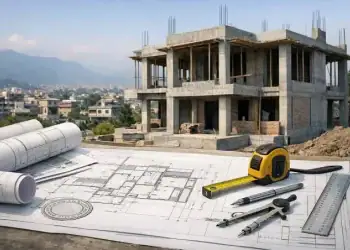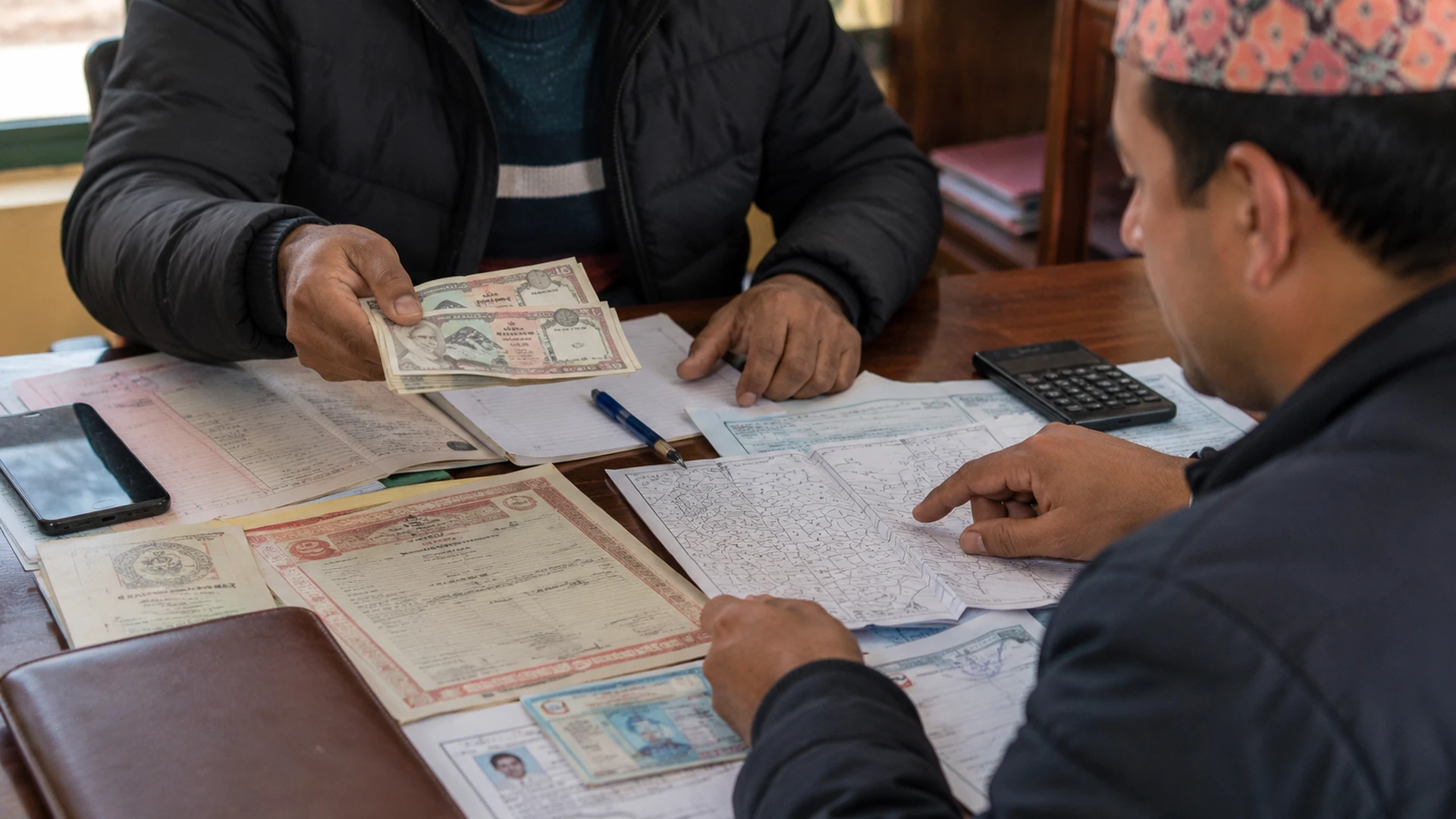
Nepal’s municipalities are sitting on a resource they can’t fully capture. That resource is property tax, and the gap between what’s owed and what’s collected keeps growing.
Property tax collection leakage isn’t a minor administrative hiccup. It’s a structural weakness that limits how much local governments can invest in roads, waste management, and basic services.
Since 2017, Nepal’s constitution has given municipalities exclusive authority over property taxation. On paper, this should have created a strong, stable revenue base. In practice, outdated valuation methods, weak enforcement, and thin technical capacity keep undermining that potential.
In this article, we’ll explore why property tax collection leakage persists in Nepal, what recent data reveals, and why closing this gap matters for local development.
What Is Property Tax Collection Leakage?
Property tax collection leakage refers to the gap between the revenue a municipality could theoretically collect, based on the full, accurate value of taxable property, and what it actually collects.
This gap emerges from several sources. Properties may go unregistered or underassessed. Rental income may go unreported. Enforcement may simply be too weak to chase down non-payers. Each of these leaks reduces the money flowing into municipal budgets.
Understanding this matters because property tax isn’t a minor line item for Nepal’s local governments. According to a Kathmandu Post analysis of fiscal federalism data, property taxes and local service fees together made up over 70% of local governments’ own-source revenue in fiscal year 2022/23. When this single revenue category leaks, the effects ripple through nearly every municipal budget in the country.
How Nepal’s Property Tax System Is Structured
To understand where leakage happens, it helps to understand how the system is supposed to work.
Nepal’s Local Government Operation Act, 2074 (2017), empowers municipalities and rural municipalities to levy either an integrated property tax or a separate house and land tax, according to Attorney Nepal’s 2026 guide. Most municipalities now favor the integrated approach, since it consolidates billing and simplifies compliance for both taxpayers and local governments.
Property valuation depends heavily on the District Rate Committee, or DRC rate, according to Attorney Nepal. This rate is reviewed annually and published in the Nepal Gazette before each new fiscal year begins. For example, Kathmandu Metropolitan City set land values ranging from NPR 4 lakh to NPR 50 lakh per aana for fiscal year 2082/83, depending on location and road access.
Tax rates themselves typically range from 0.05% to 0.5% of assessed property value, according to multiple legal guides including GFCS Nepal and Tax Consultant Nepal. Some municipalities apply rates up to 2% for certain property categories. Payment can happen at ward offices directly, or online through platforms like eSewa and ConnectIPS.
Rental Income: A Three-Layer Tax Puzzle
Rental income taxation adds an extra layer of complexity, and with it, extra opportunities for leakage.
According to Law Alpine’s 2026 guide, rental property owners actually face three separate tax obligations. First, there’s federal income tax and TDS withholding under the Income Tax Act, 2058. Second, there’s municipal house-rent tax under the Local Government Operation Act, 2074, typically ranging from 10% to 17% of annual rent, with Kathmandu Metropolitan City levying 10%. Third, there’s Malpot, the annual land-revenue tax paid separately at the Land Revenue Office, calculated by land area and classification rather than rental income.
This layered structure creates genuine compliance confusion. Landlords remain statutorily liable for the municipal rent tax, according to Law Alpine, yet enforcement depends heavily on ward-level tracking and self-reporting. Without robust cross-checking between federal tax records and municipal rent tax rolls, underreported rental income can slip through easily.
Why Valuation Remains a Core Problem
Perhaps the biggest driver of property tax collection leakage lies in how properties get valued in the first place.
According to a 2026 study published in the American Journal of Civil Engineering, Nepal’s property valuation practices remain “largely non-scientific and subjective,” relying heavily on administrative benchmarks and expert judgment rather than market-based or spatially explicit methods. This often results in significant discrepancies between official valuation and actual market value.
The consequence is predictable. Systematic undervaluation directly reduces the tax base, regardless of how well collection itself is enforced. Even a well-administered tax system collects less than it should when the underlying valuation understates true property worth.
The same study also points to deeper institutional gaps. Municipalities frequently lack skilled personnel, operate with weak institutional frameworks, and rely on inadequate technological infrastructure, according to the researchers. These capacity limitations compound the valuation problem, since accurately assessing thousands of properties requires both technical expertise and reliable digital record-keeping.
The Bigger Fiscal Picture
Zooming out, Nepal’s broader fiscal data confirms how fragile local government finances have become.
According to Kathmandu Post’s coverage of a fiscal federalism report, local government revenue and grants declined to just 8% of GDP in fiscal year 2022/23. That same year, local governments recorded a fiscal deficit of 0.4% of GDP, driven by a significant drop in both revenue and intergovernmental grants.
This fragility became even more visible in early 2025. According to another Kathmandu Post analysis, the Office of the Comptroller General cut the third installment of fiscal equalization grants sharply, citing revenue shortfalls. Local governments, who should have received Rs 22 billion, ended up receiving just Rs 3 billion, only 13.24% of the scheduled amount.
This kind of sudden funding disruption makes property tax collection leakage even more costly. When federal transfers become unreliable, municipalities need their own-source revenue, led by property tax, to function as a genuinely stable financial foundation. Currently, leakage prevents that foundation from reaching its full potential.
Why the Tax Base Struggles to Grow
Interestingly, even fixing collection efficiency alone may not solve the whole problem, since Nepal’s underlying tax base also grows slowly.
According to Rising Nepal Daily’s analysis of property tax economics, once all property owners are actually brought into the tax net, the taxable base doesn’t expand significantly further. Land supply is fixed, and new construction doesn’t happen rapidly in every municipality. This means municipalities can’t simply grow their way out of collection weaknesses through natural expansion alone.
Consequently, closing the leakage gap through better registration, valuation, and enforcement becomes even more important. Without meaningful reform to how existing properties are assessed and taxed, revenue growth will likely remain stagnant, regardless of how quickly local economies otherwise develop.
Where Enforcement Falls Short
Collection challenges extend beyond valuation into pure enforcement capacity.
Some municipalities have adopted door-to-door collection drives to reach non-compliant taxpayers directly, according to GFCS Nepal’s guide. Others have expanded online payment options through platforms like eSewa, ConnectIPS, and Fonepay to make compliance easier. These are sensible steps, but they address the symptom rather than the underlying capacity gap.
Fundamentally, chasing down unregistered properties, verifying accurate rental income, and cross-referencing ownership transfers all require sustained administrative effort. According to the American Journal of Civil Engineering study, this kind of enforcement remains inconsistent precisely because municipalities lack the skilled staff and digital infrastructure needed to sustain it at scale.
What Reform Could Look Like
Several concrete steps could help Nepal meaningfully reduce property tax collection leakage.
First, modernizing valuation methodology matters most. Shifting from subjective administrative benchmarks toward market-based, spatially explicit valuation would directly expand the effective tax base, without requiring any new legal authority.
Second, digitizing land and property records more comprehensively would strengthen enforcement. Better integration between the Land Revenue Office’s records and municipal tax rolls would make it far harder for unregistered or underreported properties to slip through.
Third, coordinating Nepal’s three-layer rental taxation system more closely could close a specific compliance gap. If municipal house-rent tax records were cross-checked against federal income tax and TDS filings, discrepancies would become much easier to identify.
Fourth, investing in municipal staff training and technical capacity would address the root institutional weakness researchers consistently identify. Even the best valuation methodology and digital systems require trained personnel to implement effectively.
Finally, given the increasing unreliability of federal fiscal transfers, strengthening property tax as a genuinely stable local revenue source has become more urgent, not less. Municipalities that reduce leakage now will be better positioned to weather future grant disruptions.
Why This Metric Deserves Long-Term Tracking
Property tax collection leakage deserves sustained, structural attention, not just periodic policy discussion.
First, it directly determines how much genuine fiscal autonomy Nepal’s municipalities actually have. Since property taxes and service fees already constitute over 70% of local own-source revenue, improving collection efficiency here has an outsized impact on overall municipal financial health.
Second, tracking leakage over time reveals whether reform efforts are actually working. A shrinking gap between potential and actual collection would signal genuine institutional progress. A stagnant or widening gap would suggest deeper structural fixes are still needed.
Third, this metric connects directly to service delivery outcomes. Municipalities with stronger property tax collection can invest more reliably in roads, drainage, waste management, and other services residents depend on daily.
Conclusion
Property tax collection leakage remains one of the most persistent structural weaknesses in Nepal’s local government finance system. Despite constitutional authority dating back to 2017, and property taxes making up the majority of municipal own-source revenue, valuation practices remain largely unscientific, enforcement remains inconsistent, and institutional capacity remains thin.
With federal fiscal transfers increasingly unreliable, as the sharp equalization grant cuts in early 2025 demonstrated, closing this leakage gap has become more urgent than ever. Municipalities that modernize valuation, strengthen digital records, and build stronger enforcement capacity stand to gain real fiscal independence.
Ultimately, tracking the gap between Nepal’s potential and actual property tax collection offers one of the clearest windows into local governance health. Closing that gap won’t be easy, but it remains one of the most promising paths toward genuinely self-sufficient municipal finance.
FAQ: Property Tax Collection Leakage in Nepal
What is property tax collection leakage?
It’s the gap between the property tax revenue a municipality could theoretically collect and what it actually collects, due to undervaluation, non-registration, and weak enforcement.
How important is property tax to Nepal’s local governments?
Very important. Property taxes and local service fees made up over 70% of local governments’ own-source revenue in fiscal year 2022/23.
Why does property valuation contribute to tax leakage in Nepal?
Valuation practices remain largely non-scientific, relying on administrative benchmarks rather than market-based methods, which often understates true property value.
How many layers of tax apply to rental income in Nepal?
Three: federal income tax with TDS, municipal house-rent tax under the Local Government Operation Act, and Malpot, the separate annual land-revenue tax.
What law governs property tax in Nepal?
Property tax is governed by the Local Government Operation Act, 2074 (2017), which grants municipalities exclusive authority to levy the tax.
What could help reduce property tax collection leakage?
Modernizing valuation methods, digitizing land records, coordinating rental tax data across agencies, and strengthening municipal staff capacity could all help close the gap.