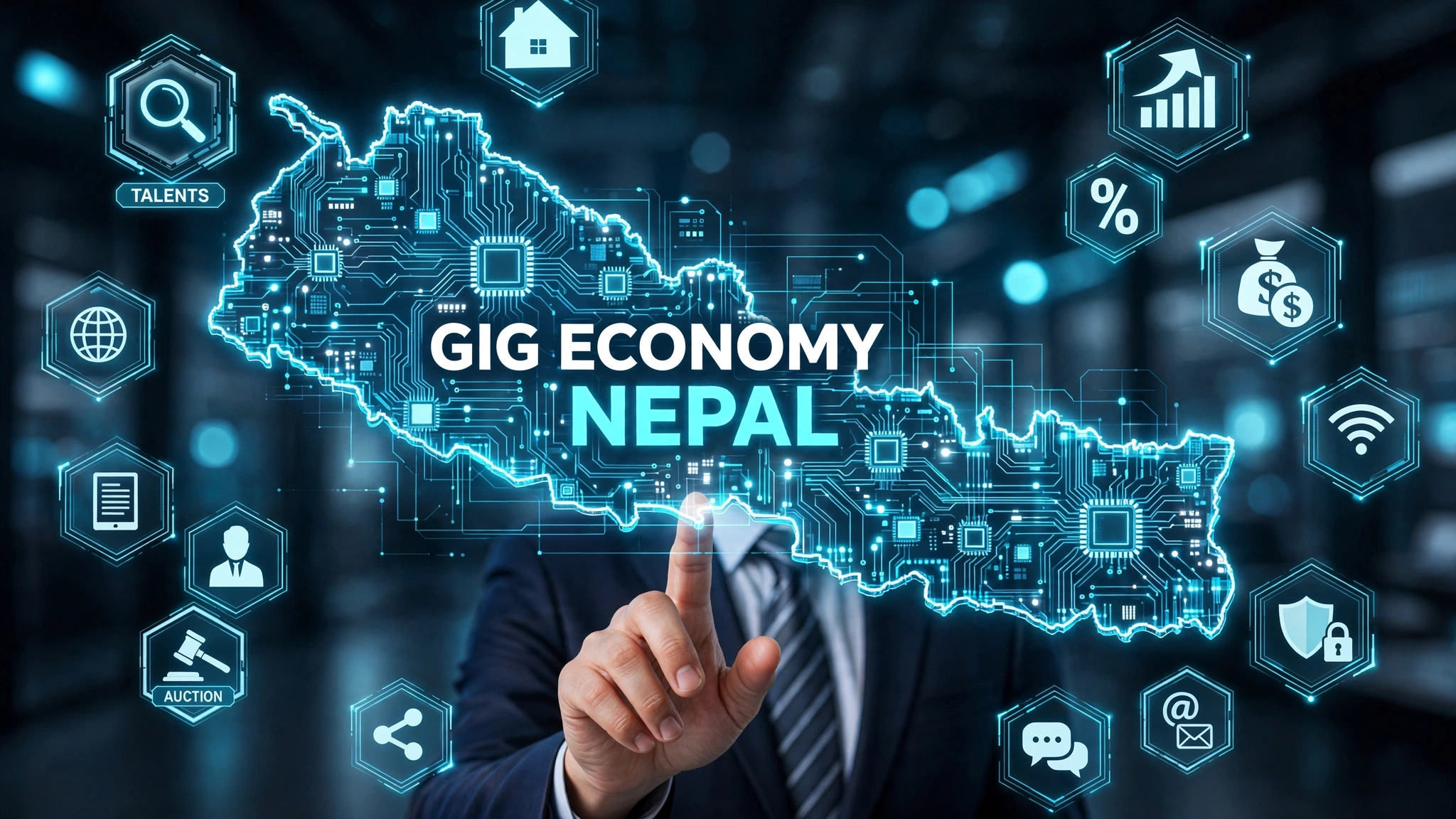
The world of work is changing fast. The traditional 9-to-5 job is no longer the only option. More people are turning to short-term, flexible work. This is the modern gig economy. It is reshaping global labor markets. It is also making a significant impact in Nepal.
But what exactly is this new way of working? And how is it playing out in the unique context of Nepal’s market? Let’s find out.
Defining the Modern Gig Economy
First, we need a clear definition. The gig economy is a labor market. It is based on flexible, temporary, or freelance jobs. It often connects workers and customers through online platforms.
Think of it as a world of short-term tasks. These are called “gigs”. The term originally came from musicians. They used it to describe a single performance booking.
Today, the meaning is much broader. It covers everything from driving for a ride-share app to freelance writing online. The key is the flexibility and the platform-based connection.
Key Characteristics of Gig Work
What makes a gig job different from a regular job? Several factors stand out:
- Temporary Positions: The work is usually project-based or task-based. It is not a permanent role.
- Platform-Driven: Digital apps are used to connect workers with customers. These platforms are the new marketplace.
- Independent Workers: Gig workers are often independent contractors. They are not traditional employees.
- Flexible Schedules: Workers can choose when and how much they work.
- Various Income Streams: Many gig workers balance multiple sources of income.
The digital platform is the backbone of the modern gig economy. It enables the connection between supply and demand. It creates a system where anyone with a skill can offer a service.
The Global Scale of the Gig Economy
This is not a small trend. The numbers are huge and growing fast. In 2024, the global gig economy was worth $556.7 billion. Experts predict it could reach a staggering $1,847 billion by 2032.
This growth is fueled by technology. Smartphones and internet access have made it possible. The COVID-19 pandemic also accelerated the trend. More people turned to gig work for income.
Countries like the US and India are leaders in this space. The US gig economy is valued at about $1 trillion. In India, the number of gig workers is projected to reach 23.5 million by 2029. It’s a global phenomenon.
The Nepali Gig Economy: An Overview
Nepal is no exception to this global trend. The gig economy is rapidly expanding there too. It is growing because of urbanization and better internet access. It is creating new opportunities.
The Nepali gig economy covers many sectors. These include ride-sharing, food delivery, and e-commerce. Online tutoring and freelance work are also very popular.
According to a 2024 report, freelancing has the highest participation rate among Nepali gig workers. This suggests a strong market for digital skills. However, ride-sharing and delivery are also very common.
The growth is significant. The gig economy now contributes about 7% to Nepal’s GDP. This shows it is a major economic force. It is providing jobs and income for many people.
Major Platforms in Nepal’s Gig Ecosystem
Several platforms are leading the way in Nepal’s gig economy. Here are some of the most prominent ones:
- Ride-Sharing Apps: This is a huge sector. Major players include Pathao, inDrive, and Tootle. These apps connect passengers with drivers, mostly on two-wheelers.
- Food Delivery: Platforms like Foodmandu are well-known. They deliver food from restaurants to customers. This sector has also grown rapidly.
- Online Freelancing: Nepal has a strong freelance workforce. Platforms like Onlinekaam and Sevak connect freelancers with clients. These platforms cover services from programming to writing.
- E-Commerce Delivery: The rise of online shopping in Nepal has created a demand for delivery workers. Platforms handle logistics and package delivery.
These platforms are changing how people work. They offer flexibility. They also provide income opportunities for many, including students and part-time workers.
Who are Nepal’s Gig Workers?
Who is driving this new economy? A recent study of 386 gig workers provides some insights. Here is what we know about Nepal’s gig workers:
- Full-time vs. Part-time: This varies by sector. Ride-sharing and delivery often have full-time workers. Freelancing and tutoring attract more part-timers.
- Income Levels: Many gig workers earn a subsistence income. The typical monthly income is between NPR 30,000 and 40,000.
- Demographics: A surprising finding is that older individuals are more likely to engage in gig work. Younger people often prefer stable, traditional jobs.
- Motivation: The main attraction is earning potential. Income was cited as a key benefit by 48.19% of respondents. Flexibility was also a big reason.
Many gig workers are already employed. They take on gig work to supplement their income. This shows how the gig economy acts as a safety net. It provides extra cash for families.
Challenges in the Nepali Gig Economy
Despite its growth, the gig economy in Nepal faces many challenges. These are serious issues. They affect the well-being and security of workers. The sector is largely unregulated. This is a key concern.
Legal Ambiguities and Lack of Protection
One of the biggest problems is the legal status of gig workers. Nepal’s current labor laws do not recognize them as employees. This creates a “legal gray area”. They are not covered by standard labor protections.
This leaves workers without access to essential benefits. There is no provision for health insurance, pension plans, or paid sick leave. This is a major social protection gap.
The lack of clear rules has real-world consequences. For example, a 2026 report details the self-immolation of a ride-sharing driver, Ganesh Nepali. He faced immense financial pressure and heavy traffic fines. The incident highlighted the desperate situation many drivers face without any safety net.
Exploitation and Low Pay
Gig workers are often vulnerable to exploitation. Platforms set the pay rates and terms. Workers have very little bargaining power. Algorithms often manage them without human oversight.
The pressure to earn pushes drivers to take risks. Many accept rides offline to avoid platform commissions. However, this exposes them to further risks. Traffic police often fine them for picking up or dropping off passengers in restricted areas.
Furthermore, competition among platforms is driving down prices. Experts say that fares have dropped by as much as 60% over the past two years. While passengers benefit, drivers are bearing the cost. Their take-home pay is shrinking as fuel and maintenance costs rise.
Taxation and Digital Divide
The gig economy also creates problems for the government. Taxation is a complex issue. Many workers don’t understand their tax obligations. The irregular nature of income makes it hard to track and collect taxes.
There is also a digital divide. Participation in the gig economy is heavily concentrated in urban areas. Rural regions are left out due to poor internet infrastructure and low digital literacy. This limits the inclusive potential of the sector.
Regulatory Conflicts
The ride-sharing sector has sparked major conflicts. Traditional transport operators see ride-sharing as unfair competition. They have protested against new regulations. In June 2025, transport operators even went on a nationwide strike against ride-sharing rules in Gandaki Province.
The Nepali government is now trying to regulate the sector. The fiscal year 2026-27 budget proposes a five percent VAT on ride-sharing services. It also proposes a one percent withholding tax on drivers’ earnings. Drivers say these new taxes will reduce their already modest income. This shows the ongoing tension between regulation, worker welfare, and company profits.
Opportunities and the Path Forward
Despite the challenges, the gig economy offers huge potential for Nepal. It can be a powerful tool for economic development. With the right policies, it could create a more inclusive and resilient labor market.
Economic Growth and Job Creation
The gig economy is already a major contributor to Nepal’s GDP. It offers significant employment opportunities. This is especially true for youth and women.
It also helps to diversify the economy. It connects Nepali workers to global markets. Freelancers can find work online with clients from all over the world. This reduces dependence on traditional remittances.
Potential for Government Intervention
The government can play a transformative role. It needs to create a clear legal framework for the gig economy. This framework must define the rights and responsibilities of workers and platforms.
Several key policy reforms are needed:
- Legal Reforms: Update outdated laws like the Vehicle and Transport Management Act. This act currently prohibits using private vehicles for commercial purposes.
- Social Security: Work with digital platforms to introduce social security schemes. This could include health insurance, retirement plans, and paid leave tailored for gig workers.
- Financial Literacy: Provide training programs to help gig workers manage their income and plan for the long term.
- Digital Infrastructure: Invest in internet access and digital literacy programs for rural areas.
By addressing these issues, Nepal can build a sustainable and fair gig economy. This will benefit workers, platforms, and the national economy.
Conclusion: The Future is Flexible
The modern gig economy is here to stay. It is a defining feature of the 21st-century labor market. It offers flexibility and income opportunities. Yet, it also presents significant challenges.
In Nepal, the gig economy is a major force. It contributes 7% of the GDP. It provides a livelihood for thousands of people. The digital platforms are creating new ways of working.
However, the path forward is not without its problems. Legal ambiguity, worker exploitation, and a lack of social protection are major issues. The government must act to create a fair system.
The future of work in Nepal will likely be a hybrid. Traditional jobs will still exist. But more and more people will turn to gig work. The goal must be to balance flexibility with security. It is time to protect Nepal’s modern gig workforce.
Frequently Asked Questions (FAQ)
What is the modern gig economy?
The modern gig economy is a labor market based on temporary, flexible jobs. It uses digital platforms to connect independent workers with customers for short-term tasks or projects.
How big is the gig economy in Nepal?
The gig economy in Nepal is a significant and growing part of the economy. It contributes about 7% to the country’s GDP.
What are the main types of gig work in Nepal?
The main types include ride-sharing (like Pathao and inDrive), food delivery (like Foodmandu), freelance work (like Onlinekaam), and e-commerce delivery.
What are the biggest challenges for gig workers in Nepal?
The key challenges are legal ambiguity, a lack of social protection (like health insurance), job insecurity, low and shrinking pay, and vulnerability to exploitation.
What is the government doing to regulate the gig economy?
The government is proposing new taxes on ride-sharing services. It is also under pressure to create a legal framework. However, clear and comprehensive regulation is still lacking.