Wholesale and retail trade is the single largest activity in Nepal’s economy, an estimated 14.55 percent of GDP in fiscal year 2081/82, ahead of every other individual line in the national accounts. Yet the buildings designed to house that spending, Kathmandu’s shopping malls, are among the emptiest commercial property in the Valley. At Chhaya Center in Thamel, which bills itself as the country’s largest mall, only about 100 of its 258 retail units were ever occupied. The gap between what Nepalis spend and how little of it moves through formal malls is the core problem of Kathmandu retail real estate.
Key Takeaways
- Wholesale and retail trade is Nepal’s single largest economic activity at an estimated 14.55 percent of GDP (FY 2081/82), yet formal mall space runs far below capacity.
- Chhaya Center, Kathmandu’s largest mall at a reported 860,000 square feet and about Rs 5 billion to build, had roughly 100 of its 258 retail units occupied.
- Older complexes show the same pattern: CTC Mall (320,000 sq ft, opened 2013) carries minimal retail, and Star Mall in Putalisadak filled six of its seven floors with education consultancies instead of shops.
- No government body publishes mall vacancy or footfall figures in Nepal, so supply decisions run on guesswork rather than demand data.
- The format that is actually winning is the standalone big-box supermarket: Bhat-Bhateni grew to roughly 29 outlets and more than 22,000 employees without a mall at all.
How much mall has Kathmandu built?
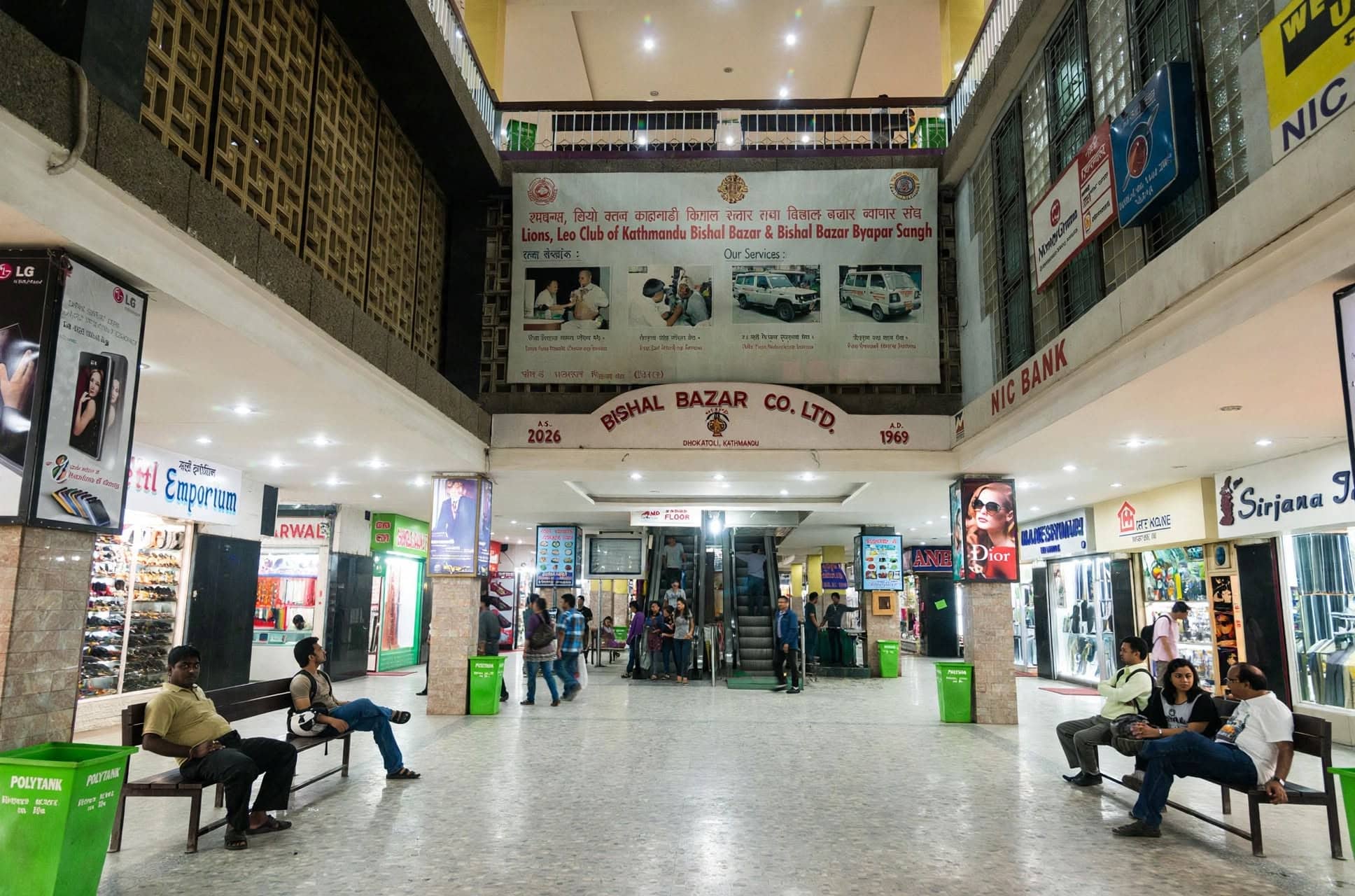
Kathmandu has far more enclosed retail floor space than most visitors assume. Public listings name more than two dozen malls and trade centers across the Valley, from early complexes like Bishal Bazar (1970) to the current generation of glass towers. The largest are substantial by any standard: Chhaya Center at a reported 860,000 square feet, the National Business Trade Center at 523,767 square feet, and CTC Mall in Sundhara at roughly 320,000 square feet. Kathmandu Metropolitan City issued 832 commercial building permits between 2016 and the end of the last decade, and construction of 10,000-plus square foot commercial buildings ran at 15 to 16 permits a year even as existing malls sat half empty.
The money kept coming because malls read as a safe, visible asset. A finished retail tower looks like proof of a growing middle class, and financiers treated the floor plates as collateral rather than as businesses that need shoppers. Chhaya Center alone cost about Rs 5 billion to put up. What almost none of these projects came with was a study of whether the demand existed to fill them.
The footfall nobody counts
Nepal has no official retail vacancy index and no published footfall data. Individual malls count their own traffic for internal use, but none release it, and no regulator, trade body, or statistics office aggregates it. The result is a market where developers cannot see, in any reliable way, how many people actually walk a competitor’s floors before they decide to build another mall across the street. This is the same blind spot that defines the rest of the city’s commercial market: as covered in our look at Kathmandu office space and the vacancy no one measures, asking rents circulate freely while occupancy stays a private number.
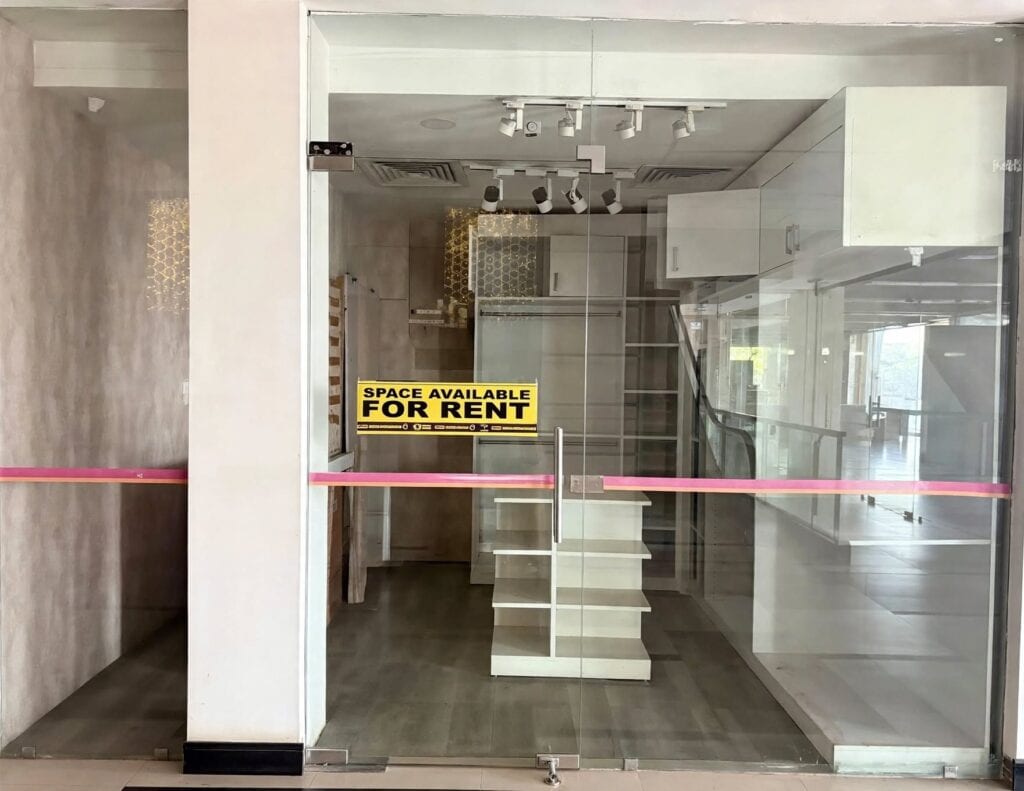
The visible evidence has to stand in for the missing data. At Chhaya Center, the ground floor carried dozens of empty units years after opening, and the mall’s own materials describe around 100 operating stores against a capacity of more than 200. CTC Mall, nine stories in the heart of Sundhara, has long run with sparse retail and shutters openly advertised for resale and lease. When occupancy is this easy to see from the sidewalk, the absence of a formal number is itself the story.
Why the shutters stay shut
Three forces explain the empty space. The first is where high-spending Nepalis actually shop. “People who can afford to shop are going abroad,” Ramesh Sharma, a former chair of the contractors’ association, told the Kathmandu Post, pointing to shopping trips to Bangkok, Delhi, and Dubai that pull the top of the market out of the country entirely. The second is the herd behavior of the investors themselves. “They do not do any market research,” said Keshav Acharya, a former executive director at Nepal Rastra Bank, describing developers who see one busy complex and assume a second will fill just as fast.
The third is that the mall is no longer where everyday retail happens. Nepali shoppers moved toward standalone supermarkets for groceries and household goods and toward online and social-commerce sellers for much of the rest. A mid-tier clothing or electronics shop that would have anchored a mall floor a decade ago now weighs the same rent against a street-level space with its own footfall, or against no physical store at all. High asking rents set against thin and unmeasured traffic make the math hard, and empty floors above the ground level are the visible result.
What is winning: big boxes and conversions
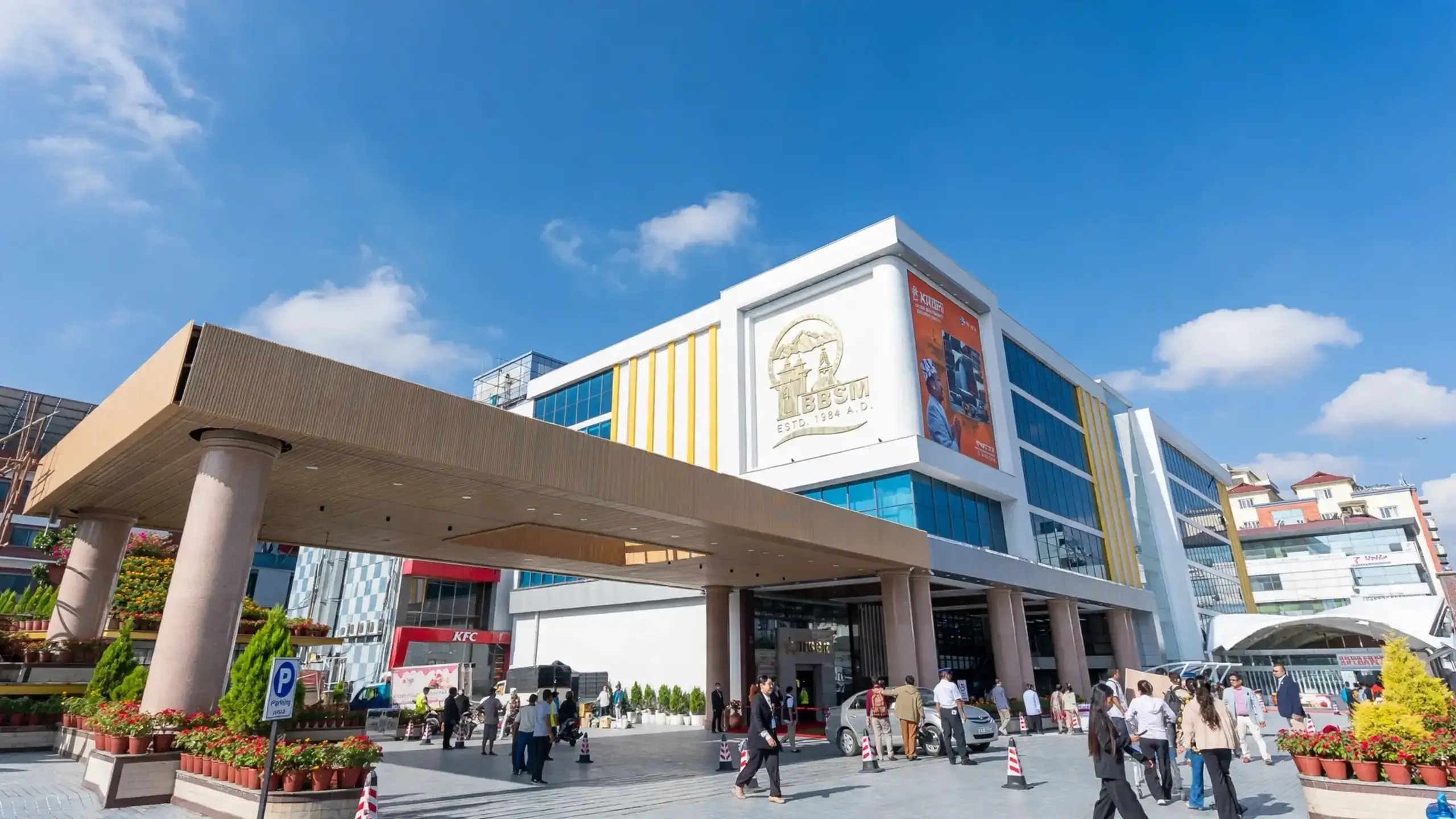
The clearest contrast is Bhat-Bhateni. Founded in 1984 with an initial investment of Rs 35,000, the chain grew to roughly 29 outlets and more than 22,000 employees by relying on standalone big-box stores with their own parking and their own anchor pull, not leased units inside someone else’s mall. That model carries its own risks: during the September 2025 unrest, the company reported that roughly two-thirds of its outlets were damaged and about a dozen destroyed, a reminder that concentrated single-owner retail is exposed in ways scattered tenancies are not. Even so, the format that captured Nepal’s rising consumer spending was the supermarket, not the mall.
Where malls could not fill with shops, many quietly converted. Star Mall in Putalisadak, opened in 2016, ended up with six of its seven floors occupied by education consultancies rather than retail. Upper floors of other complexes have drifted toward offices, training centers, and service businesses that value a central address more than passing shoppers. The empty shutters that remain are a standing part of the commercial-space market, and vacant retail units in these towers now turn up regularly on property platforms such as Basobaas under shop and business listings, priced to move.
What it means for commercial real estate
For anyone weighing retail property, the lesson is that supply has repeatedly run ahead of demonstrated demand. New mall floor space in Kathmandu is a speculative bet unless it is tied to a specific, verified catchment. That is a sharper warning than it sounds, because other commercial segments do have real demand drivers behind them. The office market is pulled by an IT services sector that exported more than a billion dollars in 2025, and, as we noted in our piece on warehousing and logistics land, trade volumes are straining capacity near the dry ports. Malls have no comparable engine. The parallel is closer to Nepal’s hospitality glut, where, as detailed in our report on the luxury hotel pipeline running against roughly 30 percent occupancy, prestige supply keeps rising past the demand to use it.
This is not an argument that every mall fails. The complexes that draw steady crowds tend to share a formula: a supermarket or cinema anchor, a food court, workable parking, and a dense residential neighborhood within walking distance. That is why mixed-use towers in established catchments hold up better than isolated glass boxes built on the assumption that shoppers will travel to them. For a buyer or lessor, the due diligence is specific: confirm the anchor tenant and its lease term, judge the catchment population rather than the square footage, check parking against the city’s traffic reality, and treat any footfall claim as an estimate until it is independently verified. In a market with no published vacancy data, the discipline that developers skipped is exactly the discipline an investor has to supply. For the broader picture, Nepal Rastra Bank’s statistics and reports remain the most reliable read on the credit and consumption trends that ultimately decide whether a retail floor fills.
For related coverage, see our full Real Estate section.
Frequently Asked Questions
How many shopping malls does Kathmandu have?
Public listings name more than two dozen malls and trade centers across the Kathmandu Valley, and industry accounts have described roughly a dozen sizable modern malls in the city proper. There is no official register, so the exact count depends on how a mall is defined against a trade center or a department store.
Why are so many Kathmandu malls empty?
Three reasons stand out: higher-spending shoppers often buy abroad or in standalone supermarkets rather than in malls, developers built without market research into actual demand, and much everyday retail shifted to street-level stores and online sellers. High asking rents set against thin, unmeasured footfall leave many upper floors unleased.
Which is the biggest shopping mall in Kathmandu?
Chhaya Center in Thamel markets itself as the country’s largest mall. It opened in December 2018, was built at a reported cost of about Rs 5 billion, spans a reported 860,000 square feet, and was designed for more than 250 retail units alongside the Aloft hotel, a cinema, and parking.
Are shopping malls a good commercial real estate investment in Nepal?
They can be, but only with strict due diligence. Nepal’s mall sector has a long record of supply outrunning demonstrated demand, and there is no published vacancy or footfall data to rely on. A sound bet depends on a confirmed anchor tenant, a dense local catchment, workable parking, and independently verified traffic rather than headline floor area.
How big is retail trade in Nepal’s economy?
Wholesale and retail trade is Nepal’s single largest individual economic activity, estimated at about 14.55 percent of GDP in fiscal year 2081/82. The paradox is that this spending flows mostly through supermarkets, street-level shops, and cross-border purchases rather than through the formal mall floor space built to capture it.