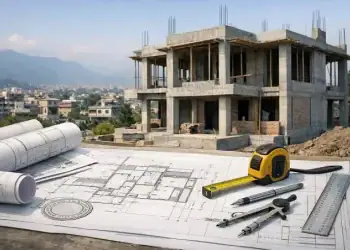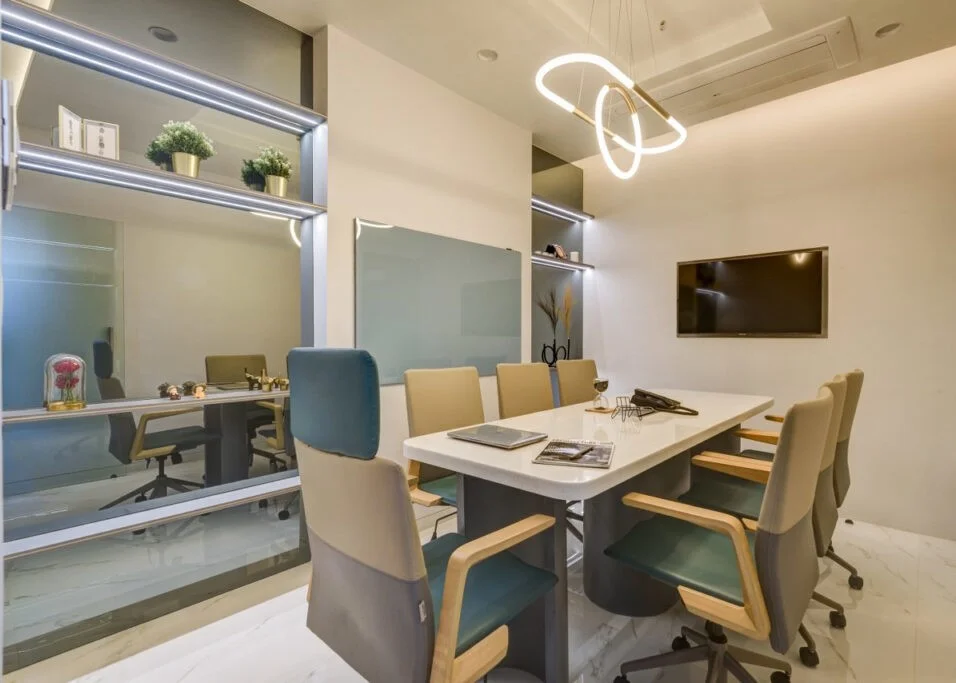
Walk the length of Durbarmarg, Baneshwor, or Pulchowk and you can read Kathmandu’s office market off the buildings: glass-fronted floors above bank branches, “To Let” banners on the third story, an IT firm’s logo where a textile showroom used to be. What you cannot find is a number for any of it. Nepal has no office vacancy index, no published absorption data, and no transacted-rent benchmark. The capital that houses roughly 90 percent of the country’s fastest-growing export sector runs its commercial space on handshake leases and asking prices typed into property portals. For anyone deciding whether to lease, build, or buy an office floor in the valley, the first fact is that the data everyone else takes for granted does not exist here.
Key Takeaways
- Asking rents for office space in Kathmandu run roughly Rs 50 to Rs 175 per square foot per month on listing portals, set almost entirely by private negotiation rather than any published benchmark.
- Demand is anchored by an IT and outsourcing sector whose service exports crossed $1 billion in 2025 and employs about 100,000 people, 90 percent of them in Kathmandu.
- Nepal has no institutional office vacancy or absorption index. There is no JLL or CBRE style tracking, so every “vacancy rate” you hear is anecdotal.
- At the 2022 to 2023 downturn, New Baneshwor reported 25 to 30 percent of shutters empty and Bishwajyoti Mall over 50 percent unoccupied. That trough still shapes how landlords price risk.
- Real estate still backs 65 percent of all bank loans, and construction lending grew 12.9 percent year over year (NRB data, mid-2025), keeping commercial supply flowing even when tenants are scarce.
- Flexible and serviced space (Regus, Work Around, Adda, The Platform) is the fastest-moving segment, because small firms will pay a premium to avoid a multi-year lease.
The market nobody measures
In most capital cities, a prospective tenant can pull a quarterly report and read grade-A rent, vacancy, and net absorption to two decimal places. Kathmandu has none of that. The brokers are largely the same informal ghar jagga agents who handle land and apartments, and the leases they arrange are mostly verbal or lightly documented. That informality is not a side issue: as BiznesVue has reported on commercial lease informality in Nepal, unwritten agreements dominate, and disputed evictions can take six months to two years through the district courts. The practical effect for the office market is that there is no clean, aggregated record of what space actually changes hands or at what price.
So the honest starting point is this: the figures that follow are asking rents from public listing portals and operator pricing, not audited transaction data. They are directional, not definitive. Treat any single number as a landlord’s opening position, not a market clearing price.
What office space actually costs

Across the main Kathmandu portals, whole-floor and multi-room office listings price in a wide band. On one large portal, monthly asking rents range from about Rs 45,000 for a small space to Rs 35 lakh for a 20,000 square foot floor in Lazimpat. Converted to a per-square-foot basis, that works out to roughly Rs 50 per square foot per month at the low end (Kalopul, a 2,000 square foot space) and about Rs 175 at the premium end (Lazimpat). Mid-market examples sit in between: a 9,000 square foot floor in Baneshwor asking roughly Rs 102 per square foot, and a 29,000 square foot space in Pulchowk, Lalitpur at about Rs 125.
A second portal, listing 27 verified commercial spaces for rent in Kathmandu, reports an average asking rent of around Rs 2.15 lakh per month, with a Tripureshwor space quoted at about Rs 135 per square foot. The consistency across portals, a rough Rs 50 to Rs 175 per square foot per month corridor, is the closest thing the city has to a rent benchmark. Location, floor plate, parking, backup power, and lift access explain most of the spread. What you will not find is a transacted average, because nobody compiles one.
For tenants who want to compare current listings themselves, marketplaces such as Basobaas carry a dedicated office-space category alongside land and residential. Reading several portals at once is the only practical way to triangulate a fair asking range for a given neighborhood.
Where the demand is coming from
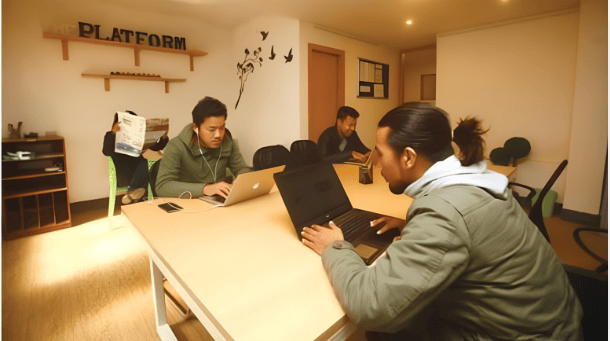
The single clearest demand signal is the technology sector. Nepal’s IT service exports crossed the $1 billion mark in 2025, more than doubling in three years from roughly $515 million in 2022, according to reporting in The Kathmandu Post. The sector employs about 100,000 people, and roughly 90 percent of that employment is concentrated in Kathmandu. The work spans software development, IT outsourcing, AI services, healthcare data analytics for US firms, and home loan processing for Australian lenders. Every one of those jobs needs a desk, and most of them need a desk in the valley.
That is a structurally different tenant from the retail and trading businesses that filled Kathmandu’s commercial floors a decade ago. IT and outsourcing firms scale headcount in bursts, prize reliable power and internet over street frontage, and increasingly want fitted-out space they can occupy in weeks, not months. It explains why serviced and coworking operators, from global brands like Regus to local spaces such as Work Around, Adda, and The Platform, have carved out a niche in areas like Jhamsikhel and the inner core. The coworking model in Nepal still fights the traditional preference for owning or holding a dedicated office, but for a 15-person startup, hourly and monthly desks beat signing a five-year lease on a cold shell.
The supply side keeps building anyway
Here is the tension at the center of Kathmandu’s office market: supply is driven less by tenant demand than by how Nepalis store wealth. Real estate remains the collateral the banking system is built on, backing 65 percent of all bank loans as of mid-2025, down only slightly from 68.5 percent a year earlier, per Nepal Rastra Bank data reported by ShareSansar. Construction lending grew 12.9 percent year over year in the same period, faster than most other sectors. When a landowner can borrow against a plot and put up a commercial block, the building often goes up whether or not a tenant is waiting. The result is persistent commercial construction in a market with no reliable read on vacancy.
That dynamic is not unique to offices. The same wealth-storage logic has produced measured oversupply in other commercial segments, from the five-star hotel glut BiznesVue has documented in Nepal’s hospitality sector to the warehousing dynamics covered in our look at logistics land near the dry ports. Office towers are the next frontier of the same bet, and the same risk.
What vacancy looks like without a vacancy number
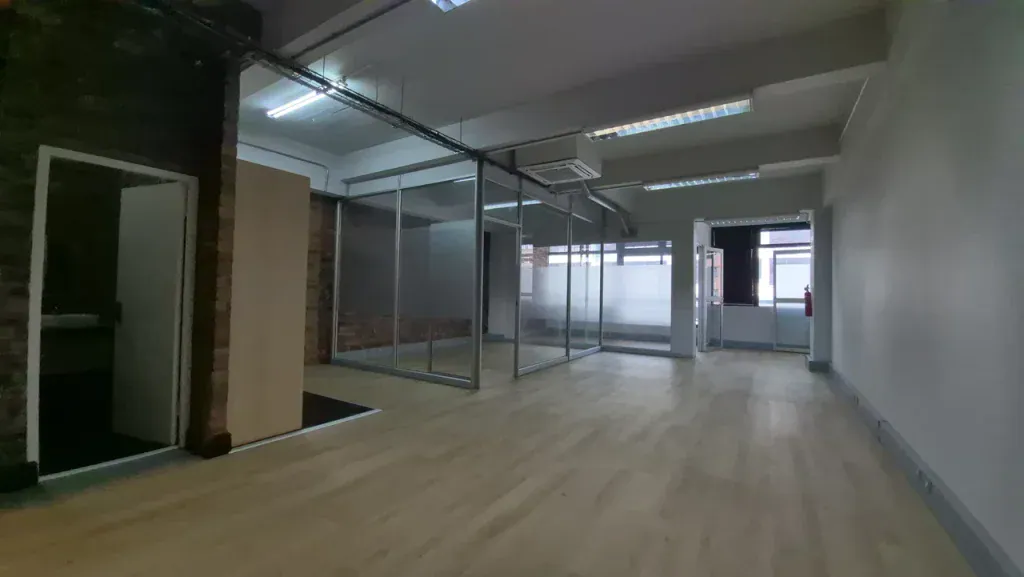
The closest the market has come to an honest vacancy read was during the downturn that followed the 2022 liquidity crunch. In 2023, business groups estimated that around 35 percent of businesses had shut amid the credit squeeze, Nepal’s first recession in roughly six decades. Reporting from that period found that in the New Baneshwor business district, 25 to 30 percent of shutters stood vacant, and more than half the space in Bishwajyoti Mall sat empty. Rents in prime pockets that landlords once refused to vacate for over Rs 1.5 million in compensation were being surrendered for around Rs 500,000, a sharp repricing of what commercial space was worth.
Those are 2023 figures, and the macro picture has since steadied: private sector credit grew Rs 407.62 billion, or 8.7 percent, in the year to mid-2025, and the broader property market has normalized rather than crashed. But the trough matters because it reset landlord psychology. Owners who watched tenants walk away in 2023 now price in that downside, and the gap between a hopeful asking rent and an achievable one is wider than the portals suggest.
What it means for tenants and investors
For a tenant, the absence of data is leverage. With no published benchmark, asking rents are negotiable, especially for larger floors and longer terms, and a landlord carrying a bank loan on an empty block has a strong reason to deal. Insist on a written lease that specifies rent, escalation, power backup, and exit terms, because the informal norm offers little protection when a dispute lands in court.
For an investor weighing a commercial office build, the honest conclusion is more cautious. The demand story is real but concentrated: it rests heavily on one sector, IT and outsourcing, whose growth is impressive but exposed to global contract cycles and to policy on how those export earnings are taxed and repatriated. Building speculative office space on borrowed money into a market with no vacancy data, still shadowed by a recent downturn, is a bet on continued IT expansion more than on diversified demand. The upside is genuine if that expansion holds. The risk is a tower of empty floors financed at 12 percent, and no index to warn you on the way there. For how office real estate fits the wider lending picture, see our analysis of the banking system’s Rs 2 trillion property exposure, and browse more coverage in the BiznesVue Real Estate section.
Frequently Asked Questions
What does it cost to rent office space in Kathmandu?
Asking rents on Kathmandu property portals run roughly Rs 50 to Rs 175 per square foot per month, depending on location, floor size, and amenities such as parking, lift access, and power backup. Prime areas like Lazimpat and Durbarmarg sit at the top of that range, while peripheral neighborhoods are lower. These are asking prices set by negotiation, not audited transaction figures, so the achievable rent is often below the listed one.
Is there a reliable office vacancy rate for Kathmandu?
No. Nepal has no institutional office market index and no systematic tracking of vacancy or absorption, unlike markets served by firms such as JLL or CBRE. The only vacancy figures available are anecdotal or tied to specific downturns, such as the 2023 recession, when parts of New Baneshwor reported 25 to 30 percent of commercial shutters empty.
What is driving demand for offices in Kathmandu?
The main driver is the IT and outsourcing sector. Nepal’s IT service exports crossed $1 billion in 2025 and the sector employs about 100,000 people, roughly 90 percent of them in Kathmandu. Software, BPO, AI services, and data-processing firms are the most active office tenants, and many prefer serviced or flexible space over long leases.
Which areas of Kathmandu have the most office space?
Office listings cluster in Baneshwor, Durbarmarg, Lazimpat, Putalisadak, Bagbazaar, Thapathali, and Pulchowk and Jhamsikhel in Lalitpur. Flexible and coworking operators tend to concentrate in the inner core and around Jhamsikhel, where IT firms and startups are based.
Should an investor build a commercial office tower in Kathmandu now?
Proceed with caution. Demand is real but concentrated in a single sector exposed to global contract cycles, there is no vacancy data to guide supply decisions, and the 2022 to 2023 downturn showed how quickly commercial space can empty. Speculative office construction financed at high interest rates carries meaningful risk; pre-leasing or anchor tenants substantially reduce it.
How are office leases structured in Nepal?
Many commercial leases in Nepal are verbal or lightly documented, which creates risk when disputes arise. Tenants should insist on a written agreement covering rent, annual escalation, security deposit, power and internet provisions, maintenance, and exit terms. Under the Muluki Civil Code, written agreements are not mandatory below certain rent thresholds, but they are strongly advisable for any office tenancy.