Nepal’s brain drain isn’t a distant threat anymore. It’s happening right now, permit by permit.
Every year, hundreds of thousands of young Nepalis leave for jobs abroad. Many never come back. This steady outflow is reshaping the country’s workforce, families, and future.
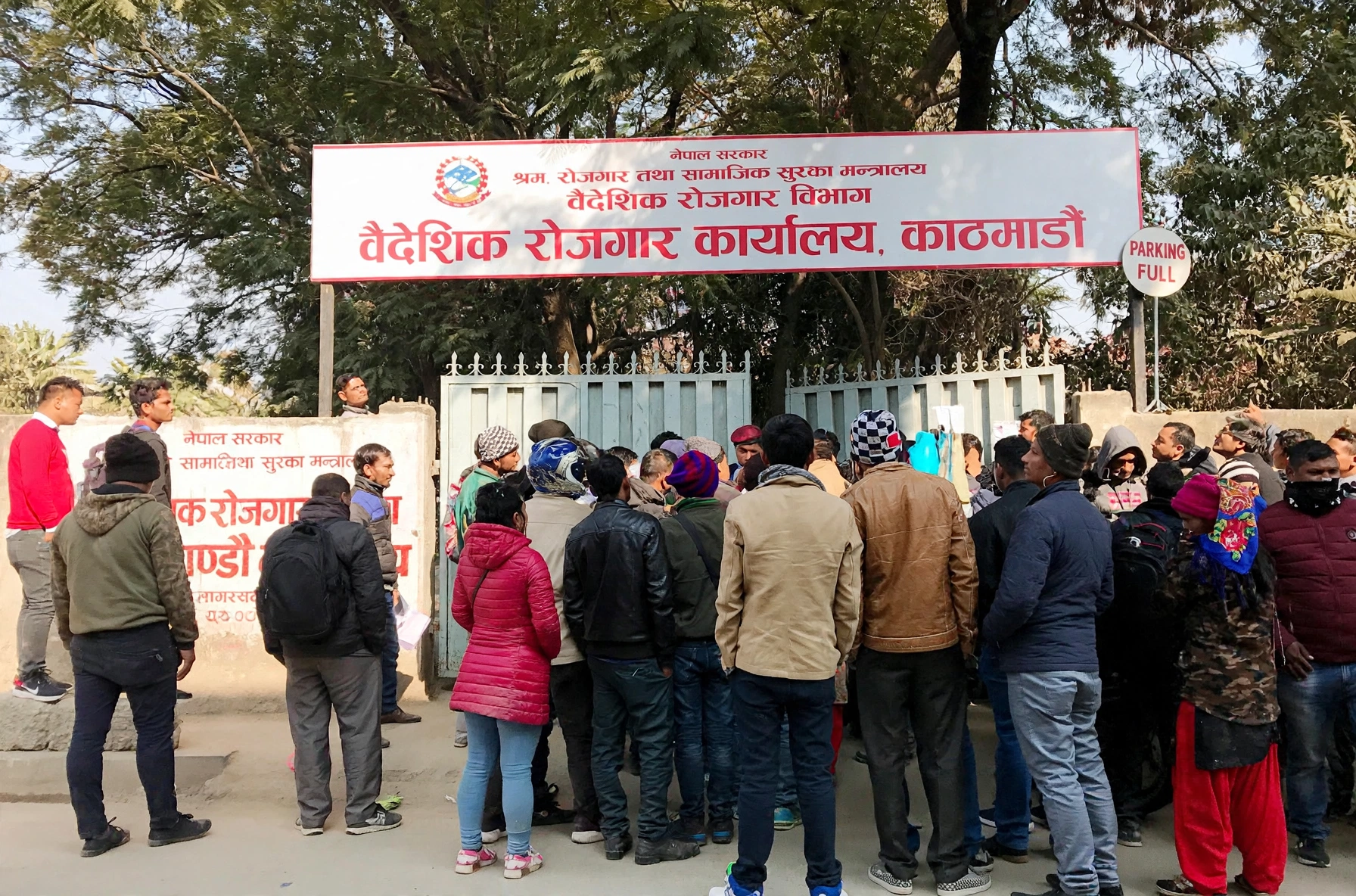
To understand the scale of this problem, we need to look at one key number. That number is the count of labor permits issued annually by the Department of Foreign Employment, or DoFE. It’s the clearest, most consistent signal we have of how fast Nepal’s human capital is leaving.
In this article, we’ll break down what the data actually says. We’ll also explore why this matters, and what it means for Nepal’s long-term development.
What Is Nepal Brain Drain, Exactly?
Brain drain refers to the long-term loss of skilled and unskilled workers who leave their home country permanently, or for extended periods. In Nepal’s case, it includes both high-skilled professionals and low-skilled laborers.
This distinction matters. Unlike many countries, Nepal’s brain drain isn’t limited to doctors or engineers. It spans nearly every sector of the workforce. Farmers, construction workers, domestic helpers, and IT professionals are all part of the exodus.
As a result, the impact touches every corner of the economy. Local labor markets shrink. Family structures change. Villages empty out, especially in rural districts.
Why DoFE Permits Are the Metric That Matters
The Department of Foreign Employment issues labor permits to Nepalis heading abroad for work. Consequently, this permit count offers a direct, verifiable snapshot of outbound labor migration.
Unlike survey estimates or census projections, DoFE data is administrative. It’s collected in real time, as people apply to leave. Therefore, it’s one of the most reliable indicators available to researchers and policymakers.
Furthermore, tracking DoFE permits over time reveals patterns. It shows which years saw surges, which years saw declines, and why those shifts happened. This makes it a powerful structural metric for measuring brain drain over the long term.
The Numbers: A Two-Decade Story
Let’s look at the actual trend, because the numbers tell a compelling story.
Labor permit issuance in Nepal rose steadily throughout the 2000s. According to the Nepal Economic Forum, permits peaked in fiscal year 2013/14, reaching 519,638. That was the high-water mark.
After that, however, numbers began to fall. One major reason was the “Free Visa Free Ticket” policy, introduced in June 2015. This policy shifted recruitment costs onto employers abroad. As a result, it hit demand from Malaysia particularly hard, since many Malaysian employers were unwilling to absorb those costs.
Then came COVID-19. Migration nearly halted during the pandemic. Roughly 115,000 workers who had already received permits couldn’t leave due to travel restrictions, according to research published by Springer Nature.
But the pause didn’t last. Migration rebounded sharply once borders reopened. By fiscal year 2023/24, DoFE approvals surged past 741,000. That figure includes 661,125 men and 80,172 women, based on the Nepal Labour Migration Report 2024, jointly published by Nepal’s Ministry of Labour and Aarhus University.
In the first nine months of fiscal year 2024/25 alone, Nepal recorded over 358,000 new labor approvals. This suggests the outward trend is continuing, even accelerating in some respects.
Altogether, more than 7.6 million labor permits have been issued since 2008. That’s a staggering figure for a country of roughly 30 million people.
Who Is Leaving, and Where Are They Going?
The demographic profile of Nepal’s outbound migrants is strikingly consistent. Most are young adults, typically between 25 and 35 years old. This is prime working age, the age group a country relies on most for productivity and growth.
Gender imbalance is also significant. Data shows around 81% of Nepalis abroad are male, while roughly 19% are female. However, female labor migration has been slowly rising in recent years, driven by demand in domestic work and caregiving sectors.
As for destinations, a handful of countries dominate. Malaysia, Qatar, Saudi Arabia, the UAE, and Kuwait receive the bulk of Nepali workers. India also absorbs a large, though undercounted, share of migrants. Since Nepal and India share an open border, no labor permit is required to work there. That means official DoFE numbers likely understate the true scale of outmigration.
According to earlier estimates from the Nepal Economic Forum, more than 1,700 Nepalis left for foreign employment every single day. Some more recent academic sources place that daily figure closer to 1,931. Either way, the pace is relentless.
The Economic Trade-Off: Remittances vs. Human Capital
Here’s the paradox at the heart of Nepal’s brain drain. The same migration that drains human capital also fuels the economy.
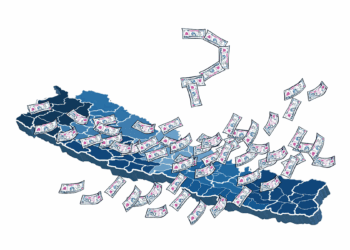
Remittances sent home by migrant workers are enormous. In fiscal year 2023/24, Nepal received around NPR 1,445 billion in remittances, roughly USD 11 billion. That accounted for nearly 25% of the country’s entire GDP, based on estimates from eStartup Nepal.
Momentum hasn’t slowed. In just nine months of fiscal year 2024/25, Nepal received over NPR 1,191 billion in remittances, marking about 10% year-on-year growth.
These funds matter enormously to households. Research cited in a 2024 academic study from Nepal Journal Online (ILAM) found that families receiving remittances are 2.3% less likely to fall into poverty than those who don’t. For every 10% increase in remittance flow, poverty probability within a household drops by about 1.1%.
So remittances clearly reduce poverty at the household level. Yet, this short-term financial relief comes at a long-term structural cost. Nepal is essentially exporting its most productive age group in exchange for cash inflows. Meanwhile, domestic industries struggle to find workers, and skill shortages deepen across sectors.
The Human Cost Behind the Statistics
Behind every permit number is a person, and often a family left behind.
Tragically, migration carries real risk. Over 14,000 Nepalis have died while working abroad over the past 15 years, according to reporting from eStartup Nepal. These deaths highlight ongoing concerns about worker safety, particularly in construction and labor-intensive industries in Gulf countries.
Additionally, regulatory oversight remains a challenge. In July 2024, DoFE suspended the licenses of more than 580 manpower recruitment companies due to fraudulent practices. This points to a recruitment ecosystem that, despite reforms, still struggles with exploitation and mismanagement.
Meanwhile, absentee households have become a defining feature of rural Nepal. Nepal’s 2021 Census found an absentee rate of 23%, according to LSE’s South Asia blog. That means nearly a quarter of households have at least one member currently living or working abroad. Villages increasingly consist of children, spouses, and elderly parents, while working-age adults are absent.
What Rising Migration Rates Signal for the Future
Nepal’s net migration rate offers another useful lens. It tracks how many people move in or out of the country per 1,000 population.
According to LSE’s analysis, this rate climbed from 3.636 per 1,000 in 2021 to 4.353 in 2022, a jump of nearly 20%. It then rose further in 2023, hitting 5.070 per 1,000, before dipping slightly in 2024 to 4.144 per 1,000.
Even with that recent dip, the broader trajectory since 2020 remains clearly upward. This suggests that outmigration pressures, particularly among youth, aren’t going away anytime soon. Instead, they reflect deeper, structural issues in Nepal’s domestic job market.
Why This Trend Deserves Long-Term Attention
So why should policymakers, researchers, and everyday citizens care about tracking DoFE permits specifically?
First, it’s a leading indicator. Rising or falling permit numbers often reflect underlying economic conditions long before those conditions show up in slower-moving statistics like GDP or unemployment data.
Second, it reveals structural weaknesses. Persistent high migration, especially among educated and skilled youth, signals that domestic job creation isn’t keeping pace with population growth or aspirations.
Third, it has generational implications. As more working-age adults leave, Nepal’s domestic labor pool skews older. Over time, this could strain productivity, innovation, and long-term economic competitiveness.
Finally, it shapes policy priorities. Understanding exactly how many people are leaving, and from which sectors, helps government agencies design better reintegration programs, skills development initiatives, and domestic job creation strategies.
Looking Ahead: Can Nepal Reverse the Trend?
Reversing brain drain isn’t simple, but it isn’t impossible either.
Several policy levers could help. These include expanding vocational training tied to actual domestic industry needs, improving wages and working conditions in local sectors, and creating stronger pathways for returnee migrants to reinvest their skills and savings back home.
Additionally, some experts argue Nepal should focus on “brain circulation” rather than pure prevention. That means encouraging migrants to gain skills abroad, then return with capital, networks, and expertise to build local enterprises.
Nonetheless, none of this works without accurate, ongoing data. That’s exactly why DoFE permit numbers remain essential. They’re the clearest, most trackable signal of whether Nepal’s brain drain is accelerating, stabilizing, or finally beginning to reverse.
Conclusion
Nepal’s brain drain is a defining demographic challenge of this decade. DoFE permit data makes that undeniable. From the 2013/14 peak of over 519,000 permits to the 2023/24 surge past 741,000, the numbers tell a story of persistent, large-scale outmigration.
Remittances continue to prop up the economy, contributing roughly a quarter of GDP. Yet, this comes at the cost of losing working-age adults, weakening domestic industries, and straining family structures across the country.
Ultimately, tracking DoFE permits isn’t just about counting departures. It’s about understanding Nepal’s economic trajectory, and deciding what kind of future the country wants to build for its youth.
FAQ: Nepal Brain Drain and DoFE Permits
What is the Department of Foreign Employment (DoFE) in Nepal?
DoFE is the Nepali government agency under the Ministry of Labour, Employment and Social Security. It regulates and issues labor permits for Nepalis working abroad.
How many labor permits does Nepal issue each year?
In fiscal year 2023/24, DoFE issued more than 741,000 permits. In the first nine months of 2024/25, over 358,000 new approvals were recorded.
Why did Nepal’s labor migration peak in 2013/14?
Migration peaked at 519,638 permits that year, before the 2015 “Free Visa Free Ticket” policy reduced demand, especially from Malaysia.
How much do remittances contribute to Nepal’s economy?
Remittances made up close to 25% of Nepal’s GDP in fiscal year 2023/24, totaling around NPR 1,445 billion.
What age group makes up most of Nepal’s migrant workers?
Most migrants are between 25 and 35 years old, representing Nepal’s prime working-age population.
Is Nepal’s brain drain limited to skilled workers?
No. Nepal’s brain drain includes both high-skilled professionals and low-skilled laborers across nearly every sector.