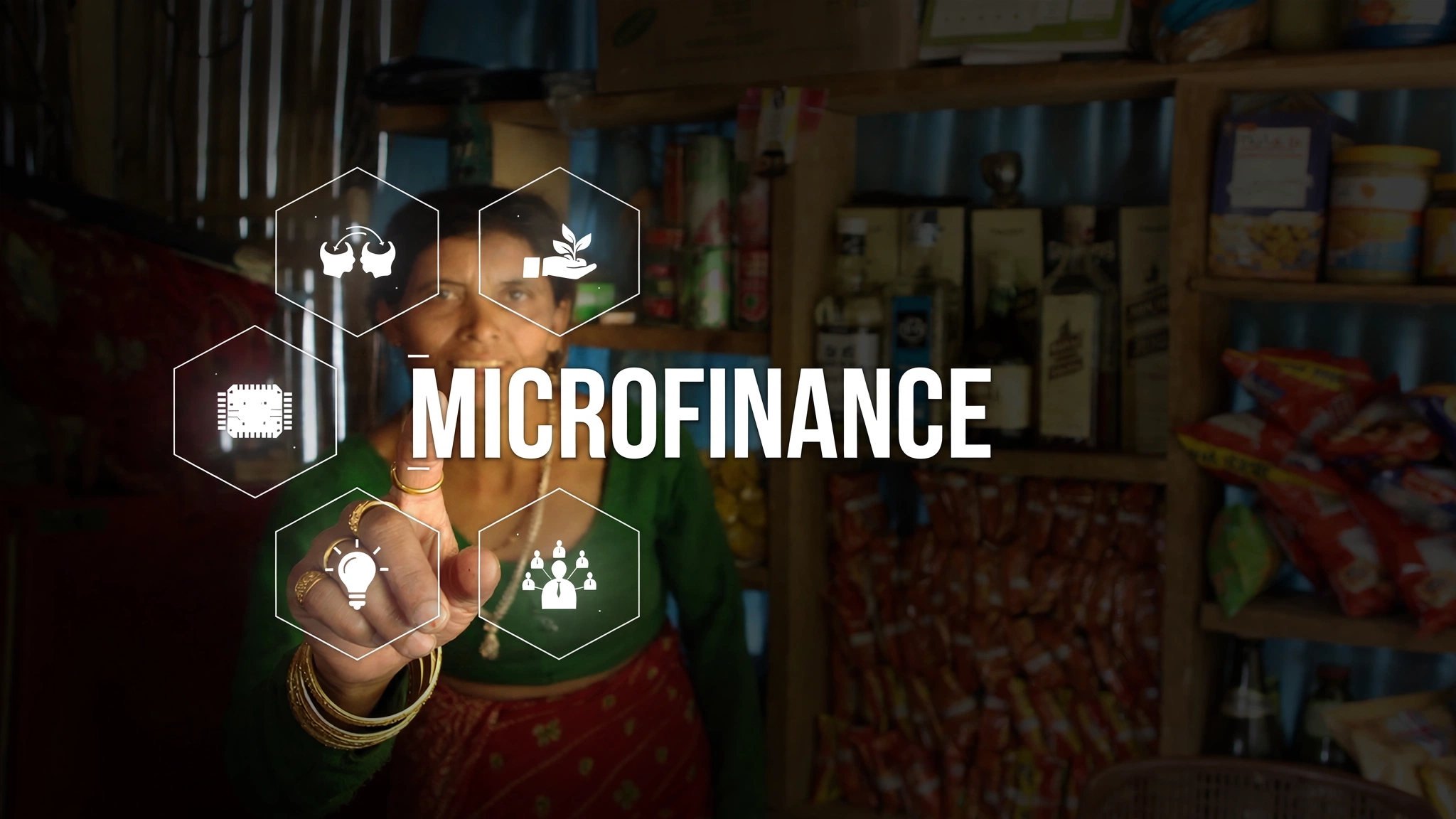
Microfinance was built on a simple promise. Give poor households small loans, and they will lift themselves out of poverty. For decades, that promise held true for millions of families. But today, microfinance over-indebtedness in rural areas is becoming a serious concern. Across Asia and beyond, rural borrowers are juggling multiple loans at once. Many turn to informal, predatory lenders just to stay afloat. This article unpacks why that is happening, and what it means for rural households.
What Is Microfinance Penetration, and Why Does It Matter?
Microfinance penetration refers to how deeply small-loan services reach into a population. In theory, higher penetration means better financial inclusion. In practice, it can mean something riskier. When too many lenders chase the same rural customers, over-lending follows. Borrowers end up holding loans from three, four, or even five institutions at once.
Globally, financial inclusion has grown steadily. According to World Bank Global Findex data, account ownership at financial institutions climbed from 63% to 71% worldwide between 2017 and 2021. That growth is good news overall. However, rapid expansion into rural markets has outpaced the checks needed to keep lending safe. Consequently, microfinance over-indebtedness in rural areas has emerged as an unintended side effect of success.
Rural households are especially exposed. They often lack steady income, formal credit histories, or collateral. As a result, they rely on group-lending models and character-based assessments instead. This works well when lending stays disciplined. Unfortunately, discipline tends to slip once competition intensifies.
How Over-Indebtedness Creeps Into Rural Lending
Over-indebtedness rarely happens overnight. Instead, it builds gradually through a familiar cycle. First, multiple microfinance institutions (MFIs) enter the same village. Next, they compete for the same limited pool of creditworthy borrowers. Then, underwriting standards quietly loosen.
India’s recent experience illustrates this pattern clearly. Between 2022 and 2023, deregulated lending rates fueled aggressive expansion across the sector. Lenders extended credit rapidly, often without fully checking a borrower’s existing debt load. By September 2024, delinquency rates on loans overdue 31 to 180 days had surged to 4.3%, up from just 2% a year earlier. By March 2025, that figure climbed further to 6.2%, according to the Reserve Bank of India’s Financial Stability Report.
The consequences rippled outward quickly. India’s gross microfinance loan portfolio shrank by 13.9% during the 2024–25 financial year. Non-performing assets nearly doubled, reaching around ₹55,000 crore. Meanwhile, roughly four lakh borrowers exited formal finance channels altogether. Many of them didn’t simply stop borrowing. Instead, they shifted toward informal sources instead.
Regulators eventually stepped in. Self-regulatory bodies MFIN and Sa-Dhan reduced the permissible number of microfinance lenders per borrower from four to three. They also capped total unsecured retail debt at ₹2 lakh per household. These guardrails helped. By mid-2025, borrower indebtedness, measured by the share of clients using three or more lenders, had started declining to 11.7%. Still, the episode revealed how quickly rural credit markets can spiral.
The Overlap With Predatory Informal Lenders
Here is where the story turns darker. When formal microfinance repayment pressure mounts, borrowers don’t simply default and walk away. Instead, many turn to informal moneylenders to bridge the gap. This is the crucial, often overlooked, overlap driving microfinance over-indebtedness in rural areas.
Research from Cambodia’s Battambang Province offers a striking case study. Academics from Development and Change found that strict repayment schedules and aggressive collection practices pushed rural households toward informal lenders. Borrowers used these informal loans to make monthly microfinance payments on time. Sometimes, they used informal debt as a bridge toward refinancing even larger formal loans. Ironically, this debt-juggling behavior often looked like success on paper. High repayment rates masked genuine borrower distress underneath.
Human Rights Watch documented similarly troubling findings in Cambodia. Research funded by the Cambodian Microfinance Association found that roughly 15% of Cambodian borrowers were spending over 70% of monthly income on debt repayment. Even more alarming, 6.4% owed more than their entire monthly income toward debt service. Certification schemes meant to protect borrowers, meanwhile, continued listing several lenders as compliant despite these findings.
This pattern is not unique to Cambodia. Studies cited by the World Bank note that microborrowers frequently resort to expensive informal moneylenders during low-income periods, simply to keep formal loan accounts current. Informal lenders typically charge far higher interest rates than regulated MFIs. Yet they offer something formal institutions cannot: instant cash, no paperwork, and flexible, if predatory, terms.
Consequently, rural borrowers get trapped between two systems. Formal microfinance demands strict, timely repayment. Informal lenders exploit that pressure, charging exploitative rates in return for flexibility. The result is a debt trap that deepens rather than resolves financial hardship.
Real-World Evidence: India, Cambodia, and Beyond
Numbers help illustrate the scale of this problem. In India, banks accounted for 48.3% of total microfinance credit outstanding as of 2024–25. When banks pulled back sharply amid rising defaults, a vacuum opened. NBFC-MFIs and fintech platforms filled that gap, but not always responsibly. NBFC-MFI portfolios controlled 38.3% of the market by March 2024, concentrating risk in less-regulated hands.
Geography matters too. States like Bihar, Tamil Nadu, Uttar Pradesh, and Karnataka reported the highest outstanding microfinance loans in 2024. These same states also showed elevated delinquency and borrower stress. Odisha, Uttar Pradesh, and Tamil Nadu recorded the sharpest quarter-on-quarter deterioration in loans overdue by 31 to 180 days.
Meanwhile, household debt patterns reveal a wider consumption-driven shift. RBI data shows that non-housing retail loans now make up 58.4% of household borrowing in India. Nearly half of all household debt funds consumption rather than income-generating activity. That distinction matters enormously. Loans used for consumption rarely generate the income needed to repay them.
Interestingly, when microfinance credit tightened, many households turned to gold loans instead. Gold loan growth reached a compound annual rate of 42.4% since March 2024, nearly double the pace of broader retail credit growth. This shift suggests displaced borrowers are still seeking credit somewhere. Unfortunately, that “somewhere” isn’t always safer or cheaper.
Cambodia’s experience adds an important cross-country dimension. There, indigenous communities faced particular vulnerability to predatory microfinance practices, according to Human Rights Watch’s 2025 investigation. Collateralized loan contracts sometimes put land itself at risk, deepening the stakes of over-indebtedness far beyond simple financial stress.
Socio-Economic Impacts on Rural Households
The consequences of microfinance over-indebtedness in rural areas extend well beyond spreadsheets. They touch nearly every part of household life.
Loss of land and assets. In severe cases, collateralized microloans put family land at risk. When repayment fails, households can lose the very asset meant to secure their future.
Coercive collection practices. India’s Economic Survey 2025–26 flagged reports of aggressive recovery tactics used against vulnerable borrowers. Pressure to maintain high repayment rates sometimes overrides borrower welfare entirely.
Weakened social cohesion. Group-lending models rely on joint liability and peer trust. However, rising individual defaults have weakened this Joint Liability Group structure. As cohesion erodes, so does the community safety net that once made microfinance work.
Women bear disproportionate risk. Over 75% of microfinance borrowers globally are rural women, according to industry data. While access to credit has empowered many, over-indebtedness disproportionately threatens the same women microfinance aimed to uplift.
Cyclical poverty, not escape from it. Ironically, debt taken to smooth income shocks can trap households in longer-term poverty. Income instability, poor harvests, and weak wage growth make repayment even harder. When one loan defaults, others frequently follow in a chain reaction.
On the positive side, evidence still shows genuine benefits when microfinance is well-managed. Studies note improved household consumption, better nutrition, and increased education spending among responsible borrowers. Roughly 47% of Indian microloan borrowers have used credit to start or expand small businesses. The challenge, therefore, isn’t microfinance itself. It’s ensuring penetration doesn’t outrun protection.
Regulatory Responses and Industry Guardrails
Fortunately, regulators have started responding. India’s central bank has pushed several structural reforms since 2024. These include capping the number of lenders per borrower, limiting total unsecured debt exposure, and requiring stronger underwriting checks before loan approval.
Self-regulatory organizations have played a meaningful role too. MFIN and Sa-Dhan have both tightened member guardrails, encouraging better borrower screening. As a result, borrower indebtedness, measured by multi-lender exposure, showed a declining trend by mid-2025, even as stressed assets continued rising in the short term.
Client protection certification schemes, such as Cerise+SPTF, aim to hold institutions accountable globally. However, Human Rights Watch’s Cambodia findings show these frameworks have real limits. Certified lenders were still linked to significant borrower over-indebtedness. This gap between certification and on-ground practice highlights why oversight must go beyond paperwork.
Ultimately, sustainable reform needs three things working together. First, credit bureaus and information-sharing systems must track cross-lender exposure accurately. Second, recovery practices need enforceable, humane standards. Third, regulation must extend to informal lending too, not just formal MFIs, since the two markets are deeply intertwined.
Building a Healthier Rural Credit Ecosystem
So, what actually helps? Several practical steps stand out based on the evidence.
- Credit information sharing. Real-time data on borrower exposure prevents multiple lenders from over-extending credit to the same household.
- Income-based lending limits. Loans should reflect realistic repayment capacity, not just group guarantees or past repayment history.
- Stronger informal-sector oversight. Since predatory informal lenders fill gaps left by formal credit, ignoring them only shifts risk elsewhere.
- Financial literacy programs. Borrowers who understand loan terms and total debt exposure make better borrowing decisions.
- Flexible repayment during shocks. Natural disasters, illness, and poor harvests shouldn’t automatically push households toward predatory debt.
- Rate rationalization. Capping microloan interest margins can curb profiteering while keeping credit affordable for genuinely needy borrowers.
Interestingly, India’s shift toward Self-Help Groups under the National Rural Livelihoods Mission shows promise. With over 80 lakh SHGs now active, this model blends community accountability with formal support. It offers one path toward penetration that doesn’t sacrifice protection.
Conclusion
Microfinance over-indebtedness in rural areas isn’t a sign that small loans fail. Rather, it’s a sign that rapid growth outpaced responsible lending practices. When formal microfinance overlaps with predatory informal lenders, vulnerable households absorb the risk twice over. The evidence from India and Cambodia makes this overlap impossible to ignore.
Going forward, the goal shouldn’t be less microfinance. Instead, it should be smarter, better-regulated microfinance that works alongside, not against, borrower welfare. With stronger credit information systems, humane recovery practices, and genuine oversight of informal lending, rural communities can keep the benefits of microfinance. At the same time, they can avoid the debt traps that undermine everything microfinance was meant to achieve.
Frequently Asked Questions
What is microfinance over-indebtedness in rural areas?
It happens when rural borrowers hold more microloans than they can realistically repay. Often, they borrow from multiple lenders at once, spreading risk across formal and informal sources.
Why do rural borrowers turn to informal lenders alongside microfinance?
Formal microfinance demands strict, timely repayment. When income falls short, borrowers often use informal loans as a quick bridge. Unfortunately, informal lenders typically charge much higher interest rates.
How common is over-indebtedness among microfinance borrowers?
It varies by region. In Cambodia, research found roughly 15% of borrowers spent over 70% of monthly income on debt repayment. In India, borrower indebtedness stood at 11.7% by mid-2025, based on multi-lender exposure data.
Can microfinance still benefit rural households despite these risks?
Yes, when managed responsibly. Studies show improved consumption, education spending, and small-business growth among borrowers with manageable debt loads. The risk lies in unchecked, competitive over-lending, not microfinance itself.
What can reduce microfinance over-indebtedness in rural areas?
Stronger credit information sharing, income-based lending limits, and oversight of informal lenders all help. Financial literacy and flexible repayment terms during income shocks also reduce borrower distress significantly.
Who is most affected by predatory rural lending overlap?
Rural women make up over 75% of microfinance borrowers globally, making them especially exposed. Low-income households facing income instability, poor harvests, or health shocks also face elevated risk.