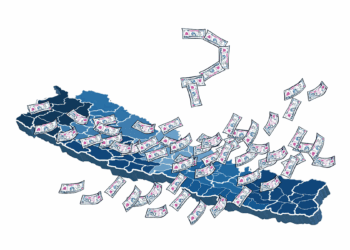
Nepal just posted its best-ever year of electricity export revenue. Almost all of that money came from a single customer.
Hydropower export monopsony in Nepal describes exactly this imbalance. Nepal’s rivers generate a genuine, growing surplus of clean energy. Yet, nearly the entire export market for that surplus runs through one buyer, India, leaving Nepal with limited pricing power and real exposure to decisions made entirely outside its borders.
This isn’t a hypothetical risk. It’s already shaping which hydropower projects get built, which foreign investors get welcomed, and how much bargaining leverage Nepal actually has when negotiating export terms. Understanding this dependency, and the genuine but limited steps Nepal has taken to diversify away from it, matters for anyone tracking the country’s energy future.
In this article, we’ll examine the scale of Nepal’s reliance on India as an energy buyer, the geopolitical mechanisms reinforcing that reliance, and what real diversification would actually require.
A Record Year Built on One Market
Nepal’s recent export numbers look genuinely impressive at first glance. According to the Kathmandu Post’s July 2026 reporting, Nepal earned Rs 29.32 billion from electricity exports to India and Bangladesh in fiscal year 2025-26, a 67.96% increase over the Rs 17.46 billion earned the previous year. This produced a net electricity trade surplus of Rs 18.76 billion, the highest annual export revenue the Nepal Electricity Authority has ever recorded.
Export volumes grew just as sharply. According to News Today’s coverage of the same NEA data, electricity exports rose from 2.3829 billion units in fiscal year 2024-25 to 3.877 billion units in fiscal year 2025-26, sold at an average price of Rs 7.56 per unit. Nepal became a net electricity exporter starting in fiscal year 2024-25, a genuinely significant milestone for a country that spent decades as a power-deficit importer.
However, look closely at where this revenue actually comes from. According to the Kathmandu Post, India remains the primary destination for Nepal’s electricity exports, with only a small portion reaching Bangladesh, and even that portion travels through India’s own transmission grid to get there.
Just How Concentrated Is This Dependency?
The scale of India’s dominance as a buyer becomes clearer when looking at Nepal’s export infrastructure directly.
According to the South Asia Subregional Economic Cooperation program’s August 2025 update, India approved an additional 200 MW purchase from Nepal, effective through October 2025, raising Nepal’s total export capacity to India to 1,010.9 MW. India currently imports an average of roughly 1,000 MW daily from Nepal, according to Nepal Republic’s tracking data, with India’s longer-term ambition, outlined in the 2022 India-Nepal Joint Vision Statement, targeting 5,000 MW of imports from Nepal by 2030.
This dependency was reinforced further just weeks ago. According to reporting on the 13th Joint Steering Committee meeting, held in Pokhara on July 15, 2026, India and Nepal agreed to raise combined power transmission limits to 1,650 MW for exports and 1,400 MW for imports. On the surface, this looks like straightforward regional integration progress. Critics describe it differently, characterizing the arrangement as “a masterclass in asymmetrical diplomacy,” given how heavily the terms remain shaped by India’s own market access rules rather than genuine bilateral negotiation.
The Bangladesh Breakthrough, and Its Real Limits
Nepal’s export relationship with Bangladesh represents genuine, historic diversification, at least on paper. The details reveal just how partial that diversification actually is.
According to the Kathmandu Post, Nepal made its first-ever electricity export to a third country when it began supplying Bangladesh in 2024, following a tripartite agreement between the Nepal Electricity Authority, Bangladesh Power Development Board, and India’s NVVN, signed September 23, 2024. The first shipment, delivered November 15, 2024, supplied power for 12 hours and earned Rs 265.5 million. According to New Spotlight Magazine, Nepal earned a total of $9.43 million exporting to Bangladesh in 2025, marking the first trilateral power trading arrangement in South Asia.
However, the same analysis identifies the critical catch. Access to Bangladesh depends entirely on Indian transmission infrastructure, meaning India maintains effective control over Nepal’s third-party trade, even for exports that technically go to a different country. As the report states directly, this arrangement is “a significant milestone,” but “it is just the beginning, not a solution.” Nepal’s electricity to Bangladesh currently exports at just 40 MW under the initial agreement, expanding to 60 MW starting June 2026 under a newly signed five-year deal, according to Nepal Republic’s tracking, a genuinely modest volume relative to Nepal’s over 1,000 MW export capacity to India directly.
The Geopolitical Mechanism Reinforcing This Dependency
Perhaps the most striking evidence of Nepal’s monopsony exposure isn’t the trade volume itself, but how directly India’s regulatory rules shape which projects even get built in Nepal in the first place.
According to a detailed analysis of India-Nepal hydropower diplomacy, India’s Cross-Border Electricity Trade guidelines explicitly favor projects without Chinese investment or contractors. Since India functions as Nepal’s only genuinely viable large-scale export market, this creates what the analysis calls “a highly effective, non-tariff barrier” that functions essentially as “a geopolitical veto.” Facing the reality that any project built with Chinese contractors would be barred from exporting to India, Nepal has been forced to systematically cancel contracts with Chinese firms that had previously offered competitive construction costs and financing.
This dynamic carries real economic cost beyond simple market access. According to the same analysis, Nepal’s hydropower potential exceeds 40,000 MW of economically viable capacity, but the country lacks sufficient domestic capital to build these multi-billion-dollar plants alone. For years, Chinese state-run firms served as active, competitively priced bidders for this financing gap. India’s CBET guidelines effectively closed off that capital source for any project hoping to eventually export power, narrowing Nepal’s financing options precisely when it needs capital most.
This restriction traces back to broader regional tensions. According to Scroll’s reporting, the 2020 Galwan Valley military clash between India and China significantly soured India-China relations, prompting India to actively discourage China-linked economic activity across its neighborhood, including cross-border power trading arrangements involving Nepal.
Nepal’s Own Domestic Monopsony Problem
Interestingly, Nepal’s dependency on a single dominant buyer isn’t purely an external, India-facing issue. A strikingly similar dynamic exists entirely within Nepal’s own borders.
According to the Kathmandu Post’s late July 2026 reporting, 281 hydropower projects with a combined installed capacity of 16,425.77 MW currently await power purchase agreements with the Nepal Electricity Authority, the sole authorized electricity trader and primary off-taker for private power in Nepal. Developers report having already spent between Rs 5 million and Rs 6 million per megawatt on survey licenses, feasibility studies, and environmental assessments, all before even reaching the PPA negotiation stage.
This matters enormously because, according to the U.S. Commercial Guide’s June 2026 update, private developers still lack power trading licenses as of March 2026, meaning they cannot legally sell electricity directly to customers or export markets without going through NEA first. NEA effectively functions as a monopsony buyer domestically, just as India functions as a monopsony buyer for Nepal’s export surplus. Developers describe this bottleneck as directly threatening bank financing, since financial institutions generally require a signed PPA before releasing project loans.
Why Nepal’s Policy Circles Are Now Naming This Problem Directly
This isn’t merely outside criticism. Nepal’s own policy discourse has begun explicitly acknowledging single-buyer dependency as a structural risk requiring urgent correction.
According to New Spotlight Magazine’s analysis, Nepal endorsed its Energy Development Roadmap and Action Plan-2081 in January 2025, targeting 28,500 MW of generation capacity by 2035 and aiming to mobilize $46.5 billion in energy sector investment, with exports as a central focus. Yet, the same analysis states plainly that despite genuine accomplishments in transmission infrastructure, “there is a fundamental issue that cannot be solved by transmission lines: Nepal is developing an energy economy heavily reliant on a single buyer.”
Separately, according to New Spotlight Magazine’s coverage of a Supreme Court judgment on cross-border electricity trade, Nepal’s own judicial and policy analysis has explicitly called for the country to “diversify market access, strengthen bilateral and regional energy partnerships,” and specifically “avoid excessive dependence on any single market, transmission corridor, or trading partner.”
Real Diversification Efforts, With Real Limits
To Nepal’s credit, genuine diversification efforts are underway, even if their scale remains modest relative to the core India dependency.
According to Scroll’s reporting, Nepal signed a significant electricity infrastructure agreement with China, signaling deeper engagement and a genuine push to diversify energy partnerships and markets. The Millennium Challenge Corporation compact between the United States and Nepal, ratified by Nepal’s Parliament in 2022 after years of delay, has funded $48.24 million in spending so far, including $27.82 million specifically on electricity transmission facilities, part of a broader push to strengthen infrastructure that could eventually support more diversified trade.
However, these efforts remain constrained by the same underlying dynamic. According to the Diplomat’s Renewable Energy Asia coverage, while Nepal has genuinely sought Chinese investment and expertise as part of a diversification strategy, this shift has simultaneously raised tension with India and introduced new regional competition dynamics, rather than offering a clean, low-friction alternative market.
Why Seasonal Imbalance Compounds the Monopsony Risk
Nepal’s reliance on a single buyer becomes especially consequential given the seasonal nature of its hydropower generation itself.
Nepal exports surplus electricity during the monsoon season, when river flows run high, but continues importing electricity from India during dry winter months, when hydropower output falls sharply. Electricity imports did fall 31.57% in fiscal year 2025-26 as domestic generation improved, according to News Today’s coverage, but Nepal still depends on India to cover winter shortfalls, meaning India functions as both Nepal’s primary export customer and its primary import supplier simultaneously.
This dual dependency deepens Nepal’s structural vulnerability considerably. A single trading partner that controls both the market Nepal sells its summer surplus into and the market Nepal must buy from during winter shortages holds substantially more leverage than a simple export-only monopsony would suggest.
What Genuine Diversification Would Require
Given how deeply this dependency runs, several concrete steps would be necessary for Nepal to meaningfully reduce its exposure to single-buyer risk.
First, expanding Bangladesh export volumes substantially beyond the current 60 MW, while simultaneously developing transmission routes that don’t rely entirely on Indian infrastructure, would represent genuine rather than partial diversification. As long as Bangladesh access depends on Indian transit rights, that market alone can’t meaningfully offset India’s dominance.
Second, resolving Nepal’s own domestic PPA bottleneck, currently stranding 281 projects and over 16,000 MW of potential capacity, would strengthen Nepal’s negotiating position by ensuring the country actually has more exportable, bankable capacity ready to diversify toward new buyers as they emerge.
Third, continuing to build genuine transmission and investment relationships with China, while carefully managing the diplomatic sensitivities involved, would create at least a credible alternative capital and market source, reducing the leverage any single CBET-style guideline can exert over Nepal’s project pipeline.
Finally, investing in storage-based hydropower, like the Dudhkoshi Storage Hydroelectricity Project that secured $2.32 billion in pledged funding from the ADB, World Bank, AIIB, and EIB in February 2026, could help smooth Nepal’s seasonal generation imbalance directly, reducing the winter import dependency that currently reinforces India’s dual leverage over both Nepal’s buying and selling seasons.
Why This Trend Deserves Long-Term Tracking
Hydropower export monopsony in Nepal deserves sustained attention as a structural indicator of the country’s energy sector resilience and geopolitical exposure.
First, tracking the share of Nepal’s total electricity export revenue coming from India specifically, versus Bangladesh and any future markets, would reveal whether diversification efforts are genuinely reducing concentration, or whether India’s share remains structurally dominant regardless of headline diversification announcements.
Second, monitoring progress on Nepal’s stranded PPA backlog would show whether the domestic monopsony bottleneck is easing, a precondition for any external diversification strategy to matter at scale.
Third, tracking how India’s CBET guidelines evolve, particularly regarding Chinese-linked project restrictions, would indicate whether Nepal’s financing and construction options are genuinely broadening, or remaining constrained by the same non-tariff barrier dynamics currently in place.
Conclusion
Hydropower export monopsony in Nepal sits behind an otherwise genuinely impressive success story. Record export revenue of Rs 29.32 billion, a growing trade surplus, and Nepal’s transition to net electricity exporter status all reflect real, hard-won progress. Yet, nearly all of this revenue flows through a single dominant buyer, India, whose own regulatory guidelines already shape which foreign investors Nepal can even work with.
The Bangladesh export relationship offers a genuinely historic first step toward diversification, but its dependence on Indian transmission infrastructure means it doesn’t yet constitute real independence from that single-buyer dynamic. Meanwhile, Nepal’s own domestic monopsony, NEA’s chokehold over 281 stranded hydropower projects, compounds the external risk with a parallel internal bottleneck.
Nepal’s own policymakers and courts have already named this dependency directly as a structural risk requiring urgent correction. Whether the country can build genuine market diversification before its next major export milestone will determine whether Nepal’s hydropower boom becomes a source of lasting economic sovereignty, or remains permanently subject to decisions made in New Delhi.
FAQ: Hydropower Export Monopsony in Nepal
How much electricity does Nepal export to India versus Bangladesh?
India remains overwhelmingly dominant, importing roughly 1,000 MW daily, while Bangladesh currently receives just 40 MW, expanding to 60 MW from June 2026.
Why is India’s dominance considered a monopsony risk for Nepal?
With India functioning as Nepal’s only genuinely viable large-scale export market, Nepal has limited bargaining power and must comply with India’s own trade rules to access that market at all.
How does India’s influence affect Nepal’s hydropower investment decisions?
India’s Cross-Border Electricity Trade guidelines favor projects without Chinese investment, forcing Nepal to cancel contracts with Chinese firms to preserve export access to India.
Does Nepal have its own domestic monopsony problem too?
Yes. The Nepal Electricity Authority is the sole authorized power buyer domestically, leaving 281 projects worth over 16,000 MW currently stranded awaiting purchase agreements.
Is Nepal’s electricity export to Bangladesh truly independent of India?
Not entirely. Bangladesh-bound electricity currently transits through India’s transmission grid, meaning India retains effective control over this trade route too.
What would help Nepal reduce its dependency on India as a buyer?
Expanding Bangladesh volumes, resolving the domestic PPA backlog, building genuine alternative transmission and investment ties, and investing in storage hydropower could all help.