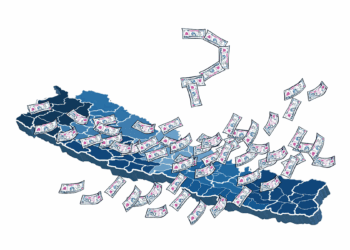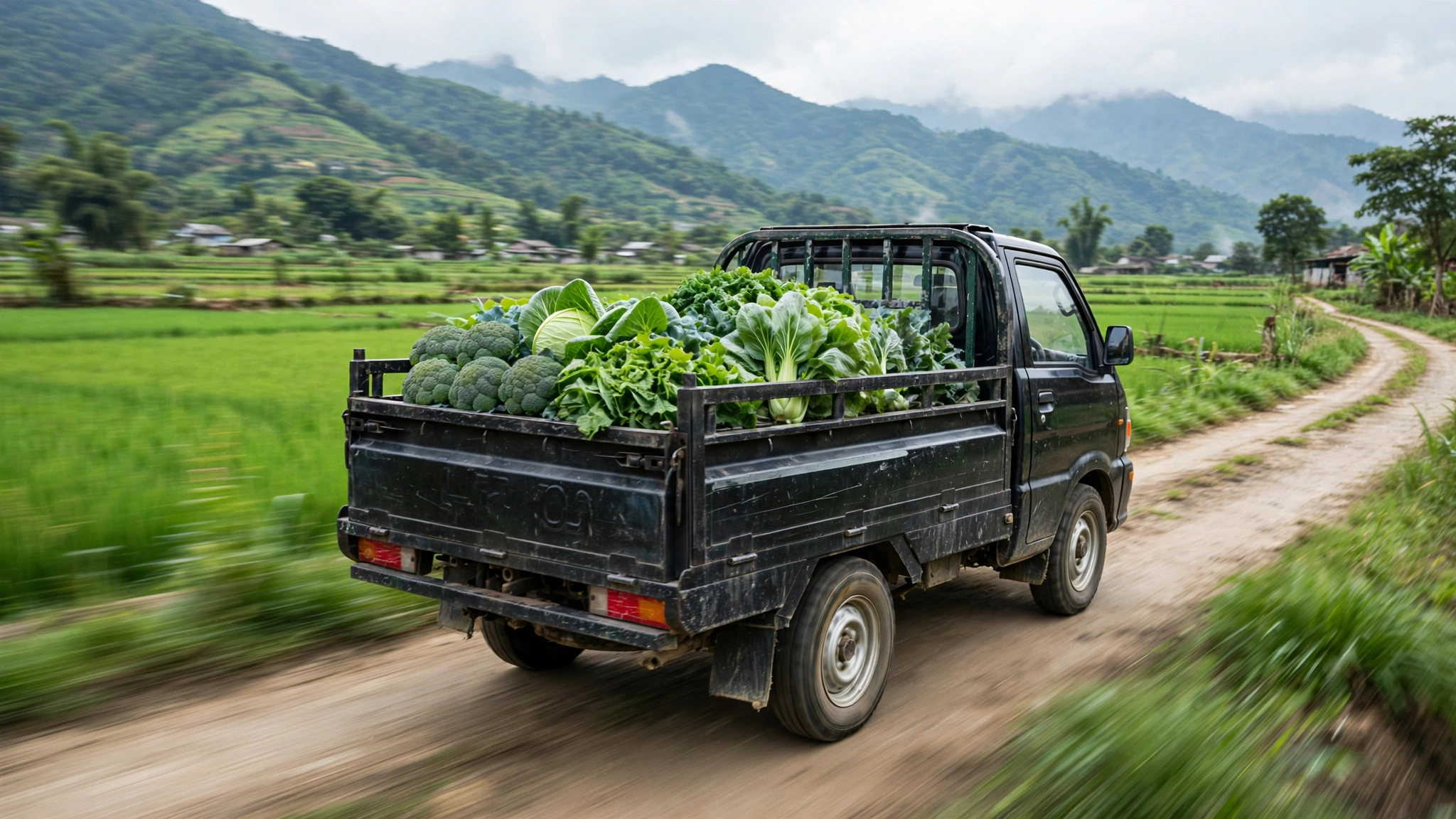
A tomato picked in Dolakha and a tomato sold in Kathmandu should be the same tomato. Too often in Nepal, they aren’t, because roughly a third of what’s harvested never survives the journey in sellable condition.
Cold chain logistics in Nepal remains one of the most persistent, underappreciated bottlenecks in the country’s agricultural economy. Without a functioning network of refrigerated storage and transport, fresh produce spoils, loses value, or simply never reaches urban markets at all. This isn’t a minor inefficiency. It’s a structural gap that undermines farmer incomes, inflates city food prices, and quietly limits what Nepal’s growing agrotech sector can actually achieve.
In this article, we’ll examine exactly how large this cold chain deficit really is, why it persists, and what genuine progress, and remaining gaps, look like today.
Just How Big Is the Loss?
The scale of Nepal’s post-harvest loss problem is well documented, and genuinely striking. According to Swisscontact’s research on Nepal’s agricultural logistics, multiple studies estimate post-harvest loss in fruits and vegetables at 20% to 30% nationally, a figure that can exceed 50% under adverse conditions.
Academic research adds further precision. According to a study published in Archives of Agriculture and Environmental Science, postharvest losses of horticultural produce in Nepal range between 15% and 35%, depending on the specific crop and handling conditions. Farmers themselves report similarly severe losses. According to OnlineKhabar’s reporting on Nepali agrotech, farmers and producers commonly see up to 40% of their production lost during the post-harvest phase alone.
To put this in perspective, this means for every ten kilograms of vegetables a Nepali farmer harvests, roughly three to four kilograms may never reach a buyer in sellable condition. That’s not simply lost food. It’s lost income for farmers who already operate on thin margins, and it’s a direct contributor to the price volatility and supply gaps urban consumers experience regularly.
Why the Losses Happen
Understanding why this problem persists requires looking at the physical realities of moving produce across Nepal’s terrain.
According to research published by Agriculture and Forestry University, most production areas lack smooth roads, causing damage to commodities from jerking and vibration during transportation. Compounding this, production farms tend to be small and scattered, meaning produce often passes through multiple intermediaries and collection points before reaching a wholesale market, with limited proper pack-house operations along the way.
The same research notes that on-tree fruits are frequently bought by middlemen, then harvested and transported to wholesale markets with basic size-based grading, but without appropriate packaging to protect quality during transit. Each of these steps, absent refrigeration or proper handling infrastructure, compounds spoilage risk incrementally.
Nepal’s mountainous topography makes this worse structurally. According to the Oxford Academic review of decentralized cooling systems, local markets often sit far from production areas, and Nepal’s mountains specifically enable and constrain small-scale fruit and vegetable farming simultaneously, creating conditions where significant post-harvest loss becomes almost structurally built into the supply chain.
What a Functioning Cold Chain Actually Requires
To understand the deficit clearly, it helps to know what a complete cold chain actually involves, since Nepal’s gap isn’t limited to just one missing piece.
According to Sea Sky Cargo Service’s 2026 guide to cold chain logistics, a genuine cold chain covers everything from pre-cooling and storage to refrigerated transport, appropriate handling at transit points, and final delivery, all while maintaining a controlled temperature range throughout. The same guide notes candidly that Nepal’s geography and infrastructure make temperature control considerably harder than in many other markets, citing mountain roads, changing weather, transit delays, and power interruptions as compounding risk factors for temperature-sensitive cargo.
This matters because a cold chain is only as strong as its weakest link. Even if a farm has proper cold storage and a truck has working refrigeration, a single unrefrigerated transfer point, or a power outage at a rural collection center, can undo the entire chain’s value.
The Startups Trying to Fill the Gap
Despite these structural challenges, a small but genuine cluster of Nepali agrotech ventures has emerged specifically to address post-harvest loss, even without full-scale cold chain infrastructure.
According to OnlineKhabar’s profile of Mandala AgriFresh, the Nepali startup, led by CEO Sophiya Tamang, has focused specifically on affordable technologies to extend produce shelf life without requiring expensive refrigeration infrastructure. The company has introduced modified atmosphere packaging bags and ethylene absorber sachets, technologies already tested and adopted in markets like India, since starting trials in December 2021. According to Tamang, these tools can extend the shelf life of leafy greens like coriander by two to three days, while fruits like kiwi and avocado can see their shelf life extended by up to two weeks.
This kind of intervention matters precisely because it works around Nepal’s cold chain deficit, rather than requiring its immediate resolution. Modified atmosphere packaging doesn’t need electricity or refrigerated trucks; it slows spoilage through controlled gas composition inside sealed packaging, making it a genuinely practical bridge solution for farmers who can’t access proper cold storage.
Community-Level Cold Storage Innovation
Beyond commercial startups, community and NGO-driven initiatives have also demonstrated what targeted cold storage investment can achieve, even at a small scale.
According to a review published in Oxford Academic’s Clean Energy journal, the People, Energy and Environment Development Association introduced mobile, solar-powered cold storage units in Dolakha district, specifically designed for Nepal’s rural farming communities. This pilot allowed farmers to store their harvest collectively and sell in larger, more organized quantities, rather than being forced to sell individually in small amounts immediately after harvest. The review notes that up to 50% of food loss could potentially be reduced through this kind of intervention, while also creating local employment for maintaining and operating the units.
This solar-powered model addresses a specific, often-overlooked piece of Nepal’s cold chain puzzle: many rural production areas lack reliable grid electricity entirely, making conventional refrigeration genuinely impractical regardless of upfront investment. Solar-powered, decentralized cooling sidesteps this constraint directly.
Commercial Cold Storage Is Expanding, But Selectively
On the commercial side, dedicated cold storage providers have begun building out infrastructure specifically for Nepal’s high-value horticultural crops.
According to RM Agrotech’s service listings, the company, operating as the authorized Nepal dealer for ICE Make Refrigeration, has installed commercial cold rooms for specific crops including apples in Mustang and Jumla, guava in Chitwan and Nawalparasi, raspberries in Dolakha and Rasuwa, and tomatoes and red chilies more broadly. The company claims that proper cold storage can reduce post-harvest losses from the typical 20% to 30% range down to less than 5%, a dramatic improvement if achieved consistently at scale.
However, this expansion remains selective and crop-specific rather than comprehensive. According to the same source, ripening chambers with capacities ranging from 5 to 25 tons serve cooperatives and commercial operations in specific production pockets, rather than representing a nationwide, interconnected cold chain network. This illustrates the core structural problem clearly: pockets of genuine cold storage capability exist, but they don’t yet connect into the kind of continuous, farm-to-city cold chain that would meaningfully close Nepal’s broader post-harvest loss gap.
What the Government Is Actually Funding
Nepal’s government has begun directing real policy attention, and some funding, toward cold storage specifically, though the broader agricultural budget picture is genuinely mixed.
According to the Farsight Nepal’s coverage of the fiscal year 2025-26 budget, the government introduced a VAT exemption specifically on the import of machinery and equipment required for cold storage, packaging, and testing laboratories. This directly reduces the capital cost barrier for businesses and cooperatives looking to invest in cold chain infrastructure. The same budget introduced a 10-year full income tax exemption for agro-processing industries, alongside an 80% premium subsidy for agriculture and livestock insurance.
However, according to Ratopati’s coverage of the more recent fiscal year 2026-27 budget, the government’s overall direct agriculture allocation was actually cut, from Rs 57.48 billion to Rs 46.92 billion, a reduction of Rs 10.5 billion that farmers described as disappointing. This cut came even as the same budget introduced a new pilot incentive subsidy program, offering a 40% capital subsidy for farmers investing at least Rs 20 million in agricultural or livestock production, tapering by 10 percentage points annually over four years.
This creates a genuinely mixed policy picture. Nepal’s government is offering meaningful, targeted incentives specifically for cold storage and processing infrastructure, while simultaneously reducing the broader agricultural budget that would otherwise support the smaller-scale farmers who generate most of the post-harvest loss in the first place. According to Nepal News’s budget overview, the same 2026-27 budget also proposed land banks at the local government level, using idle government and reclaimed river land for farming, alongside a shift toward what it calls market-linked farming, explicitly supported by cold storage and processing facilities.
Why This Gap Specifically Limits Agrotech Startups
This infrastructure deficit doesn’t just hurt farmers directly. It fundamentally constrains what agrotech and farm-to-city delivery startups can realistically build.
Any startup attempting to connect rural farmers directly to urban consumers, cutting out layers of middlemen to improve farmer incomes, runs immediately into the same physical constraint: produce that spoils in transit destroys the entire value proposition. Without refrigerated trucks, functioning cold storage at aggregation points, and reliable rural electricity, even a technically sophisticated logistics platform or mobile ordering app can’t overcome basic physical spoilage.
This explains why Nepal’s most visible agrotech success stories, like Mandala AgriFresh, have focused on packaging-based shelf-life extension rather than attempting to build full refrigerated logistics networks from scratch. Given the capital intensity and infrastructure prerequisites, like consistent electricity and paved farm-to-market roads, working around the cold chain gap has proven more immediately viable than trying to build around it entirely.
What Would Genuinely Close This Gap
Given the scale and structural nature of this deficit, several concrete steps would meaningfully improve Nepal’s cold chain capacity over time.
First, expanding solar-powered, decentralized cold storage specifically in areas lacking reliable grid electricity would address the root infrastructure constraint directly, rather than assuming conventional refrigeration is universally viable across Nepal’s diverse terrain.
Second, connecting Nepal’s growing but scattered commercial cold storage facilities, currently concentrated around specific crops like apples, guava, and raspberries, into a more coordinated network would help create genuine farm-to-city continuity, rather than isolated pockets of cold storage capability.
Third, ensuring the government’s cold-storage-specific incentives, like the VAT exemption on refrigeration machinery, translate into actual accessible financing for smaller cooperatives and farmer groups, not just larger commercial operations, would broaden the impact of these policy tools considerably.
Finally, continued investment in low-infrastructure interim solutions, like modified atmosphere packaging and ethylene absorber technology, offers a genuinely practical bridge while more capital-intensive cold storage infrastructure develops over a longer timeframe.
Why This Trend Deserves Long-Term Tracking
Nepal’s cold chain logistics deficit deserves sustained attention as a structural indicator of agricultural sector modernization and rural income potential.
First, tracking post-harvest loss rates over time, currently estimated between 20% and 40% depending on the study, would reveal whether cold storage expansion and packaging innovations are genuinely reducing spoilage at scale, or remaining confined to isolated pilot projects and specific high-value crops.
Second, monitoring whether cold-storage-specific budget incentives actually translate into completed, operational facilities, particularly for smaller cooperatives rather than only larger commercial operations, would show whether policy intent is matching real-world infrastructure outcomes.
Third, tracking the growth and survival rate of agrotech startups working specifically within this space would help reveal whether Nepal’s cold chain gap is gradually narrowing enough to support more ambitious, infrastructure-dependent business models over time.
Conclusion
Cold chain logistics in Nepal remains a genuine, well-documented structural deficit, one that costs farmers an estimated 20% to 40% of their harvest before it ever reaches a paying customer. Mountain roads, scattered small farms, unreliable rural electricity, and fragmented cold storage capacity all compound to create losses that ripple through farmer incomes, urban food prices, and the viability of agrotech startups trying to modernize the sector.
Genuine progress exists, from Mandala AgriFresh’s packaging innovations to solar-powered community cold storage in Dolakha and expanding commercial cold rooms for specific high-value crops. Government policy has begun offering real, targeted incentives too, even as broader agricultural funding faces real cuts.
Closing this gap fully will require sustained investment across every link in the chain, storage, transport, electricity, and financing, rather than isolated pockets of progress. Until then, too much of what Nepal’s farmers grow will keep losing its value somewhere between the field and the city.
FAQ: Cold Chain Logistics in Nepal
How much fresh produce is lost due to Nepal’s cold chain gap?
Studies estimate post-harvest loss in fruits and vegetables at 20% to 30% nationally, rising to 40% or even more than 50% under adverse conditions.
Why does Nepal struggle to build a functioning cold chain?
Mountainous terrain, poor rural roads, unreliable electricity, and small, scattered farms all combine to make consistent refrigerated storage and transport difficult.
Are there Nepali startups working to solve this problem?
Yes. Mandala AgriFresh uses modified atmosphere packaging and ethylene absorber technology to extend produce shelf life without requiring full refrigeration infrastructure.
Does the Nepal government support cold storage investment?
Yes, including a VAT exemption on cold storage machinery imports and capital subsidies for larger agricultural investments, though the broader agriculture budget was recently cut.
What is solar-powered cold storage, and why does it matter for Nepal?
It’s decentralized refrigeration powered by solar panels, allowing cold storage in rural areas without reliable grid electricity, an approach piloted successfully in Dolakha district.
Can proper cold storage really reduce post-harvest losses significantly?
Yes. Industry estimates suggest proper cold storage can reduce losses from the typical 20% to 30% range down to less than 5% when implemented consistently.