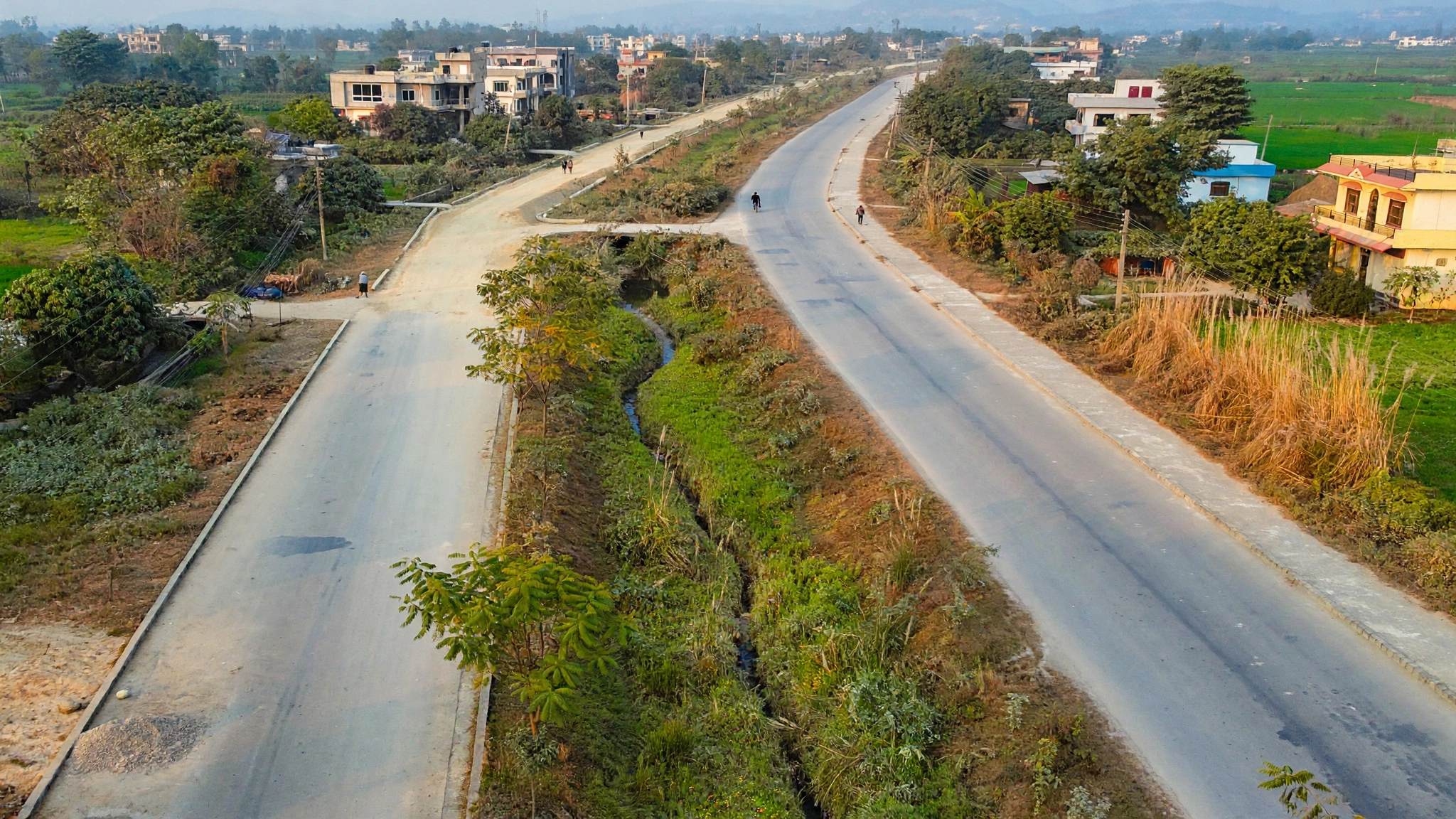
Nepal just posted its largest-ever national budget. In the same year, it failed to spend even half of what it had already allocated for infrastructure.
Capital expenditure underutilization in Nepal isn’t a one-time embarrassment. It’s a recurring, well-documented pattern that has persisted for years, regardless of which party holds power or how large the headline budget grows. Money gets allocated for roads, bridges, and buildings. Then, year after year, a substantial share of it simply goes unspent.
This gap between ambition and execution carries real consequences. It slows infrastructure growth, discourages private investment, and leaves Nepal’s development goals perpetually behind schedule. Understanding exactly how deep this problem runs, and what’s actually driving it, matters for anyone tracking Nepal’s economic trajectory.
In this article, we’ll examine the data behind Nepal’s capital expenditure underutilization, its structural causes, and the genuine, if limited, reform efforts underway.
Just How Bad Was the Most Recent Year?
The numbers from fiscal year 2025-26 are genuinely striking. According to the Kathmandu Post’s July 2026 reporting, the government failed to spend even half of its capital budget, recording the country’s weakest development spending performance in six years. Of the Rs 407.89 billion allocated for capital expenditure, only Rs 190 billion had been spent by July 15, the close of the fiscal year, a utilization rate of just 46.79%, according to Clickmandu’s coverage of the same data.
This wasn’t simply a bad year in isolation. According to the Kathmandu Post, this marked the lowest capital expenditure rate since fiscal year 2019-20, when the government similarly managed to spend only 46% of its capital budget. In a striking parallel, that year’s allocation was also close to Rs 408 billion, with just Rs 189 billion actually spent, almost identical in nominal terms to this year’s shortfall. Between those two low points, capital spending had actually improved somewhat, reaching 57% in one fiscal year and holding between 60% and 65% across four subsequent years, according to the same report.
Government officials attributed this year’s particularly weak performance to a combination of disruptions. According to Kathmandu Post, officials pointed to the Gen Z protests of September 2025, the subsequent March 5 federal parliamentary elections, the formation of a new government, and the general disruption these transitions caused to routine project implementation.
This Isn’t a New Problem
While this year’s numbers stand out, chronic capital expenditure underutilization has characterized Nepal’s fiscal performance for years, not just this particular election cycle.
According to the Annapurna Express’s January 2025 reporting on the prior fiscal year, the government had managed to utilize just 11.58% of its capital budget within the first five months of that fiscal year, spending only Rs 40.8 billion of the Rs 352 billion allocated between mid-July and mid-December. The same report noted that low capital expenditure has long been a persistent issue for Nepal, with average utilization sitting at just 60% over the preceding four years. In fiscal year 2023-24 specifically, the government spent only 63.47% of its capital budget, according to the same source, using just Rs 191.73 billion of the Rs 302 billion allocated.
By the eleven-month mark of fiscal year 2081-82, according to Fiscal Nepal’s June 2025 analysis, capital expenditure had reached just 40% of its NPR 352 billion allocation, with only NPR 143 billion actually spent. Notably, this stood in sharp contrast to recurrent spending, which had already reached 75% of its NPR 1.14 trillion allocation by the same point, and financial management expenditure, covering debt repayment, which had reached 78% of its budget. This gap reveals something important: it’s specifically capital spending, the money meant to build lasting infrastructure, that consistently lags behind, while routine administrative and debt-related spending gets executed far more reliably.
The Structural Story Behind the Numbers
Beyond individual fiscal years, a comprehensive World Bank analysis reveals just how deep and structural this problem actually runs.
According to the World Bank’s Nepal Capital Expenditure Bottlenecks Analysis, published in October 2025 and cited in the World Bank’s March 2026 feature report, the share of the capital budget within Nepal’s total federal budget declined from 27.1% in fiscal year 2021 to just 20.9% in fiscal year 2024. Even more tellingly, only around 62% of these already-shrinking allocations were actually executed on average during this period.
The compounding effect of these two trends is severe. According to the same World Bank analysis, federal capital expenditure as a share of GDP fell from 5.3% to 3.4% between fiscal years 2021 and 2024. When combined with underspending at the provincial and local government levels, total capital expenditure across all three tiers of Nepal’s government fell from 11.4% of GDP in fiscal year 2021 to just 7.8% in fiscal year 2024, well below the 10% to 15% of GDP that the World Bank estimates is necessary to meaningfully close Nepal’s infrastructure gap.
The World Bank describes this gap between planning and delivery bluntly, as “structural—and persistent,” language that reflects years of accumulated evidence rather than a single disappointing budget cycle.
The “Institutional Chronic Disease” of Year-End Spending Rushes
Nepali economists and policy analysts have their own vivid language for describing this recurring pattern, and it points to a specific, well-known behavioral problem within government spending cycles.
According to an opinion piece published in Kantipur in March 2026, the tendency to spend 40% to 60% of the capital budget only in the final two months of the fiscal year has become what the piece calls an institutional “chronic disease” persisting for decades. This rushed, back-loaded spending pattern often results in lower-quality project execution, since agencies scramble to disburse large sums under genuine time pressure rather than following a steady, well-planned implementation schedule throughout the year.
The same analysis notes that Nepal requires an annual investment of 8% to 12% of GDP specifically to bridge its infrastructure gap. It also highlights a striking urban infrastructure spending shortfall: out of a required per capita expenditure of $93 in urban areas, only about $47 is actually being spent, roughly half of what’s genuinely needed.
Which Agencies Struggle Most?
Aggregate national figures obscure real variation between government offices, some of which perform dramatically worse than others.
According to Khabarhub’s Economic Digest coverage, the Treasury and Accounts Controller Office in Syangja district reported that Rs 1.146 billion in unspent funds was returned to government accounts during fiscal year 2025-26. This represented about 5% of the federal allocation and a striking 30% of the provincial allocation for that district specifically. Even more tellingly, the Infrastructure Development Office alone accounted for nearly 43% of these returned funds, highlighting significant underutilization concentrated within the very office responsible for building physical infrastructure.
This isn’t universal underperformance, however. The same report noted that the Ministry of Finance and its subordinate offices utilized 73.21% of their allocated budget in fiscal year 2025-26, with capital expenditure execution specifically reaching 88.34%, a genuinely strong performance relative to the national average. This contrast matters: it suggests capital expenditure underutilization isn’t an unavoidable feature of Nepali governance broadly, but rather reflects specific, identifiable weaknesses concentrated in particular offices and project types.
Why Budgets Keep Getting Cut Mid-Year
This underutilization pattern has direct consequences for how future budgets get planned, creating a feedback loop that economists find genuinely concerning.
According to the Kathmandu Post’s February 2025 reporting, Nepal’s budget was trimmed by 9% specifically citing low spending capacity from the previous year. Economic analyst Nara Bahadur Thapa, cited in the same report, offered a pointed critique of this cycle: for years, budgets have been announced without properly assessing implementation capacity, only to be reviewed and cut halfway through the fiscal year. Thapa warned that this pattern doesn’t just disappoint citizens with high expectations, but actively discourages private investment, since businesses struggle to plan around government spending commitments that routinely fail to materialize as announced.
This dynamic connects directly to Nepal’s broader development ambitions. Thapa specifically noted that reduced government capital spending threatens Nepal’s goal of graduating from Least Developed Country status, since underinvestment in infrastructure, public services, and development projects can lower economic growth and reduce job creation precisely when Nepal needs both most.
Signs of Genuine, If Limited, Reform
Despite this discouraging trend, some concrete reform efforts have begun addressing specific, identified bottlenecks within Nepal’s capital spending process.
According to the World Bank’s March 2026 feature, the government amended forest regulations in January 2026 specifically to streamline the tree-cutting clearance process, a bureaucratic step that had previously delayed numerous infrastructure projects requiring land clearance. The World Bank describes this as “an encouraging first step,” while cautioning that sustaining momentum through deeper, follow-on reforms will be essential to genuinely accelerate the delivery of needed public investment.
This targeted approach, identifying and resolving specific procedural bottlenecks rather than simply announcing larger budgets, represents a meaningfully different strategy than Nepal’s historical pattern of expanding headline allocations without addressing underlying execution capacity.
What the Newest Budget Suggests
Nepal’s record fiscal year 2026-27 budget offers an early test of whether these lessons are translating into different fiscal planning.
According to Nepal News’s detailed budget breakdown, capital expenditure in the new Rs 2,124.34 billion budget stands at Rs 431.10 billion, representing 20.3% of the total, alongside Rs 1,270.58 billion in recurrent expenditure at 59.8%. This capital share sits roughly in line with, or slightly above, recent years’ allocations, suggesting the government hasn’t dramatically scaled back its infrastructure ambitions despite the preceding year’s execution failures.
Whether this allocation translates into meaningfully improved spending execution remains the genuinely open question. Given the World Bank’s finding that only around 62% of federal capital allocations get executed on average, and this past year’s even weaker 46.79% performance, simply allocating a similar or larger nominal amount doesn’t guarantee improved outcomes without addressing the structural bottlenecks the World Bank’s analysis identified.
Why This Trend Deserves Long-Term Tracking
Capital expenditure underutilization in Nepal deserves sustained attention as a core structural indicator of governance capacity, extending well beyond any single year’s headline execution rate.
First, tracking capital expenditure as a share of GDP across all three tiers of government, currently at just 7.8% against a needed 10% to 15%, reveals whether Nepal is genuinely closing its infrastructure investment gap or continuing to fall further behind.
Second, monitoring which specific agencies and offices consistently underperform, like the Syangja Infrastructure Development Office’s disproportionate share of returned funds, would help identify exactly where targeted reform efforts should concentrate, rather than treating underutilization as a uniform, undifferentiated problem.
Third, tracking whether the pattern of year-end spending rushes persists, or whether reforms like the streamlined forest clearance process genuinely spread capital disbursement more evenly across the fiscal year, would indicate whether Nepal’s execution capacity is structurally improving.
Conclusion
Capital expenditure underutilization in Nepal remains one of the country’s most persistent, well-documented fiscal challenges. With just 46.79% of the capital budget spent in fiscal year 2025-26, the weakest performance in six years, and structural analysis showing total capital expenditure across all government tiers falling from 11.4% to 7.8% of GDP since 2021, this isn’t a temporary setback. It’s a deeply embedded pattern.
Political instability, bureaucratic bottlenecks like land clearance delays, and a chronic tendency to rush spending into the fiscal year’s final two months all contribute to this gap between allocation and execution. Genuine reform efforts, like January 2026’s forest regulation amendments, offer real if modest progress, but the World Bank’s own assessment makes clear that sustained, deeper reform remains essential.
Until Nepal closes the gap between what it allocates and what it actually spends, even record-breaking budgets like fiscal year 2026-27’s Rs 2.12 trillion plan risk repeating the same story: ambitious numbers on paper, and infrastructure that stays unbuilt.
FAQ: Capital Expenditure Underutilization in Nepal
How much of Nepal’s capital budget went unspent in fiscal year 2025-26?
The government spent only 46.79% of its Rs 407.89 billion capital budget, the weakest development spending performance in six years.
Is capital expenditure underutilization a new problem in Nepal?
No. Average capital budget utilization has hovered around 60% over the past several years, with some years falling well below that.
Why does Nepal consistently struggle to spend its infrastructure budget?
Causes include political instability, bureaucratic delays like land and forest clearance, and a chronic pattern of rushing spending into the final months of the fiscal year.
How does Nepal’s capital spending compare to what’s actually needed?
Total capital expenditure across all government tiers fell to 7.8% of GDP by fiscal year 2024, well below the 10% to 15% the World Bank estimates is necessary.
Are any reforms being made to fix this problem?
Yes. In January 2026, Nepal amended forest regulations to streamline tree-cutting clearance, a bureaucratic step that had previously delayed many infrastructure projects.
Does underspending affect future budget planning?
Yes. Nepal’s budget was cut by 9% in one recent year specifically citing low spending capacity from the previous year, creating a cycle of announced-then-revised fiscal targets.