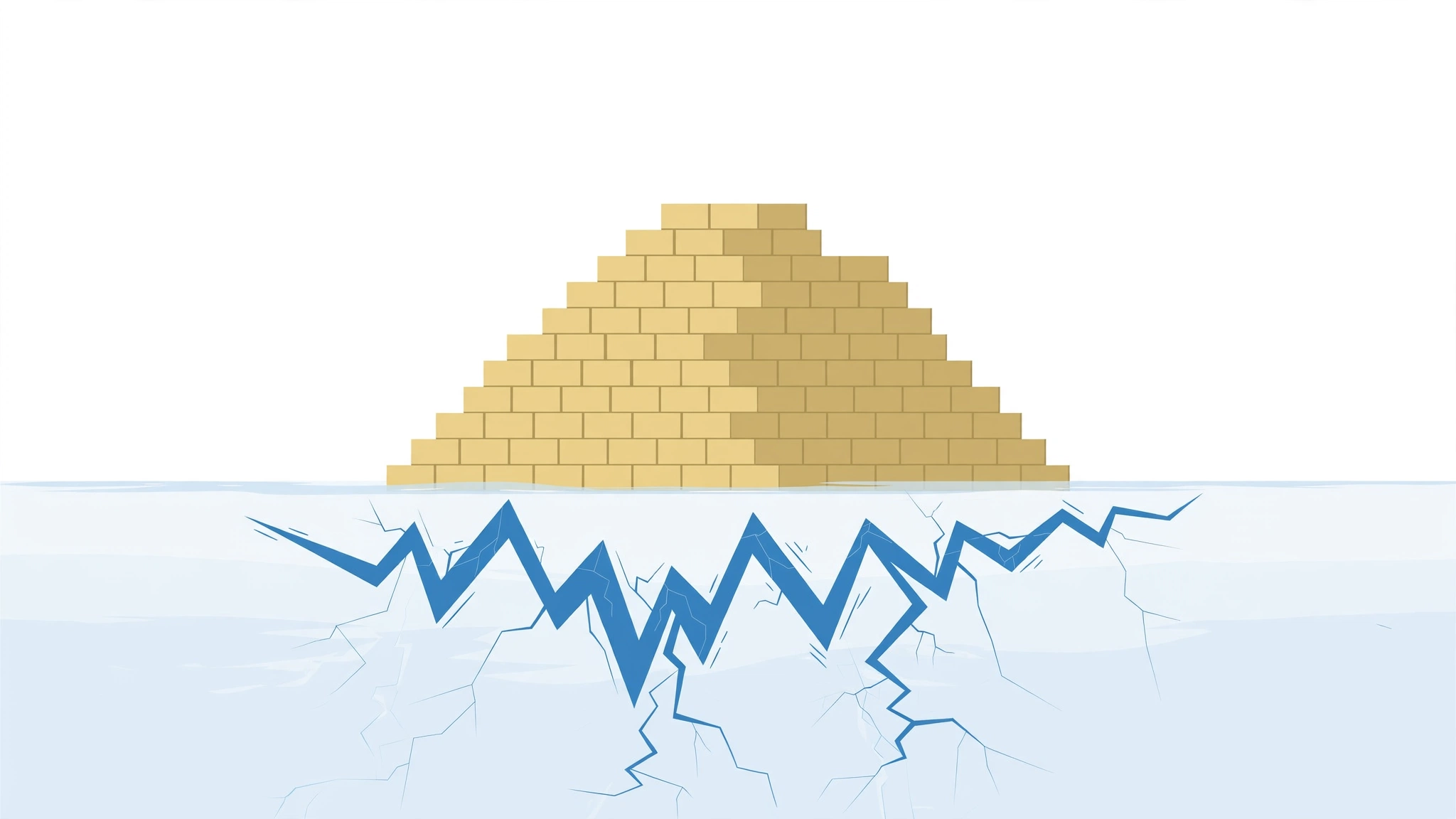
Balance of payments volatility rarely announces itself early. It builds quietly, hidden behind reassuring headlines about “record reserves.” Then, almost overnight, it becomes a full-blown currency crisis. For many developing economies, this pattern isn’t random. It’s structural. A chronic trade deficit gets patched over by foreign reserves, remittances, or borrowed dollars, instead of being fixed at its root. That patch works, until it doesn’t.
This article breaks down what balance of payments volatility actually means. It explains why so many countries depend on foreign reserves to cover persistent trade gaps. And it looks at real, verified examples, from Nepal to Sri Lanka to Pakistan, to show how this dependency plays out in practice.
What Is Balance of Payments Volatility?
A country’s balance of payments (BOP) records every transaction it makes with the rest of the world. It has three main parts: the current account, the capital account, and the financial account. Balance of payments volatility happens when these flows swing sharply and unpredictably. One year brings a surplus. The next brings a deficit. Reserves rise, then fall just as fast.
Usually, the volatility traces back to one core problem. A country imports far more than it exports. That’s a chronic trade deficit. To keep functioning, the country needs another source of foreign currency. Often, that source is remittances, foreign aid, external borrowing, or reserve drawdowns. None of these are exports. None of them build lasting productive capacity. So the underlying imbalance never really closes.
The Structural Trap: Reserves Masking Trade Deficits
Here’s the uncomfortable truth. Foreign reserves are meant to be a buffer, not a business model. They exist to smooth out short-term shocks, like a bad harvest or a temporary drop in exports. They were never designed to permanently plug a trade gap year after year.
Yet that’s exactly what happens in many economies today. Reserves climb, and policymakers celebrate. Import cover looks healthy, often far above the standard three-month benchmark. But look closer, and the growth usually comes from one narrow channel, not from a broader, more resilient export base.
This creates a dangerous illusion. On paper, the balance of payments looks stable. In reality, it depends entirely on one variable staying strong. If that variable weakens, even briefly, reserves can drain fast. This is balance of payments volatility in its purest form: strength that looks solid but isn’t diversified.
Case Study: Nepal’s Remittance-Fueled Reserve Buffer
Nepal offers a clear, current example of this dynamic. According to Nepal Rastra Bank‘s most recent assessment, covering eleven months through mid-June 2026, gross foreign exchange reserves rose sharply, reaching over Rs 3.75 trillion. That’s enough to cover well beyond the standard import benchmark. On the surface, this looks like a strong external position.
But the details tell a different story. The trade deficit widened to roughly Rs 1.62 trillion over the same period. Headline inflation climbed to 5.22 percent. Domestic private credit grew by only 0.5 percent. In other words, the real economy is struggling, even as reserves hit record highs.
What’s driving the reserve growth? Largely, it’s remittances. Nepali workers abroad sent home record sums, with remittance growth outpacing import growth by a wide margin during parts of fiscal year 2025/26. Over 800,000 Nepali workers received labor approvals to work overseas in a single fiscal year, and the number heading abroad has grown by nearly 29 percent annually over the past decade.
This remittance surge has propped up the current account and the overall balance of payments. But Nepal Rastra Bank’s own reporting flags the risk plainly. Reserve comfort here is structurally dependent on remittances, not on export earnings or productive investment. Rising global oil and gold prices, both major import items for Nepal, only add more pressure to the trade deficit. If labor markets in the Gulf or elsewhere weaken, remittance flows could slow quickly. That would expose the balance of payments volatility that’s currently hidden beneath comfortable headline numbers.
When the Cushion Fails: Sri Lanka and Pakistan
Nepal’s situation isn’t unique in the region. Sri Lanka and Pakistan show what happens when this structural dependency finally breaks.
Sri Lanka’s 2022 crisis is now a textbook case. Gross foreign exchange reserves fell from around USD 7.6 billion at the end of 2019 to roughly USD 50 million by early April 2022. That’s barely enough to cover a few days of imports, let alone months. The country’s net reserve position turned negative for the first time since independence. A tourism-dependent economy, hit hard by the pandemic, saw a key foreign currency source vanish almost overnight. Combined with heavy foreign debt and surging oil prices, the result was a full sovereign default in April 2022.
Pakistan has faced a similar, if less dramatic, pattern. Since 2008, its reserves have followed a volatile cycle, repeatedly dropping below two months of import cover before being propped up by IMF bailout packages. According to Moody’s, Pakistan is now the most vulnerable country in South Asia to a balance of payments crisis, largely because of very low export levels relative to GDP, alongside weaker policy management. By contrast, Moody’s notes that India remains the least vulnerable in the region, thanks to a larger, more diversified export sector.
The lesson across all three cases is consistent. Reserves built on a narrow, external source, whether tourism, remittances, or borrowed dollars, can evaporate fast. And when they do, balance of payments volatility turns from a slow-burning risk into an immediate crisis.
Why Chronic Trade Deficits Persist
If reserves are just a temporary fix, why don’t more countries close their trade deficits directly? Several structural barriers get in the way.
First, many developing economies rely on a narrow set of exports. Nepal, for instance, mainly exports items like carpets, textiles, and vegetable oils, a limited basket compared to its far larger import bill for fuel, machinery, and consumer goods. Second, infrastructure gaps raise production and shipping costs, making local goods less competitive internationally. Third, currency and trade policy often prioritize short-term stability over long-term export competitiveness. Finally, easy access to remittances or foreign borrowing can actually reduce the political urgency to fix underlying trade weaknesses.
Together, these factors create a loop. The trade deficit stays wide. Reserves, propped up by an external channel, mask the problem. And because the headline numbers look fine, real reform gets delayed, sometimes for years, sometimes for decades.
How Analysts Measure Reserve Adequacy
Not all reserve figures tell the same story. To judge whether a buffer is genuinely safe, analysts look beyond the headline dollar amount. A few standard metrics help separate real stability from balance of payments volatility in disguise.
Import cover is the most common measure. It shows how many months of imports the reserves could fund, if all other inflows stopped. Three months is the traditional minimum. Many economies today hold well above that, sometimes 18 or even 19 months, as Nepal’s recent data shows. That sounds reassuring. Yet import cover alone doesn’t reveal where the reserves came from.
The reserve composition test matters just as much. Analysts ask a simple question. Did reserves grow because exports earned more foreign currency, or because remittances, aid, or borrowing filled the gap? When the answer is the latter, reserve adequacy looks strong only until that single channel slows.
External debt-to-reserve ratios offer another lens. If a country owes more in near-term foreign debt than it holds in reserves, even a large buffer can vanish quickly once repayments come due. Sri Lanka’s experience shows this clearly. Its net reserve position turned negative once foreign liabilities were subtracted from gross holdings, even though gross reserves still looked substantial on paper.
Finally, volatility of the financing source itself deserves attention. Export earnings tend to move gradually, tied to global demand cycles. Remittances can shift faster, tied to labor migration trends, exchange rates, and conditions in destination countries. Short-term debt can disappear overnight if investor confidence turns. Together, these four lenses give a fuller picture than any single reserve number ever could.
Global Context: Which Economies Face the Highest Risk
Balance of payments volatility isn’t confined to South Asia. It shows up wherever a narrow export base meets a persistent trade gap. Still, certain patterns stand out across emerging markets right now.
Economies with low export-to-GDP ratios face the sharpest exposure. According to Moody’s, Pakistan and Bangladesh sit near the bottom of South Asia’s export rankings, at roughly 10.5 and 12.9 percent of GDP. Sri Lanka and India, by comparison, benefit from larger services export sectors, giving them more diversified foreign currency inflows. That diversification, more than reserve size alone, tends to determine how well a country weathers external shocks.
Commodity-dependent importers face a related risk. Countries that import most of their fuel, like Nepal, feel every swing in global oil prices directly through their trade balance. When Brent crude climbed from roughly USD 76 to nearly USD 89 a barrel year-on-year through mid-2026, the impact showed up almost immediately in Nepal’s import bill and transportation-driven inflation. Gold price increases added further strain, given gold’s cultural importance during festivals and weddings in South Asia.
The common thread across these economies is simple. A wide trade deficit isn’t dangerous by itself. It becomes dangerous only when the financing behind it is fragile, concentrated, or vulnerable to a single global shock.
Warning Signs of Balance of Payments Volatility
Spotting balance of payments volatility early requires looking past the headline reserve figure. A few warning signs matter most:
- Reserve concentration: Are reserves growing mainly from one source, like remittances or short-term borrowing, rather than diversified exports or investment?
- Widening trade deficits: Is the merchandise trade gap growing faster than exports, even while reserves look strong?
- Import dependency on volatile commodities: Heavy reliance on imported oil, gold, or food leaves the trade balance exposed to global price swings.
- Weak domestic credit growth: Sluggish private lending can signal that reserve accumulation isn’t translating into productive investment.
- External debt servicing pressure: Rising foreign debt repayments can quietly drain reserves that appear healthy on paper.
None of these signs alone guarantees a crisis. But together, they show whether a country’s external position is genuinely resilient or simply well-disguised balance of payments volatility.
Policy Responses That Actually Work
Fixing this structural dependency isn’t quick, but it is possible. A few approaches consistently help.
Diversifying exports matters most. Countries that broaden their export base, moving beyond one or two commodities, become far less exposed to sudden demand shocks. Building competitive manufacturing or service sectors takes time, but it reduces reliance on remittances or aid.
Improving trade infrastructure also helps. Ports, roads, and customs systems that move faster and cost less directly boost export competitiveness. Meanwhile, encouraging productive investment of remittance inflows, rather than pure consumption, channels foreign currency toward long-term growth instead of short-term imports.
Finally, transparent, forward-looking monetary policy matters. Central banks that communicate clearly about reserve adequacy, rather than simply celebrating headline totals, help markets and investors judge real risk. This kind of transparency won’t eliminate balance of payments volatility completely. But it can soften the shock when a key external source, like remittances or tourism, eventually slows down.
Conclusion
Balance of payments volatility is often invisible until it isn’t. Nepal’s current reserve strength, built heavily on remittances, illustrates how comfortable numbers can hide a persistent trade deficit underneath. Sri Lanka and Pakistan show what happens when that hidden imbalance finally surfaces. The core lesson holds across all three: reserves are a buffer, not a substitute for a competitive export economy. Countries that treat them as one, rather than the other, remain structurally exposed to balance of payments volatility, no matter how strong their reserve figures look today.
FAQ: Balance of Payments Volatility
What causes balance of payments volatility?
It usually stems from a chronic trade deficit combined with heavy reliance on one external funding source, such as remittances, foreign aid, or short-term borrowing, rather than diversified exports.
Is a large foreign reserve always a good sign?
Not necessarily. Reserves that grow mainly from remittances or debt, rather than exports, can mask an underlying trade imbalance. This creates hidden balance of payments volatility.
How many months of import cover is considered safe?
The international benchmark is typically three months of import cover. Many countries, including Nepal, currently hold far more, though the source of that buffer matters as much as its size.
What happened during Sri Lanka’s balance of payments crisis?
Sri Lanka’s reserves collapsed from roughly USD 7.6 billion in 2019 to about USD 50 million by April 2022, driven by a pandemic-hit tourism sector, heavy debt, and rising oil prices, leading to a sovereign default.
Can remittance-dependent economies avoid a balance of payments crisis?
Yes, but it requires diversifying exports, investing remittances productively, and reducing reliance on any single external funding source over time.
Why is Pakistan considered highly vulnerable to balance of payments crises?
According to Moody’s, Pakistan has one of the lowest export-to-GDP ratios in South Asia, combined with weaker policy management, making it especially exposed to external shocks.