Juna Bastola pays Rs 350 a month for Netflix. That’s roughly a quarter of what Netflix officially charges. She knows exactly what she’s doing, and she’s far from alone.
Subscription model resistance in Nepal isn’t simply cultural stubbornness toward recurring deductions. It’s a rational response to a payment system that, for most Nepali consumers, was never actually built to accommodate automatic international billing in the first place. As a result, a thriving grey market of resellers has emerged, offering prepaid, manually renewed access to Netflix, Spotify, and even AI tools like ChatGPT Plus, sidestepping recurring automatic charges entirely.
Understanding why this pattern exists, and how deeply it’s embedded in Nepal’s digital economy, reveals something more interesting than simple consumer preference. It reveals a structural mismatch between global subscription business models and Nepal’s financial infrastructure.
In this article, we’ll examine exactly how Nepal’s subscription resistance works in practice, what’s driving it, and what risks and regulatory gaps it creates.
The Real Reason Behind “Resistance”
Start with why someone like Juna Bastola avoids official subscription billing at all. According to the Kathmandu Post’s February 2026 investigation, Bastola explained her reasoning plainly. Buying directly would require a dollar card and a subscription at a high price, so she chose the cheaper option instead, paying around a quarter of the original price through a local reseller platform.
This single decision captures the core dynamic driving subscription resistance across Nepal. It’s not that Nepali consumers philosophically object to recurring payments. It’s that the infrastructure needed to make recurring international payments work smoothly, widely accepted international cards, favorable currency conversion, and local pricing, simply isn’t standard for most Nepali consumers. According to the same investigation, thousands of users across Nepal make this identical calculation daily, choosing heavily discounted, resold subscriptions advertised on Facebook and Instagram over official channels.
How Nepal’s Subscription Grey Market Actually Works
The mechanics behind this workaround economy are surprisingly sophisticated, built specifically around Nepal’s foreign exchange restrictions.
According to a former Netflix reseller interviewed by the Kathmandu Post, sellers buy Netflix or premium subscriptions from countries like Pakistan, India, Brazil, or Colombia, where prices run considerably cheaper, then share access with multiple customers. Payments happen entirely in Nepali rupees, while the reseller handles all foreign exchange logistics themselves.
Himal Thapa, who runs the reseller service Cheapmandu, described his three-year-old business model directly to the Kathmandu Post. His platform uses dollar cards to pay for subscriptions, then distributes account access to customers, who never need to use a dollar card themselves. This directly bypasses the exchange limitations imposed by Nepal Rastra Bank that would otherwise constrain individual consumers.
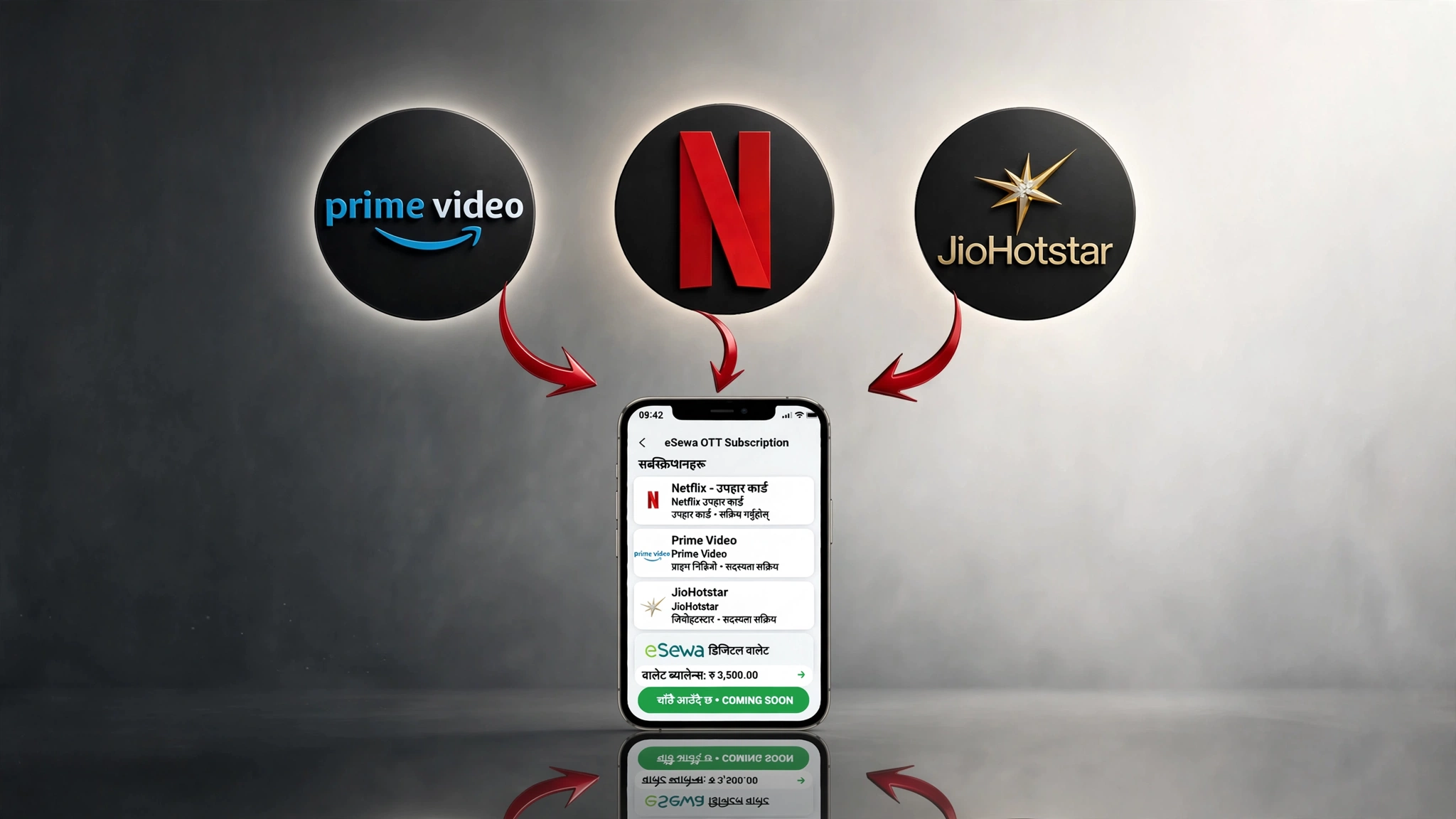
This isn’t a small, fringe operation either. Multiple established platforms now operate openly in this space, including RoyalSewa, SoftFlix Nepal, Cheapmandu, Digital Shop Nepal, and Premium Nepal, offering everything from Netflix and Spotify Premium to YouTube Premium, Amazon Prime Video, and JioHotstar, all payable through local wallets like eSewa and Khalti rather than international cards.
It’s Not Just Streaming, Either
Perhaps the most telling detail is how far this resistance pattern extends beyond entertainment subscriptions into productivity and AI software specifically, the exact category the term “SaaS” typically describes.
According to SoftFlix Nepal’s service listings, the same reseller model now covers ChatGPT Plus, Canva Pro, Cursor AI, Notion’s business plan, Google Gemini AI Pro, and even Autodesk’s full professional design suite, all sold as prepaid, locally-paid access rather than direct recurring subscriptions billed by the software companies themselves. This confirms that subscription resistance in Nepal isn’t confined to media consumption habits. It reflects a broader pattern applying equally to professional software tools that businesses and individual professionals genuinely need.
Just How Big Is This Market?
The scale of Nepal’s underlying digital consumption, and by extension its subscription workaround economy, has grown dramatically.
According to the Kathmandu Post’s analysis of Nepal Telecommunication Authority data, internet penetration in Nepal stands at around 104% of the population, while broadband user density reaches 144.23%, based on Nepal’s total population of approximately 29.6 million, according to the government’s Economic Survey of 2025. Telecom data now accounts for 52% of operator revenue, according to Mordor Intelligence research cited in the same report, as traditional voice services continue declining.
This growing connectivity translates directly into subscription demand. Analysts project that by 2030, nearly one million Nepalis may subscribe to international OTT streaming services, according to the Kathmandu Post’s reporting. Meanwhile, digital wallet transactions grew from Rs 114 billion in fiscal year 2020-21 to Rs 506 billion in fiscal year 2024-25, part of a broader electronic payment ecosystem now approaching roughly Rs 98 trillion in total transaction value.
Real Prices Show Just How Wide the Gap Is
The financial incentive driving this behavior becomes obvious when comparing official and grey market pricing directly.
According to RoyalSewa’s own subscription price tracker, the platform held its Netflix dual-screen price flat at Rs 499 per month for six consecutive months, despite Netflix’s official USD price increase in April 2026. The same tracker notes that Netflix officially prices its Premium plan at USD 22.99 in the United States, while adjusting to less than USD 5 in markets like India based on local purchasing power, taxes, and licensing arrangements, a pricing gap Nepal’s official channels don’t fully benefit from directly, since Netflix doesn’t offer Nepal-specific local pricing the way it does for neighboring India.
Digital Shop Nepal’s pricing illustrates the broader pattern too, offering Netflix Premium private profiles starting from Rs 499, Spotify Premium Standard for Rs 649 monthly, and Amazon Prime Video from just Rs 149 monthly, all payable through local channels rather than requiring international payment methods.
The Real Risks Buried in the Convenience
This grey market isn’t risk-free, and Nepali consumers using it regularly encounter genuine problems.
According to the Kathmandu Post’s reporting, Netflix’s removal of password-sharing features has led directly to account suspensions and frustrated customers, since IP address tracking sometimes triggers account bans even for resellers operating with formally registered businesses. The former Netflix reseller interviewed noted plainly that sharing accounts violates platform terms of service, regardless of whether the local reselling business itself is properly registered in Nepal.
User complaints reinforce these risks. According to Reddit discussions cited in the Kathmandu Post’s investigation, one user reported paying for a subscription that never worked properly, with no response after attempting to contact the seller. Another described a father’s subscription being blocked entirely, with the seller disappearing after receiving payment. These aren’t isolated incidents; they reflect a structural risk built into any grey market lacking formal consumer protection mechanisms.
The Regulatory Gap Enabling This Market
Understanding why this grey market operates so openly requires looking at Nepal’s fragmented digital regulation, which genuinely struggles to keep pace with the market it’s meant to govern.
According to Department of Commerce, Supplies and Consumer Protection Director Taranath Luitel, cited by the Kathmandu Post, any business offering digital services must register under Nepal’s E-commerce Act framework to legally deliver services, whether through social media marketplaces or standalone websites. Yet, compliance remains strikingly uneven. According to Luitel, only around 300 firms have actually completed this registration process, while nearly 900 to 1,000 applications remain under review.
A separate, entirely distinct regulatory layer applies specifically to streaming platforms. According to the same reporting, amendments to Nepal’s National Broadcasting Regulations require OTT platforms to obtain approval from the Ministry of Communication and Information Technology, maintain content records, and in some cases establish local cache servers. Notably, while platforms like TikTok and Viber have completed this registration, Netflix has not, according to Luitel’s own confirmation. This means Netflix currently operates in Nepal without formal broadcasting approval, even as it remains broadly accessible to Nepali consumers.
Taxation Adds Another Fragmented Layer
Nepal’s approach to taxing digital subscription revenue reveals yet another piece of this fragmented puzzle, one that specifically doesn’t reach the reseller economy at all.
According to an Inland Revenue Department spokesperson cited by the Kathmandu Post, Nepal introduced a 2% Digital Service Tax in 2022, targeting multinational platforms like Google, Amazon, and Netflix that generate income from Nepali users without maintaining a local office. This tax has grown steadily, from Rs 16 million in fiscal year 2022-23 to Rs 58 million in fiscal year 2023-24, while VAT collected from digital services reached Rs 358 million in fiscal year 2023-24.
However, this tax framework has a specific, significant blind spot. According to the same official, there’s no explicit requirement for individual sellers or micro-resellers to pay this Digital Service Tax, since it applies specifically to multinational cross-border transactions rather than local resales. This regulatory gap effectively means Nepal’s entire subscription reselling economy operates largely outside the tax framework designed to capture digital service revenue.
Why Nepal’s Regulation Remains So Fragmented
According to the Kathmandu Post’s analysis, Nepal’s digital regulation currently divides across four largely uncoordinated segments: commerce registration, broadcasting approval, cross-border taxation, and foreign currency transaction rules. Each operates independently, with limited coordination between them.
This fragmentation creates a genuinely strange situation. A platform can be tax-compliant while remaining broadcasting-unlicensed. A reseller business might hold proper commerce registration while operating in a legal gray zone specifically around subscription account-sharing and negotiation, which platforms like Netflix explicitly prohibit under their own terms of service, regardless of local business registration status.
Why This Isn’t Simply “Cultural” Resistance
It’s worth being precise about what’s actually driving this pattern, since framing it purely as cultural resistance misses the more accurate structural explanation.
Nepali consumers aren’t avoiding recurring payments because they distrust the concept of subscriptions itself. They’re avoiding official subscription channels because those channels require financial infrastructure, specifically internationally accepted cards and USD-denominated pricing, that remains genuinely difficult and expensive for most Nepali consumers to access. Given the choice between a complicated, costly dollar card application process and a reseller offering the same content at a quarter of the price through familiar local payment methods like eSewa or Khalti, the resulting consumer behavior isn’t really “resistance” in a cultural sense. It’s a rational financial decision shaped by real infrastructure constraints.
What Would Genuinely Change This Pattern
Given these underlying drivers, several concrete shifts could meaningfully reduce Nepal’s reliance on grey market subscription workarounds.
First, global platforms offering genuine Nepal-specific local pricing, similar to what Netflix already provides for neighboring India, would directly remove much of the financial incentive currently driving consumers toward resellers. If official Netflix pricing in Nepal reflected local purchasing power rather than flat USD conversion, the roughly fourfold price gap Bastola described would shrink considerably.
Second, easier access to international payment methods, building on Nepal’s already-improving dollar card infrastructure for IT-classified businesses, would reduce the friction currently pushing individual consumers toward informal resale channels.
Third, consolidating Nepal’s currently fragmented digital regulation, commerce registration, broadcasting approval, taxation, and foreign currency rules, into a more coordinated framework would help close the specific gaps that currently let reseller businesses operate profitably outside formal tax and consumer protection structures.
Finally, stronger consumer awareness around registration verification, exactly what Director Luitel recommends, checking for registration numbers and certificates before purchasing, could help reduce the fraud and account-suspension risks currently affecting a meaningful share of grey market subscribers.
Why This Trend Deserves Long-Term Tracking
Subscription model resistance in Nepal deserves sustained attention as a structural indicator of how global digital business models adapt, or fail to adapt, to markets with constrained international payment access.
First, tracking whether major platforms introduce genuine Nepal-specific pricing would reveal whether global subscription companies are responding to this documented grey market demand, or continuing to cede this revenue to informal resellers entirely.
Second, monitoring e-commerce registration compliance rates, currently just around 300 firms formally enlisted against nearly 1,000 pending applications, would show whether Nepal’s regulatory framework is genuinely catching up with its rapidly growing digital subscription economy.
Third, tracking Digital Service Tax revenue growth alongside broader digital wallet transaction volume would help quantify how much subscription revenue continues flowing through untaxed, unregulated reseller channels versus formal, compliant platforms.
Conclusion
Subscription model resistance in Nepal reflects something more precise than simple cultural aversion to recurring digital deductions. It’s a rational, widespread response to a mismatch between global subscription infrastructure, built around international cards and USD pricing, and Nepal’s actual financial reality, where dollar cards remain limited and local wallets dominate everyday payments.
The resulting grey market, spanning Netflix and Spotify to ChatGPT Plus and professional design software, offers real short-term value to consumers like Juna Bastola, at a fraction of official pricing. Yet, it carries genuine risk, from account suspensions to vanished sellers, and operates within a regulatory framework so fragmented that compliance remains the exception rather than the norm.
Closing this gap will require global platforms and Nepali regulators to meet in the middle, through fairer local pricing, easier international payment access, and more coordinated digital regulation. Until then, Nepal’s subscription economy will likely keep running largely through the back door.
FAQ: Subscription Model Resistance in Nepal
Why do Nepali consumers avoid official subscription billing?
Official subscriptions typically require international dollar cards and USD pricing, which remain costly and difficult to access, pushing many consumers toward cheaper, locally-paid reseller alternatives.
How do Nepal’s subscription resellers actually work?
Resellers purchase subscriptions from countries with cheaper regional pricing, then share or distribute account access to Nepali customers who pay in rupees through local wallets like eSewa or Khalti.
Is buying a resold Netflix or Spotify subscription in Nepal legal?
It exists in a legal grey zone. Account sharing typically violates platform terms of service, and many reseller businesses remain unregistered under Nepal’s E-commerce Act.
Does this grey market extend beyond streaming services?
Yes. Nepali resellers also offer discounted access to software and AI tools like ChatGPT Plus, Canva Pro, Notion, and Autodesk through the same prepaid model.
Is Netflix registered to operate in Nepal?
No. According to Nepal’s Department of Commerce, Netflix has not registered with the Ministry of Communication and Information Technology as required under broadcasting regulations.
What risks do consumers face using subscription resellers in Nepal?
Risks include account suspensions from IP tracking, sellers disappearing after payment, and no formal consumer protection recourse if something goes wrong.