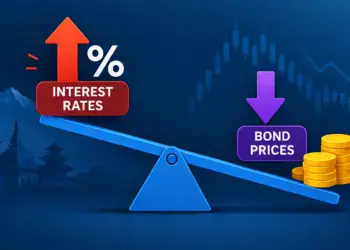
A bank posts a decent quarterly profit. Its earnings per share looks healthy, its paid-up capital is intact, and on the surface the stock looks like a safe hold. Then you scroll down to one line most retail investors skip, the non-performing loan ratio, and it has quietly climbed past 7 percent. That single number tells you more about the bank’s next two years than the profit figure at the top of the page does.
That is the story of the rising NPL problem at Nepal’s banks right now, and it is the reason this piece exists. Here is the position it takes before the numbers. The bad-loan surge across Nepali banks is not a bookkeeping blip that will reverse on its own. It is the delayed bill for a decade of forced, fast credit growth colliding with a genuinely weak economy, and the headline NPL ratio, bad as it looks, still understates the real stress. For anyone holding bank shares, this is the number that should drive your read of the sector, not dividend history and not last quarter’s EPS.
What a non-performing loan actually is
Start with the term, because it gets thrown around loosely. A loan turns non-performing, in Nepal Rastra Bank’s classification, when the borrower stops servicing it for a set period, usually once principal or interest is overdue by more than three months. NRB sorts these into three worsening buckets. “Substandard” is the mildest. Doubtful is worse. Loss is the category for loans the bank has essentially given up on recovering.
Why should a shareholder care about a borrower who has gone quiet? Because a bank cannot just wait and hope. The moment a loan slips into one of those buckets, NRB rules force the bank to set aside a provision, real money carved out of profit, against the chance the loan is never repaid. A substandard loan needs a smaller provision. A loss loan can require the bank to provision the entire amount. So every rupee that migrates into the loss category is close to a rupee taken straight out of the bank’s distributable profit. That is the mechanism that connects a farmer’s failed harvest in Dang to the dividend that does not land in your account. If the ratios themselves are unfamiliar, our explainer on how to read a bank’s NPL, CD, and CAR ratios walks through each one.
The numbers, and why they are getting worse
The trend is not subtle. The banking system’s average non-performing loan ratio rose from 3.02 percent in mid-July 2023 to 5.42 percent by mid-February 2026, according to figures cited from Nepal Rastra Bank. By the third quarter of fiscal year 2025/26, the average NPL ratio across banks and financial institutions had reached 5.60 percent, per NRB data reported by the Kathmandu Post and Nepalnews. In under three years the sector’s bad-loan ratio has nearly doubled.
Look at the annual snapshot, and the same picture holds. NRB’s Financial Stability Report for fiscal year 2024/25 put the industry-wide NPL ratio at 4.62 percent as of mid-July 2025, up from 3.86 percent a year earlier. In rupee terms the jump is starker than the percentage. Non-performing loans across banks and financial institutions climbed to NPR 2.58 kharba (about NPR 258 arba) in mid-July 2025 from around NPR 2 kharba a year before, an increase of roughly 29 percent in a single year, according to the same report. The loan book grew too, so the ratio moved less than the absolute figure, but the direction is one way.
Commercial banks, the Class A institutions that dominate NEPSE’s banking index, are holding up better than the rest, though not by as much as their reputation suggests. Their average NPL ratio rose to around 5.25 percent in the third quarter of 2025/26 from 4.98 percent a year earlier, and five commercial banks had already reported bad-loan ratios above 7 percent, the Kathmandu Post reported. As of mid-July 2025, 15 of 20 commercial banks still sat below the 5 percent line, per NRB’s stability report, which tells you the stress is real but uneven. The three state-owned commercial banks, Nepal Bank, Rastriya Banijya Bank, and Agricultural Development Bank, carried NPL ratios of 4.47 percent, 3.59 percent, and 3.26 percent, respectively, at that date.
Move down the tiers, and the numbers turn ugly. Development banks, the Class B institutions, saw their average NPL ratio reach 9.86 percent by mid-October of fiscal 2025/26, up from 7.89 percent a year earlier, according to figures reported by New Business Age. Finance companies sit in similar territory. The Economic Survey presented by Finance Minister Swarnim Wagle explicitly warned that development banks and finance companies have recorded significantly higher bad-loan ratios than commercial banks. Microfinance is worse still, and we will come to why that matters for the big banks in a moment.
Why the headline number is too kind
Here is the part ShareSansar and Merolagani will report as a data point and leave alone. The reported NPL ratio, ugly as it is, almost certainly understates the true stress in the system. Three things are hiding losses that have not yet surfaced.
First, the quality of the bad loans is deteriorating inside the total. It is not just that there are more non-performing loans; it is that more of them are the worst kind. The share of NPLs sitting in the loss category, the bucket for loans banks consider essentially unrecoverable, rose from 56.66 percent to 62.30 percent, while the doubtful category rose from 16.95 percent to 21.06 percent, according to figures from NRB’s stability report. A bank with a 5 percent NPL ratio made mostly of loss loans is in a far deeper hole than one with the same ratio made of substandard loans because the provisioning bill is much higher.
Second, large borrowers get treated more gently than small ones. Bankers and former regulators have said openly that when a big corporate borrower runs into trouble, banks make every effort to restructure, reschedule, or otherwise avoid stamping the loan non-performing, while a small borrower gets classified quickly. That flattering treatment keeps some genuinely stressed corporate exposure out of the reported ratio. It does not make the loans good.
Third, and most important, the Covid-era relief has run out. During the pandemic NRB let banks restructure and reschedule loans and postpone classifying them as bad. Large numbers of loans stayed alive on paper because of that relief. As bankers, including the Nepal Bankers’ Association and NIC Asia’s chief executive, have described it, once those support measures expired, the true quality of many loans became visible. Real estate lending, share-backed lending, and MSME loans were named as the hardest hit. In other words, part of what looks like a sudden 2025/26 surge is really the belated recognition of losses that were always there, just papered over.
Put those three together, and the honest reading is that the 5.60 percent headline is a floor, not a ceiling.
The microfinance channel: a hidden pipe into bank books
There is a specific plumbing problem worth understanding, because it links a sector most equity investors ignore to the balance sheets of the banks they own.
Commercial banks are required to lend at least 5 percent of their portfolio to the deprived sector, low-income and marginalized borrowers. Banks rarely lend to those borrowers directly. Instead, they hand wholesale loans to microfinance institutions, which on-lend to clients in small, mostly collateral-free amounts, and the banks book that wholesale lending as deprived-sector credit to meet the quota. It is neat, until the microfinance layer breaks.
It is breaking. The average NPL ratio among microfinance institutions climbed to 11.32 percent by mid-April 2026, up sharply from 7 percent in mid-July the previous year, according to central bank data reported by the Kathmandu Post. Bad loans held by microfinance institutions reached NPR 54 arba, a rise of more than 74 percent from the previous fiscal year end. Around 85 percent of microfinance lending is unsecured, backed by group guarantees rather than physical collateral, so when rural incomes fall, there is nothing to seize. When those borrowers stop repaying the microfinance institutions, the institutions struggle to repay the banks, and the banks’ deprived-sector exposure quietly turns risky. For a fuller picture of how fragile that layer is, see our piece on the microfinance business model in Nepal. The short version: the bad loans on a commercial bank’s book are not only the ones it made itself.
What is actually driving the defaults
The reflexive explanation is reckless lending. That is only part of it, and probably the smaller part.
The larger driver is a weak economy meeting a lending framework that forced banks to grow fast into exactly the sectors now defaulting. NRB requires commercial banks to direct a large slice of their loans into prescribed priority sectors. As of the revised 2026 framework, commercial banks must put at least 10 percent of total lending into agriculture; at least 20 percent collectively into tourism, MSMEs, energy, information technology, and export businesses that use domestic raw materials; and 5 percent into the deprived sector. Taken together, banks must channel at least 35 percent of their loans into sectors the regulator chooses.
Those are also the sectors bleeding. Agriculture and fisheries alone account for around 23.5 percent of total non-performing loans; construction, including hydropower, for roughly 10.5 percent; and wholesale and retail trade for about 10 percent, according to banking disclosures up to mid-April cited by the Kathmandu Post. When you compel banks to lend into agriculture and small enterprises regardless of the credit cycle, and the cycle then turns down hard, forced volume becomes forced losses. Nepal’s outstanding bank loans now exceed NPR 59 kharba (NPR 5.9 trillion), up from a fraction of that a decade ago, yet the deprived-sector percentage requirement has barely changed. Fast, mandated growth into weak sectors is the structural cause.
The cyclical trigger is demand. Business confidence has been battered by a stretch of political uncertainty, including the Gen Z protests, an interim government, and the run-up to parliamentary elections. Factories that once ran five or six days a week now run two or three because nobody is buying. Only 461 new businesses were registered nationwide in the first half of the current fiscal year, down from 581 a year earlier. The banking association’s own framing is telling: liquidity exists on paper, but credit demand is weak because confidence is fragile, and even fundamentally sound businesses have seen their cash flows dry up. This is not primarily a story of crooked borrowers. It is a story of an economy that stalled while the loan book kept growing.
What it means for bank shares
Now the part that matters if you own or are eyeing bank stocks on NEPSE. Rising NPLs hit a bank’s share value through four channels, and most retail investors watch only the first.
Provisioning eats profit. Every migration into doubt and loss forces more money set aside, and that comes straight out of the profit line. A bank can report a respectable operating profit and still have thin distributable profit once provisions are booked, which is the number that actually funds your dividend. If you have ever wondered why a “profitable” bank pays a stingy dividend, this is often the answer, and our explainer on distributable profit versus net profit unpacks the gap. Expect bank dividends to come under pressure while NPLs climb.
Capital gets tied up in dead assets. When borrowers default and banks seize collateral, that collateral becomes a non-banking asset on the balance sheet, property the bank now owns and must eventually sell, usually at a loss and slowly. More than NPR 60 arba of such non-banking assets have already piled up across the system, according to the Confederation of Banks and Financial Institutions Nepal. That is capital frozen in unproductive real estate instead of earning interest, and it drags on return on equity.
Book value gets less trustworthy. Banks on NEPSE are usually valued on price-to-book. But if reported NPLs understate true bad loans, then provisions are understated, and reported book value is inflated. A bank trading at what looks like a cheap 1.1 times book may be more expensive than it appears if a chunk of its loan book is worth less than stated.
Dispersion widens. This is the opportunity inside the risk. The sector average tells you little about any single bank, because the range runs from banks near 3 percent to five commercial banks above 7 percent, plus development banks near 10 percent. In a rising-NPL environment the gap between a well-underwritten bank and a loose one stops being academic and starts showing up in dividends and share prices. This is the moment stock selection inside the banking sector actually pays.
The verdict
Here is the call. Do not treat the rising NPL numbers as a passing dip, and do not buy a Nepali bank stock on headline EPS or dividend history alone in this environment. The bad-loan surge is structural, driven by a decade of mandated credit growth into weak sectors, and it is being amplified by an economy that has genuinely stalled. The reported ratio understates the problem because of gentle treatment of large borrowers, the expiry of Covid relief, and the microfinance losses seeping into bank books through deprived-sector lending. The worsening mix, with loss loans now the majority of NPLs, means the provisioning bill still has room to grow.
None of that makes the sector uninvestable. Nepal’s commercial banks are still, on average, better capitalized and better provisioned than their smaller cousins, and 15 of 20 were under the 5 percent line as recently as mid-July 2025. The banking sector is not on the edge of a systemic crisis, and NRB has room to act. But the era when you could buy almost any bank and collect a reliable dividend is over for now. The move is to read asset quality first. Before you buy a bank share, pull its latest quarterly report and look at the NPL trend over the last four quarters, the split between substandard, doubtful, and loss; the loan-loss provision coverage; and the pile of non-banking assets. Our guide to reading a bank’s quarterly report shows you where each of those sits. A bank whose NPL ratio is stabilizing and whose provisioning is conservative is a very different investment from one whose ratio is still climbing while it treats big borrowers gently. In 2026, that difference is the whole game.
This is analysis, not financial advice.