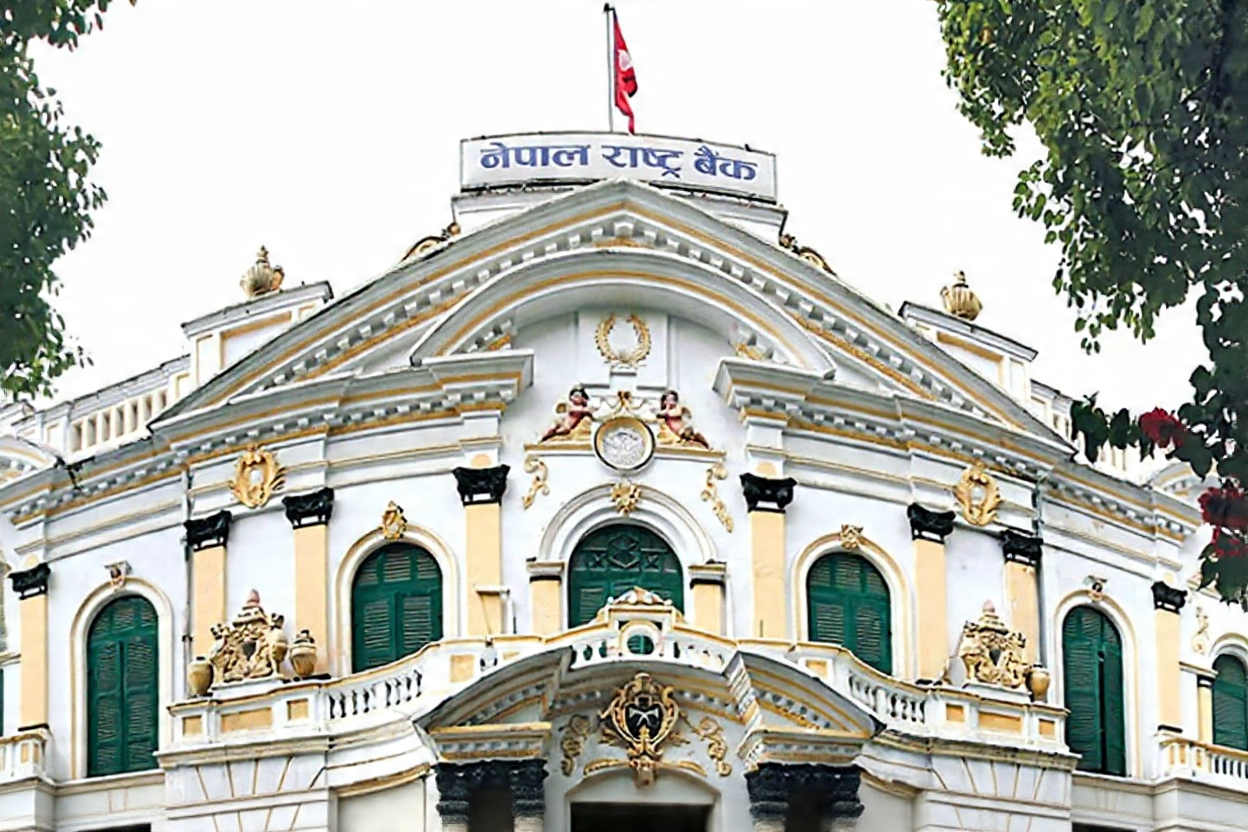
Kathmandu — Nepal Rastra Bank (NRB) has released its Annual Review Report of the Monetary Policy. The report shows a mixed picture for the country’s economy: while the central bank successfully kept inflation low and built record-breaking foreign exchange reserves, it struggled to get businesses to borrow and spend the massive amount of money sitting idle in banks.
Low Inflation and Record Savings
The central bank hit its economic stability targets out of the park. The government successfully kept average consumer inflation at just 2.66%, despite targeting inflation below 5.0%.
At the same time, thanks to a steady flow of money sent home by migrant workers (remittances), Nepal’s foreign exchange reserves climbed to historic heights. NRB reported that the country now has enough foreign currency to cover 19.2 months of imports, nearly triple their basic target of 7 months.
The Loan Puzzle: Plenty of Cash, Few Borrowers
Even though banks lowered interest rates and had plenty of money to lend, the real economy moved slowly. The report shows a major gap between the central bank’s goals and reality:
- The total money circulating in the banking system grew by 15.2%, which was higher than the 13.0% target.
- Loans to the private sector grew by just 6.5%, missing the central bank’s growth target of 12.0% by a very wide margin.
By the end of the year, average interest rates dropped significantly, with bank deposit rates hitting a low of 3.35% and average loan rates sliding to 6.73%. However, a rise in bad loans (non-performing loans), low business confidence, and slow government spending meant that companies were hesitant to take out new loans.
To keep banks from drowning in this extra cash, NRB had to step in regularly to pull billions of rupees out of the system through regular deposit collections and central bank bonds.
Major Policy Changes and Relief Measures
To help jumpstart the economy and encourage borrowing, NRB introduced several relief packages and rule changes throughout the year:
- Real Estate and Personal Loans: To revive the slow property market, the government raised the limit for private home loans from Rs. 20 million to Rs. 30 million. First-time buyers can now borrow up to 80% of the property’s value. Additionally, the limit for individual Personal Overdraft loans was doubled from Rs. 5 million to Rs. 10 million.
- Stock Market Support: In a big move for investors, the maximum loan limit for borrowing against shares was increased from Rs. 150 million to Rs. 250 million.
- Relief for Affected Businesses: NRB allowed banks to restructure and reschedule loans for businesses impacted by highway expansions and those in earthquake-affected areas like Jajarkot and Rukum, as long as the borrowers could pay at least 10% of their overdue interest.
- Easier Loans for Farmers and Small Businesses: New rules require commercial banks to send at least 10% of their total loans to agriculture and 20% to other specific growth sectors. To reduce paperwork and costs for small farmers, loans under Rs. 1 million can now have their land or property evaluated directly by bank staff instead of expensive outside professionals.
Looking Ahead: Digital Banking
The central bank is also preparing for a major shift toward digital technology. NRB has finalized a draft for its upcoming Fintech Strategy, and legal work is underway to allow the creation of “Neo Banks”, which are completely digital banks with no physical branches. Online digital loan limits have also been expanded up to Rs. 1 million, allowing banks to use automated technology to approve loans instantly.
The Bottom Line: While the central bank has done an excellent job keeping the economy stable and building a massive safety net of foreign currency, the real challenge now is convincing the private sector to start borrowing and investing that idle cash back into the economy.
Download the full budget document in PDF for complete details.