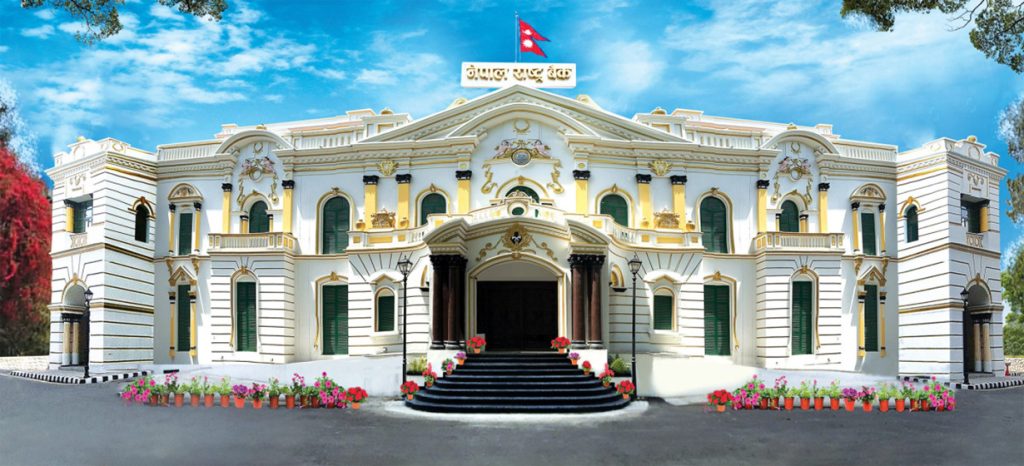
KATHMANDU — Nepal Rastra Bank (NRB) has officially unveiled its Monetary Policy for the Fiscal Year 2083/84. Aimed squarely at maintaining overall financial stability, the policy centers on containment strategies for consumer price inflation while simultaneously rolling out extensive structural banking overhauls.
At a Glance: Key Targets & Projections of Monetary Policy 2083/84
| Macro Indicator | Policy Target (FY 2083/84) |
| Consumer Price Inflation | Capped within 5.5% |
| Broad Money Supply ($M_2$) | Projected at 14.0% |
| Private Sector Credit Growth | Targeted at 11.0% |
| CRR & SLR Ratios | Kept unchanged at existing structural limits |
Key Policy Highlights
1. Easing Geopolitical & Inflationary Pressures
The central bank notes that recent ceasefires in West Asia have systematically lowered international fuel price volatility. This development actively alleviates the initial domestic inflationary pressures, setting up a stable environment to confidently project inflation containment within the strict 5.5% ceiling.
2. Operational Cost Cuts via Digitalization & “Specialized Banking”
To systematically lower the cost of capital mobilization across the banking sector, the NRB has introduced several aggressive operational amendments:
- BFI Reclassification: NRB will introduce a specialized banking framework. It will align institutional roles with each bank’s business scale and core operations.
- Structural Flexibility: NRB will relax branch regulations. Commercial banks can open, close, or consolidate branch offices more easily.
- Digitalization Drives: Financial institutions will accelerate digital transformation. They will pass operational cost savings to eligible borrowers through lower lending rates.
3. Credit Safety Nets & Corporate Debt Restructuring
In a major structural shift to clear out risk aversion in the private sector. The NRB is reforming the way banks handle credit defaults and institutional security:
- Ending Unlimited Personal Guarantees: Strict regulatory caps will be placed on personal guarantees required from institutional borrowers. This eliminates the historical practice of exposing business owners to absolute, unlimited individual financial liability.
- Restructuring Stressed Assets: The central bank will roll out fresh credit instruments to actively manage non-performing loans (NPLs) within sick and structurally idle industries.
- Blacklisting Reform: Nepal Rastra Bank (NRB) is streamlining its Credit Information Bureau (CIB) blacklisting rules to drastically minimize the number of blacklisted individuals and entities, prioritizing financial rehabilitation instead.
4. Direct Tariffs on Central Bank Liquidity Management
With massive influxes of remittance, public capital expenditures, and revitalized tourism revenues flooding commercial vault reserves, market liquidity shows substantial surpluses.
Policy Directive: To protect retail savers from falling deposit rates in an over-liquid market, the NRB will absorb excess liquidity through its Standing Deposit Facility (SDF) and short-term debt instruments. By doing so, it will support deposit interest rates while bearing the associated interest costs.
Continuity of Monetary Stance
The Interest Rate Corridor framework; including the key policy rate, the Standing Deposit Facility (SDF) rate, and the core bank rate; remains completely unchanged.The NRB kept the existing requirements for the Cash Reserve Ratio (CRR), Statutory Liquidity Ratio (SLR), and Standing Liquidity Facility (SLF) unchanged. This move helps maintain confidence in the financial system.
The comprehensive review report for the preceding fiscal year (2082/83) has been officially cataloged and published to the public portal alongside this announcement.