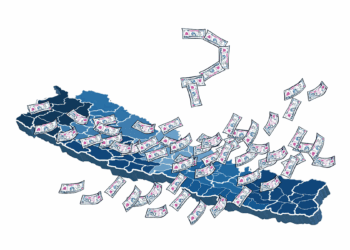
Millions of Nepalis work abroad. Every month, they send money home. But not all of it travels through banks.
A huge share moves through hundi, an old, informal transfer network. It runs beside the formal system. It rarely shows up in official records.
At the heart of this shadow economy sits one number: the NRB exchange rate spread. This gap, between the official Nepal Rastra Bank rate and the informal market rate, drives people toward hundi. Understanding it explains why the system survives, despite being illegal.
This article breaks down how hundi works. It also explains why the exchange rate spread matters so much. And it looks at what Nepal is doing to close that gap.
What Is the Hundi System?
Hundi is an informal value transfer system. It has roots going back to the Mughal era.<cite index=”1-1″>In the hundi system, a worker gives cash to a hundi operator in the source country, who contacts a counterpart in Nepal, and the equivalent amount in NPR is handed over to the recipient in cash, with no bank accounts, no records, and no official exchange rate.</cite>
No money actually crosses any border. Instead, operators settle balances between themselves later. They often do this through trade, gold, or other transfers.
This makes hundi fast. It also makes it nearly invisible to regulators.
<cite index=”18-1″>Hundi operators, known as hundiwala, maintain networks of trusted counterparts in source and destination countries.</cite> A migrant worker in Qatar can hand over cash in the morning. By evening, his family in rural Nepal has rupees in hand. No paperwork. No waiting.
That speed is the system’s biggest selling point. For families without nearby bank branches, it can feel like the only practical option.
Why Do People Still Use Hundi?
The reasons are practical, not ideological. Most users are not trying to break the law. They are trying to get money home quickly and cheaply.
Here is why hundi keeps attracting customers, even today:
- Speed. Cash reaches families the same day, sometimes within hours.
- Reach. Hundi networks cover remote villages where banks do not operate.
- Better rates. <cite index=”1-1″>Hundi is attractive because it is fast, reaches rural areas with no bank branches, and sometimes offers marginally better rates.</cite>
- No paperwork. There are no forms, no ID checks, and no bank account requirements.
- Interest earnings. <cite index=”12-1″>Families, instead of paying bank fees, earn interest, typically 5% to 7%, and don’t have to travel to bank branches to collect the money.</cite>
For a Qatar-based worker like Bindeshwar Das, the logic is simple. <cite index=”12-1″>”It is our obligation to send money through a hundi even though we know it is illegal,” he says.</cite> Every four months, he hands cash to a hundi operator, plus a small fee, and his wife receives Nepali rupees within days.
Understanding the NRB Exchange Rate Spread
Now, let’s get to the core issue: the exchange rate spread.
Nepal Rastra Bank sets official reference rates for major currencies. But these rates do not always match what informal dealers offer. That gap is the spread. And it shapes behavior across the whole remittance chain.
How the Official Rate Works
NRB does not let the rupee float completely freely. <cite index=”18-1″>Nepal Rastra Bank operates a managed float system where the exchange rate is primarily determined by market forces, but NRB intervenes when it deems movements disorderly or harmful to the economy.</cite>
One anchor matters more than any other. <cite index=”19-1″>The NPR is officially pegged against the Indian Rupee in the ratio of NPR 1.60 to INR 1.00, and this peg has been operating since 1994.</cite> That peg forms the backbone of Nepal’s entire currency system.
How the Informal Rate Differs
Hundi operators do not follow NRB’s published rates. Instead, they price based on supply, demand, and risk. When formal channels tighten, informal rates often improve for customers, at least in the short run.
This pattern is not unique to Nepal. Across South Asia, restrictions tend to backfire. <cite index=”20-1″>Such increased demand for foreign exchange in the informal market in turn leads to a wider spread between the official and informal exchange rates, as hundi agents charge a premium to traders who turn to the informal market.</cite>
In Pakistan, this effect was dramatic. <cite index=”20-1″>Between 2021 and early 2022, the informal exchange rate premium in Pakistan was only about 2 percent, but after a temporary import ban in May 2022, the premium skyrocketed to 13 percent by January 2023.</cite>
Nepal shows a related but different pattern. Because hundi often pays migrant families slightly more NPR per unit of foreign currency, and skips bank fees entirely, the effective spread favors hundi users, not the government. This pulls foreign exchange away from NRB’s reserves.
Why the Spread Matters for Nepal’s Economy
Every rupee that flows through hundi is a rupee NRB cannot count, tax, or bank. That has real consequences.
- Reserve pressure. Foreign currency never officially enters Nepal’s banking system.
- Distorted data. Nepal’s real remittance inflow is likely far higher than official statistics show.
- Weaker monetary control. NRB struggles to manage liquidity when a large share of transactions stays invisible.
- Lost revenue. The government cannot tax or track hundi transactions.
The scale is significant. <cite index=”12-1″>About 40% of Nepal’s economy is based on informal transactions, according to the Central Department of Economics at Tribhuvan University.</cite> That is not a marginal leak. It is a parallel financial system.
The Legal Reality of Hundi
Despite its popularity, hundi is fully illegal in Nepal. The law is unambiguous on this point.
<cite index=”4-1″>Dealing in foreign exchange requires a licence from Nepal Rastra Bank, and informal foreign-exchange transfers such as hundi are offences under the Foreign Exchange (Regulation) Act 2019.</cite> Penalties are severe. <cite index=”5-1″>The Act gives penalties up to three times the transaction amount, along with imprisonment up to 7 years.</cite>
Yet enforcement has struggled to keep pace with demand. Ironically, some of Nepal’s own banking rules pushed more people toward hundi. <cite index=”12-1″>The system grew exponentially after Nepal Rastra Bank instituted the Integrated Circular for Payment Systems in 2023, which banned remittance transfers within Nepal.</cite>
Domestic transfer limits tightened sharply around the same period. <cite index=”6-1″>The NRB reduced the allowable transfer limit within Nepal from Rs100,000 to Rs25,000 per person, per transaction, per day.</cite> Many licensed operators simply stopped offering domestic transfer services altogether.
The lesson is clear. Tighter formal restrictions, without better formal alternatives, often push more money into informal channels, not less.
Hundi and Nepal’s FATF Grey List Problem
Hundi is no longer just a domestic concern. It has become an international reputation issue for Nepal.
<cite index=”9-1″>Nepal was placed on the FATF grey list for a second time in February 2025, during the plenary meeting held in Paris.</cite> This is not a small bureaucratic label. Grey-listed countries face real economic costs.
<cite index=”14-1″>Key concerns raised by FATF include weak regulatory enforcement in high-risk sectors such as real estate, cooperatives, and informal remittance systems like hundi.</cite> Nepal was told, directly, that hundi networks must be dismantled to regain trust.
Progress has been slow. <cite index=”8-1″>By May 2026, the Asia/Pacific Group on Money Laundering found that Nepal had made meaningful progress on only 9 of its 15 required actions, describing the remaining gaps as “disappointing.”</cite> A decisive review is expected in September 2026.
The economic fallout is already visible. <cite index=”16-1″>By mid-April 2025, Nepal had received foreign investment commitments worth around Rs 60 billion, but in the following fiscal year, such commitments dropped to about Rs 40 billion.</cite> Foreign aid has fallen too, alongside slower and costlier banking transactions.
There’s also a troubling feedback loop here. <cite index=”16-1″>As grey-list scrutiny raises the cost of formal transfers, there is a risk that funds may shift further from formal banking channels into informal systems like hundi, weakening financial transparency even more.</cite> The exchange rate spread could widen exactly when Nepal needs it to shrink.
What Is Nepal Doing About It?
Authorities are not standing still. Enforcement has picked up noticeably since the grey-listing.
<cite index=”12-1″>Less than two months after the FATF added Nepal to the grey list, police cracked down on a hundi operation and arrested 21 people.</cite> Investigators are pursuing charges tied to fraud, tax evasion, and illegal digital wallets used to move funds.
Regulators are also pushing formal alternatives harder. NRB-licensed digital wallets now let migrant workers in the Gulf and East Asia send money directly, without touching hundi networks at all. Remittance apps like Wise and Remitly increasingly compete on speed, a key hundi advantage.
Still, structural gaps remain. <cite index=”19-1″>Internet penetration outside Kathmandu and other big cities remains low, and limited financial literacy means many rural Nepalis continue relying on cash and informal sources.</cite> Closing the exchange rate spread requires more than enforcement. It requires better formal access, too.
Formal Channels vs. Hundi: A Quick Comparison
| Factor | Formal Channels | Hundi |
|---|---|---|
| Legal status | Fully legal, regulated | Illegal under the 2019 Act |
| Speed | Minutes to a few days | Often same day |
| Rural reach | Limited outside cities | Strong, even in remote areas |
| Record and receipt | Yes, traceable | No, no paper trail |
| Recipient protection | Legal recourse available | None if operator disappears |
| Rate | NRB-linked, plus fees | Sometimes marginally better |
The comparison makes the trade-off obvious. Hundi wins on convenience. Formal channels win on safety.
Risks of Using Hundi
Beyond legality, hundi carries real personal risk for both senders and receivers.
- No recovery option. <cite index=”2-1″>Never use hundi, because it can be illegal and impossible to recover if something goes wrong.</cite>
- Operator disappearance risk. <cite index=”1-1″>If the operator disappears, so does the money, with no legal protection whatsoever.</cite>
- Criminal exposure. Users can face fines and, in serious cases, imprisonment under Nepali law.
- Links to smuggling. Some hundi networks are tied to gold smuggling and other illicit trade, adding further legal exposure.
These risks are easy to overlook when cash arrives quickly. But they are real, and they fall hardest on families with the least ability to absorb a loss.
The Path Forward
Closing the NRB exchange rate spread will not happen through enforcement alone. It requires trust.
Families need to believe formal channels are just as fast, just as cheap, and just as accessible as hundi. Right now, in many rural areas, that is simply not true yet.
Digital wallets, mobile banking, and looser domestic transfer rules could help. So could restoring the domestic transfer limits that pushed people toward hundi in the first place. Until formal options match informal convenience, the spread, and the hundi system it fuels, will likely persist.
Conclusion
The hundi system endures because it solves a real problem: speed and reach that formal banks have not yet matched everywhere. But it comes at a steep cost. It weakens Nepal Rastra Bank’s control over the economy, drains transparency, and now threatens the country’s global financial standing.
The NRB exchange rate spread sits at the center of this story. As long as informal rates and convenience outcompete formal ones, hundi will keep siphoning money from the official system. Closing that spread, through better access and smarter regulation, is Nepal’s real long-term fix.
For everyday senders, though, the safest path stays the same. Use licensed remittance services. Keep receipts. Avoid hundi entirely, no matter how convenient it may seem.
FAQ: Hundi System and NRB Exchange Rate Spread
What is the hundi system in simple terms?
Hundi is an informal, cash-based method of sending money without banks, records, or official exchange rates.
Why is the NRB exchange rate spread important?
It shows the gap between official and informal rates. A wider spread pulls more money into hundi, away from Nepal’s formal banking system.
Is hundi legal in Nepal?
No. Hundi is illegal under the Foreign Exchange (Regulation) Act 2019, with penalties including heavy fines and imprisonment.
Why do people still use hundi despite the risk?
It reaches remote villages banks cannot serve, delivers cash the same day, and sometimes offers slightly better rates than formal channels.
How does hundi affect Nepal’s economy?
It reduces official foreign exchange reserves, distorts remittance data, and weakens Nepal Rastra Bank’s ability to manage monetary policy.
Is hundi connected to Nepal’s FATF grey listing?
Yes. Weak oversight of hundi networks was a key reason Nepal was placed on the FATF grey list in February 2025.
What should I use instead of hundi?
Choose licensed remittance operators, regulated banks, or NRB-approved digital wallets. These offer legal protection and traceable records.