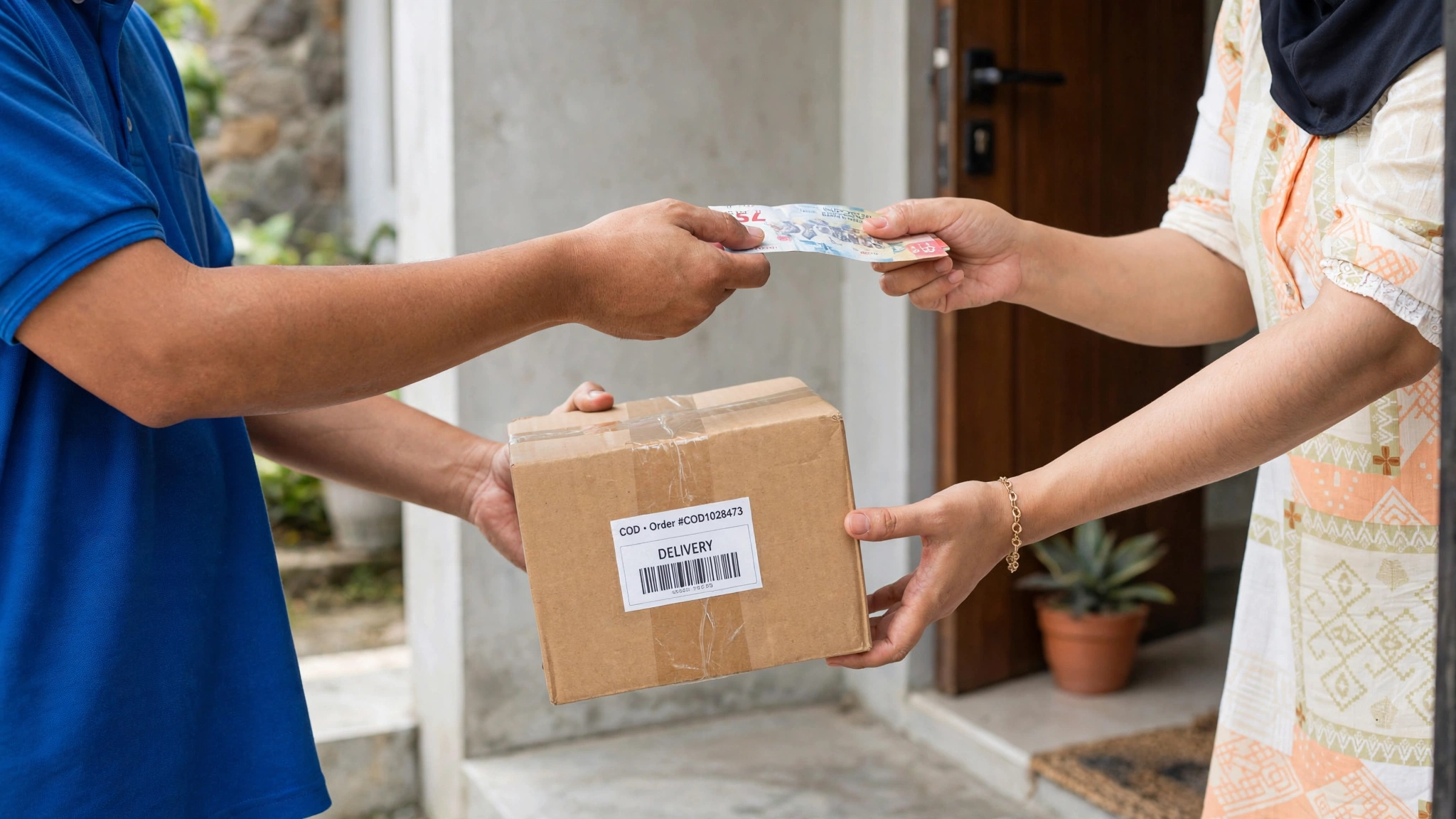
Nepal’s online shopping boom looks impressive on the surface. Dig a little deeper, though, and one stubborn habit keeps holding it back.
Most Nepali shoppers still don’t trust paying online before their package arrives. This e-commerce trust deficit in Nepal shows up clearly in one number. More than 70% of online buyers prefer cash on delivery over any digital prepayment option.
For sellers, this preference isn’t a minor inconvenience. It creates real operational costs, cash-handling risks, and unpredictable logistics headaches. Understanding why this trust gap persists, and what it’s actually costing Nepal’s e-commerce sector, matters for anyone building a business online.
In this article, we’ll explore the scale of Nepal’s COD dominance, why consumers still prefer it, and what this trust deficit means for logistics and business sustainability.
Just How Dominant Is Cash on Delivery in Nepal?
The numbers here leave little room for ambiguity. According to Upaya’s 2026 analysis of Nepali payment behavior, research consistently shows that more than 70% of online buyers in Nepal prefer to pay upon delivery, rather than through digital wallets or bank transfers.
This preference persists despite genuine growth in Nepal’s broader digital payment ecosystem. According to PayAtlas’s January 2026 market overview, Nepal’s digital payments volume reached an estimated USD 500 million in 2023, driven by expanding mobile wallets and QR code adoption. Yet, even amid this growth, PayAtlas notes that cash on delivery “remains relevant” across Nepal’s e-commerce landscape, even as it gradually declines as a share of total transactions.
Nepal’s e-commerce market itself continues expanding steadily. According to Nepspot’s 2025 market analysis, user penetration in Nepal’s e-commerce sector stood at around 25% in 2025, with market revenue estimated at approximately USD 1.38 billion. Projections suggest penetration could reach 26.8% by 2030. Despite this growth trajectory, COD’s grip on consumer behavior hasn’t loosened nearly as quickly as the market itself has expanded.
Why Nepali Consumers Still Choose Cash
Understanding this trust deficit requires looking at the actual reasons consumers give for avoiding online prepayment.
According to Upaya, low trust in online payments ranks as a primary driver. Many online buyers worry specifically about fraud, non-delivery, or receiving products that don’t match what was advertised. This concern isn’t irrational. Without established buyer protection norms or robust dispute resolution mechanisms, prepaying online genuinely does carry more risk for Nepali consumers than it might in markets with mature e-commerce infrastructure.
Limited access to digital payment infrastructure compounds this problem, particularly outside major cities. According to Upaya, this access gap remains especially pronounced beyond Kathmandu, Pokhara, and a handful of other urban centers.
Cultural preference plays a role too. According to B360 Nepal’s interview with e-commerce industry figures, consumers strongly prefer physical confirmation before paying. They want to see, touch, and verify a product’s quality before handing over money, a preference deeply embedded in how Nepalis have traditionally shopped for generations.
Neptechpal’s 2026 e-commerce guide reinforces this pattern, noting that first-time online buyers especially “still prefer to pay in cash when the product arrives.” For new e-commerce customers without established trust in a specific seller or platform, COD effectively functions as insurance against getting scammed.
The Hidden Cost: Why COD Drives Up Delivery Failures
Here’s where the trust deficit translates directly into operational risk. COD doesn’t just create cash-handling logistics. It fundamentally changes buyer commitment at the point of purchase.
According to ClickPost’s analysis of e-commerce logistics patterns, COD orders generate return-to-origin rates two to three times higher than prepaid orders on comparable delivery routes. The underlying logic is straightforward. When a customer hasn’t paid anything upfront, walking away from a purchase costs them nothing.
This dynamic plays out clearly across South Asian e-commerce more broadly. According to Shipink’s analysis, COD orders are refused or returned far more often than prepaid ones, often at that same two-to-three-times rate. Every refused COD delivery effectively costs the seller twice: once for the outbound shipping already paid, and again for the return leg back to the warehouse.
Neptechpal’s Nepal-specific guide confirms this exact challenge exists locally too, explicitly flagging that “cash-on-delivery preference increases return rates” as one of the core operational hurdles Nepali e-commerce sellers must manage.
The Cash-Handling Risk Sellers Absorb
Beyond delivery failures, COD creates a distinct financial risk that prepaid transactions simply don’t carry, tying up seller capital and creating reconciliation headaches.
According to Shipra’s 2026 analysis of COD risk management, sellers face what’s often called locked cash flow. Money sits with the courier throughout the remittance cycle, even though the seller has already paid for the product, packaging, and shipping upfront. This creates a working capital gap that prepaid e-commerce models simply avoid.
Reconciliation adds further complexity. Shipra notes that matching cash collections from multiple courier partners against hundreds of individual orders, often across spreadsheets, is precisely where money quietly leaks from small e-commerce operations. Verification calls, delivery follow-ups, and repacking returned parcels all consume operational hours that prepaid orders never demand in the first place.
For Nepal specifically, Upaya’s platform addresses this exact pain point by settling COD funds twice daily through a vendor portal, explicitly marketed as one of the fastest COD settlement cycles available among Nepali delivery partners. That such a service exists as a competitive differentiator underscores just how significant this cash-flow risk remains for sellers operating without it.
Nepal’s Geography Makes This Worse
Nepal’s challenging terrain adds another layer of difficulty specifically to COD-heavy logistics operations.
According to Nepal Can Move’s service description, reaching remote regions like Karnali and the far west sometimes requires delivering parcels on foot, by human porter, or even by donkey. In these conditions, an efficient logistics company still commits significant resources to physically reach customers, regardless of whether that delivery ultimately succeeds or gets refused at the doorstep.
This matters because COD’s higher failure rate compounds disproportionately in exactly these harder-to-reach areas. A failed COD delivery in Kathmandu costs a seller wasted shipping fees. A failed COD delivery in a remote mountain district, reached only after a multi-day courier journey, represents a far larger loss relative to the order’s value.
According to Upaya, COD delivery is now available across 4,000+ locations spanning all 77 districts in Nepal, which reflects genuinely impressive logistics network expansion. However, this same expansion means COD’s structural risks now extend across a much wider, more geographically challenging delivery footprint than in Nepal’s earlier, more Kathmandu-centric e-commerce years.
Is the Trust Deficit Actually Improving?
There are some genuine signs of gradual change, even if COD’s dominance remains largely intact for now.
According to PayAtlas, continued growth of mobile wallets like eSewa, Khalti, and IME Pay is driving digital payment adoption, notably including expansion into rural areas that previously lacked digital payment infrastructure entirely. The same analysis points to emerging buy-now-pay-later services attracting younger consumers, potentially enabling higher-value purchases without requiring full upfront prepayment or full COD reliance.
Nepspot’s analysis similarly notes that digital wallets increasingly “handle most transactions” among Nepal’s most digitally engaged e-commerce users, suggesting a generational shift may already be underway among younger, urban, tech-savvy shoppers even as COD remains dominant nationally.
However, meaningful regional context suggests Nepal still has considerable ground to cover. Regional comparisons from South Asian e-commerce markets show COD rates exceeding 90% in some neighboring countries, driven by similarly limited digital payment infrastructure and low consumer trust. Nepal’s roughly 70% COD preference, while still high, at least suggests the country isn’t uniquely behind its regional peers.
What Sellers Are Doing to Manage the Risk
Given that eliminating COD outright isn’t realistic in Nepal’s current market, sellers and logistics providers have developed practical mitigation strategies.
According to Neptechpal, requiring phone verification for larger COD orders helps filter out orders that were never seriously intended. Similarly, collecting a small advance deposit, even just a token amount, for high-value COD orders helps ensure genuine buyer commitment before a costly delivery attempt begins.
Building a database of reliable repeat COD customers over time, as Neptechpal suggests, allows sellers to gradually extend more favorable terms, like fewer verification steps, to buyers who’ve demonstrated consistent follow-through on past orders.
Address quality also plays an outsized role. According to Shipink’s broader industry analysis, incomplete or incorrect addresses often prevent delivery entirely, sending packages straight back before a courier even attempts contact. Validating and correcting addresses at the point of order, rather than after a failed delivery attempt, represents one of the highest-leverage fixes available to reduce this specific failure mode.
Why This Trust Deficit Deserves Long-Term Tracking
Nepal’s e-commerce trust deficit deserves continued attention as a structural indicator of digital economy maturity.
First, the ratio between COD and prepaid transactions reveals how quickly, or slowly, genuine consumer trust in Nepal’s digital commerce infrastructure is developing. A steadily declining COD share would suggest meaningful progress in buyer protection, platform reliability, and payment infrastructure access.
Second, tracking delivery failure and return rates alongside this COD share helps quantify the real operational cost this trust deficit imposes on Nepal’s growing e-commerce sector. As more sellers, particularly smaller ones, enter the market, these hidden costs compound across the entire industry.
Third, this metric connects directly to Nepal’s broader digital payment ambitions. Continued mobile wallet expansion into rural areas, alongside growing BNPL adoption, suggests the tools needed to close this gap already exist. What remains is building the consumer trust required to actually use them.
Conclusion
The e-commerce trust deficit in Nepal remains deeply embedded in how the country shops online. With more than 70% of buyers still preferring cash on delivery, this isn’t a minor consumer quirk. It’s a structural feature shaping logistics costs, cash-flow risk, and operational complexity across Nepal’s entire e-commerce sector.
Behind this preference lies legitimate concern. Fraud worries, limited digital payment access outside major cities, and a deeply rooted cultural preference for physical product verification all reinforce COD’s dominance. Meanwhile, sellers absorb the consequences directly, through elevated return rates, locked cash flow, and the sheer operational complexity of reconciling cash collected across dozens of courier partners.
Closing this gap won’t happen overnight. It requires continued investment in digital payment infrastructure, stronger buyer protections, and simply enough time for trust to build gradually, transaction by transaction, across Nepal’s rapidly growing but still cash-anchored digital marketplace.
FAQ: The E-Commerce Trust Deficit in Nepal
What percentage of online shoppers in Nepal prefer cash on delivery?
More than 70% of online buyers in Nepal prefer to pay via cash on delivery rather than digital wallets or bank transfers, according to industry research.
Why don’t Nepali consumers trust online prepayment?
Key reasons include fear of fraud or non-delivery, limited digital payment access outside major cities, and a cultural preference for verifying products before paying.
How does cash on delivery affect e-commerce sellers in Nepal?
COD increases delivery failure and return rates, ties up seller cash flow during remittance cycles, and adds reconciliation and verification costs.
Is cash on delivery declining in Nepal?
Gradually. Mobile wallets like eSewa and Khalti are expanding into rural areas, and younger, urban consumers increasingly use digital payments.
How widespread is COD delivery coverage in Nepal?
COD is now available across more than 4,000 delivery locations spanning all 77 districts in Nepal, according to logistics providers.
What can sellers do to reduce COD-related risk?
Common strategies include phone verification for large orders, small advance deposits, address validation, and building databases of reliable repeat customers.