Six years ago, most money in Nepal moved as physical cash, changing hands without a trace. Today, a growing share of that money leaves a digital footprint, scanned, logged, and tracked in real time.
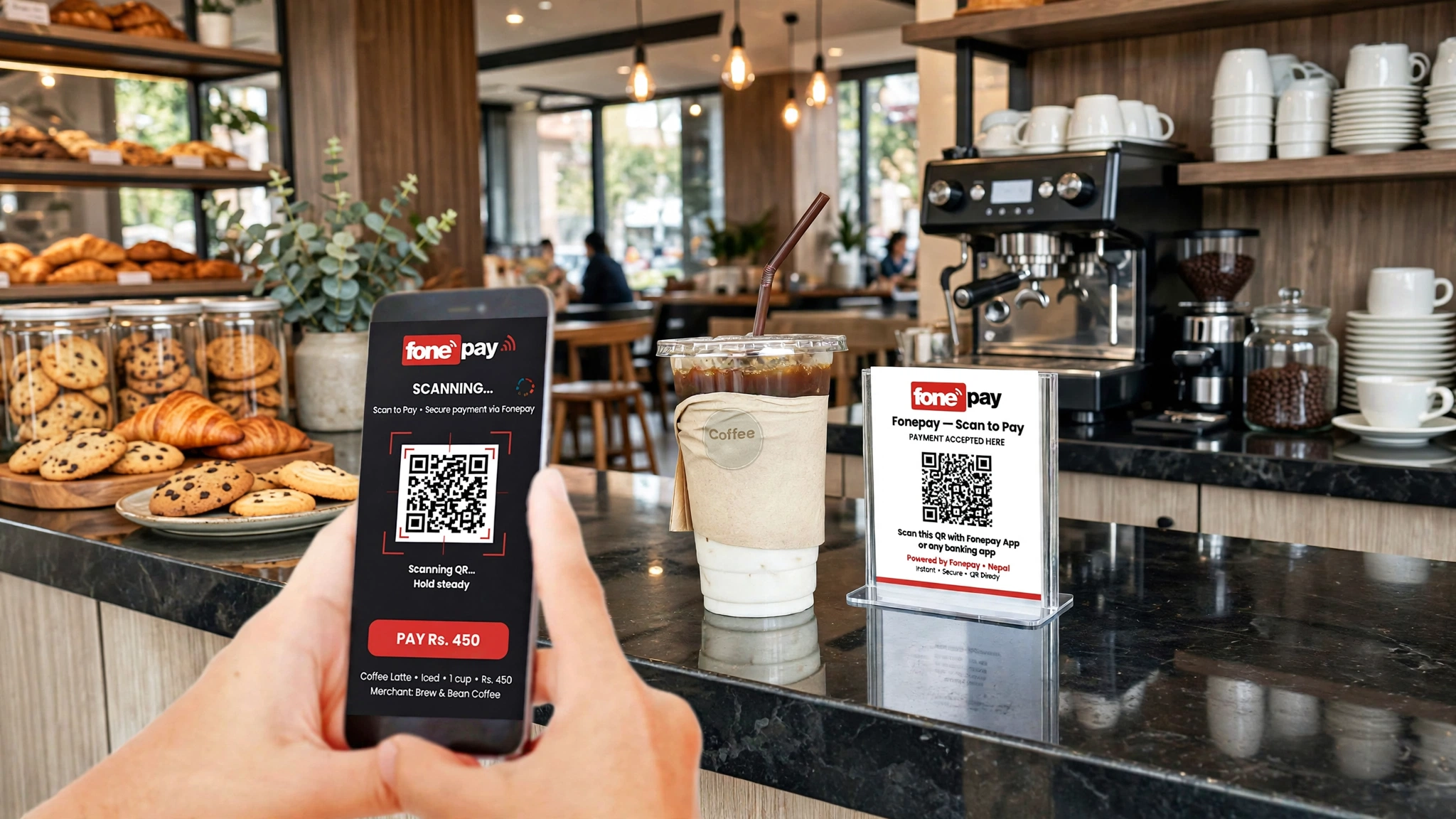
Digital payments adoption in Nepal has accelerated dramatically, transforming not just how people pay, but how money itself moves through the economy. QR codes now sit on tea stalls, momo carts, and hardware stores. Digital wallets have gone from a niche convenience to genuinely mainstream financial infrastructure.
This shift matters far beyond consumer convenience. It’s changing cash velocity, the speed at which money circulates, and giving regulators unprecedented visibility into transactions that used to happen entirely off the books.
In this article, we’ll explore just how fast digital payments adoption in Nepal has grown, what’s driving it, and what this transformation means for the broader economy.
The Scale of Nepal’s Digital Wallet Growth
The numbers here tell a genuinely dramatic story. According to Nepal Rastra Bank data reported by Peoples’ Review in June 2026, digital wallet users grew from about 6.3 million in 2020 to more than 28.3 million by mid-May 2026. That’s more than a fourfold increase in just six years.
This growth translated directly into transaction volume. During just the first ten months of the current fiscal year, wallet transactions worth Rs 477.7 billion were conducted across Nepal’s digital payment platforms. Popular platforms like eSewa, Khalti, and IME Pay have become genuinely mainstream tools for everyday payments, offering what bankers describe as a simpler, more convenient alternative to carrying cash.
According to Nepal Rastra Bank officials cited in the same report, the shift away from cash reflects a combination of forces. Growing internet access, wider banking outreach, and increasing consumer familiarity with digital tools have all pushed both individuals and businesses toward digital payment methods, gradually eroding cash’s historical dominance.
QR Codes: The Engine Behind This Shift
If digital wallets are the vehicle, QR codes have become the fuel powering Nepal’s payment transformation.
According to Kathmandu Post’s coverage of Nepal Rastra Bank’s “Major Activities and Achievements 2020-2025” report, QR code-based payments saw an average annual increase of 230% in transaction volume between fiscal years 2021-22 and 2023-24. Transaction value grew nearly as fast, rising 210% year-on-year over the same period.
Earlier NRB data confirms this wasn’t a one-time spike. According to Nepal Digital Payment Company’s analysis of NRB’s Payment Oversight Report, QR code-based transactions rose by an extraordinary 189.53% in fiscal year 2022/23 compared to the previous year. More recent figures from NRB’s own Payment Systems Oversight Report show QR transactions grew 117.03% in number and 103.66% in value during fiscal year 2023/24 compared to the year before, a still-rapid pace even as the base of transactions grew considerably larger.
Kiran Pandit, acting executive director of NRB’s Payment Systems Department, explained the appeal directly. People increasingly prefer QR payments over ATM transactions for their convenience, since QR payments are fast, convenient, and processed in real time. This preference for immediacy appears to be a central driver behind QR’s rapid rise as Nepal’s dominant digital payment method.
The Standard Behind the Scan
Much of this growth has been enabled by a specific piece of technical infrastructure that most users never think about directly.
According to QRSansar’s 2026 vendor guide, NepalQR serves as the country’s unified QR payment standard, defined by Nepal Rastra Bank. It’s built on the same EMVCo specification used by India’s UPI, Singapore’s SGQR, and Indonesia’s QRIS, placing Nepal within a broader regional family of interoperable QR payment systems.
This interoperability matters enormously for adoption. According to the same guide, Fonepay functions as the underlying network, while eSewa and Khalti operate as wallets that interoperate over Fonepay’s rails. In practical terms, this means a single QR code posted at a shop can accept payment from any compliant app, rather than forcing vendors to display separate codes for every wallet provider.
Cross-Border Payments Are Following the Same Trajectory
Nepal’s digital payment expansion hasn’t stopped at its borders. Cross-border QR payments, particularly with India, have grown at a remarkable pace too.
According to Peoples’ Review’s June 2026 reporting, monthly cross-border QR transactions rose from just over 38,000 in early 2025 to more than 325,000 by mid-May 2026, with transaction values reaching Rs 855 million. This growth reflects deepening payment integration between Nepal and India, built on collaboration between payment networks in both countries.
According to Nepal Digital Payment Company’s analysis, this integration traces back to collaboration between India’s National Payment Corporation of India, Nepal Clearing House Limited, and Fonepay. Nepal Rastra Bank’s own Payment Systems Department confirms that Fonepay began cross-border QR acceptance with India in March 2024, allowing Indian tourists and visitors to pay seamlessly using QR codes across 1.5 million Fonepay merchants nationwide.
Consolidation Is Reshaping the Wallet Landscape
As Nepal’s digital payment market has matured, it has also begun consolidating, a sign of an industry moving past its early fragmented growth phase.
According to Simpaisa’s 2025 market analysis, Khalti and IME Pay merged to form IME Khalti during 2025, a strategic union bringing together two of Nepal’s most established digital wallet brands. This kind of consolidation typically signals a maturing market, where scale and interoperability increasingly matter more than sheer platform count.
What This Means for Cash Velocity and Tracking
Here’s where this shift moves beyond simple consumer convenience into genuine macroeconomic significance.
Cash velocity refers to how quickly money changes hands within an economy. Traditionally, physical cash transactions in Nepal moved largely untracked, changing hands between individuals and small businesses with no digital record. As digital payments adoption in Nepal accelerates, an increasing share of this transaction activity now leaves a traceable digital footprint.
This has real implications for financial oversight. Every QR scan, wallet transfer, or online card payment creates a data trail that didn’t exist when the same transaction happened in cash. According to bankers cited by Peoples’ Review, growing use of QR codes and wallets, particularly among small and medium-sized businesses, is helping improve both financial inclusion and broader technology adoption across Nepal’s economy.
This tracking capability matters for tax compliance too. Transactions that once happened entirely in cash, invisible to tax authorities, increasingly pass through regulated digital payment service providers, who operate under Nepal Rastra Bank’s compliance framework. Over time, this could meaningfully narrow the gap between Nepal’s substantial informal economy and its formally recorded, taxable economic activity.
The Regulatory Framework Behind the Boom
This rapid growth hasn’t happened in a regulatory vacuum. Nepal Rastra Bank has built a fairly comprehensive oversight structure around digital payments as they’ve scaled.
According to Court Marriage in Nepal’s 2026 legal guide, every digital wallet, including eSewa, Khalti, IME Pay, and PrabhuPay, must follow strict compliance rules under NRB’s payment directives, covering cybersecurity standards, KYC requirements, and transaction limits. NRB sets these transaction limits through its Unified Directives, which are updated periodically to reflect evolving market conditions.
According to Common Law Nepal’s regulatory guide, eSewa, operating under F1Soft International, became Nepal’s first licensed payment service provider, effectively paving the way for the modern digital payment ecosystem that followed. Interestingly, the same guide notes that Nepal’s wallets remain what’s classified as semi-closed wallets, usable across multiple merchants but without direct cash withdrawal capability, distinguishing them from fully open wallet systems available in some other markets.
E-Commerce Is Riding the Same Wave
Digital payment growth hasn’t happened in isolation from Nepal’s broader e-commerce expansion. The two trends reinforce each other directly.
According to Peoples’ Review, online card payments for goods and services increased steadily as consumers turned toward digital marketplaces and social media-based businesses. This growth connects to broader market projections. According to Nepal Digital Payment Company’s analysis of Statista data, Nepal’s total digital payment transaction value was expected to reach USD 3,621 million by 2024, with projections suggesting further growth to USD 6,105 million by 2028, reflecting a 13.95% compound annual growth rate.
Worth noting, this digital payment growth coexists with a persistent consumer preference for cash on delivery specifically within e-commerce, where more than 70% of online buyers still prefer paying upon delivery rather than prepaying digitally. This suggests digital payment infrastructure and consumer trust are advancing along somewhat different timelines, growing rapidly for in-person QR transactions while online prepayment habits shift more gradually.
Where Gaps Still Remain
Despite this rapid growth, digital payments adoption in Nepal hasn’t reached every corner of the country equally.
According to Transfi’s 2025 overview of Nepal’s payment landscape, cash remains prevalent in rural areas, even as urban centers increasingly embrace mobile banking and online payments. The same analysis identifies persistent challenges around digital literacy, infrastructure gaps, and consumer trust, issues that continue shaping how evenly this transformation spreads across Nepal’s diverse geography.
This urban-rural divide matters for understanding the true scope of Nepal’s cash-to-digital transition. While headline figures like 28.3 million wallet users sound comprehensive, meaningful gaps likely persist among older populations, rural communities, and those with limited smartphone access or digital literacy.
Why This Trend Deserves Long-Term Tracking
Digital payments adoption in Nepal deserves sustained attention as a structural indicator of the country’s broader financial modernization.
First, tracking the pace of QR and wallet transaction growth reveals whether Nepal’s digital payment infrastructure investment continues translating into genuine behavioral change, or whether growth naturally plateaus as the most digitally engaged users are already onboarded.
Second, monitoring urban-rural adoption gaps specifically matters for financial inclusion goals. A genuinely transformed payment economy requires closing, not just narrowing, the disparity between Kathmandu’s QR-saturated shopfronts and more remote regions still operating primarily in cash.
Third, tracking the relationship between digital payment growth and tax compliance improvements would reveal whether increased transaction traceability is actually translating into a smaller informal economy over time, a connection with real fiscal significance for Nepal’s government revenue base.
Conclusion
Digital payments adoption in Nepal has moved from a niche fintech story to a genuine economic transformation. Wallet users grew from 6.3 million to over 28.3 million in just six years. QR transaction volumes have repeatedly grown well over 100% year-on-year across multiple recent fiscal periods. Cross-border payments with India have scaled from tens of thousands to hundreds of thousands of monthly transactions.
This shift carries significance well beyond convenience. As more of Nepal’s economic activity moves through trackable digital channels, cash velocity patterns are shifting, and the historically invisible cash economy is becoming increasingly visible to regulators and tax authorities alike.
Real gaps remain, particularly across the urban-rural divide and within Nepal’s still cash-preferring e-commerce sector. However, the underlying trajectory is unmistakable. Nepal’s relationship with cash is changing, transaction by transaction, scan by scan.
FAQ: Digital Payments Adoption in Nepal
How many digital wallet users does Nepal have?
Digital wallet users in Nepal grew from about 6.3 million in 2020 to more than 28.3 million by mid-May 2026, according to Nepal Rastra Bank.
How fast are QR code payments growing in Nepal?
QR payments saw an average annual increase of 230% in transaction volume between fiscal years 2021-22 and 2023-24, according to Nepal Rastra Bank.
What is NepalQR?
NepalQR is Nepal’s unified QR payment standard, built on the same EMVCo specification used by India’s UPI and Singapore’s SGQR, allowing one QR code to accept multiple wallet apps.
Are cross-border digital payments growing in Nepal too?
Yes. Monthly cross-border QR transactions with India rose from about 38,000 in early 2025 to over 325,000 by mid-2026.
Which are the main digital wallets used in Nepal?
Leading platforms include eSewa, Khalti (now merged with IME Pay as IME Khalti), and IME Pay, alongside networks like Fonepay and ConnectIPS.
Does cash still play a major role in Nepal’s economy?
Yes, particularly in rural areas, where digital literacy gaps and infrastructure limitations continue slowing the shift away from cash.