Open most retail portfolios on NEPSE, and the hydropower bucket looks like a single asset class. Five, ten, fifteen scripts, all labeled “hydro,” all bought on the same story: Nepal has rivers, the country needs power, and the sector compounds. The labeling is the mistake. The difference between run-of-river vs. reservoir hydropower is not a technicality for engineers. It is the single biggest driver of how a project earns money, how its revenue swings across the year, and what tariff it gets paid. Treat every hydro stock the same, and you are systematically mispricing one specific risk: the dry season.
This piece is not the valuation framework. For multiples, capacity factors, and how to model a hydro stock’s cash flows, read the companion pillar on how to value a hydropower stock on NEPSE. Here the job is narrower and arguably more important before you ever open a spreadsheet: knowing what kind of project you actually own.
Three project types, three different businesses
A hydropower plant turns falling water into electricity. How it manages the water is what separates the three designs.
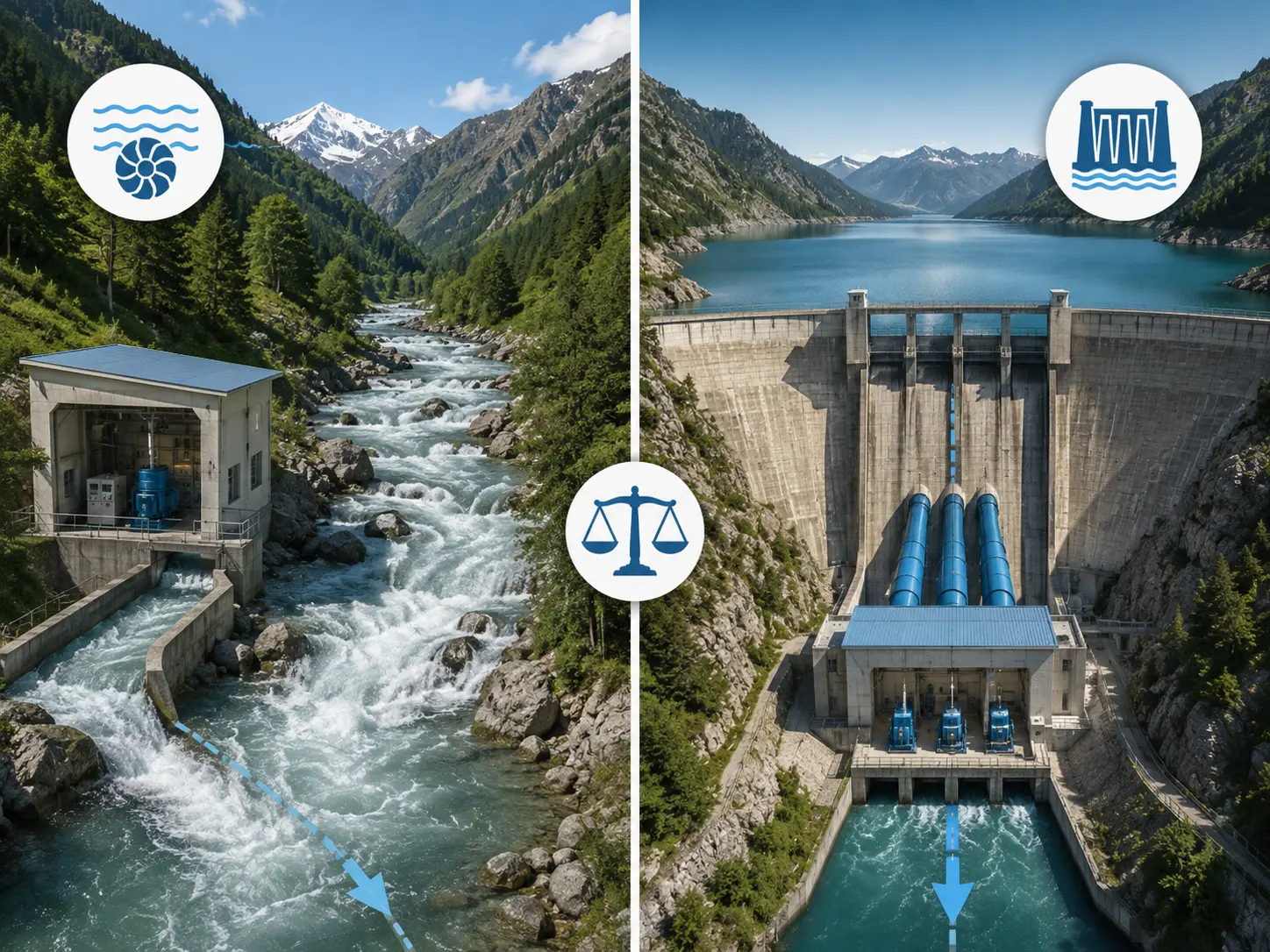
A run-of-river (RoR) plant has effectively no storage. It diverts whatever the river is carrying at that moment, runs it through the turbines, and sends it back. When the river is full, the plant generates near capacity. When the river drops, output drops with it. There is nowhere to keep water for later. The vast majority of Nepal’s installed and listed capacity is this type.
A peaking run-of-river (PRoR) plant adds a pondage, a small holding pond, usually enough to store a few hours of water. It cannot get a project through the dry season, but it can shift generation within a day, holding water through off-peak hours and releasing it through the evening peak when power is worth more. Think of it as RoR with a buffer, not a reservoir.
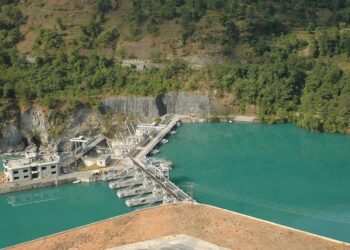
A reservoir (storage) plant is a different animal. A large dam creates a lake that holds water across seasons, capturing the monsoon surplus and releasing it through the dry winter months. This is the only design that can generate firm power when the rivers are low. It is also far more expensive, slower to build, and rare. In Nepal it is so rare that, for practical purposes, there is one.
Why this matters more in Nepal than almost anywhere
Nepal’s hydrology is brutally seasonal. The monsoon dumps the overwhelming majority of the year’s river flow in a few months, and the rivers shrink for the rest. Studies of Nepali catchments put dry-season discharge at roughly 10%, with mid-winter flows falling to a fraction of the annual average.
For a run-of-river plant, that hydrology is the whole story. Generation tracks the river. A plant that runs near its installed capacity through the monsoon can fall dramatically in winter. NEA and energy-sector reporting describe run-of-river output dropping sharply in the dry months, with the run-of-river fleet generating well below installed capacity precisely when national demand peaks. In a hard winter, domestic generation falls so far that Nepal imports power from India to cover peak demand.
A reservoir plant inverts that profile. It is designed to generate hardest in the dry season, when its stored water is most valuable and everyone else’s output has collapsed. Kulekhani, Nepal’s only seasonal storage scheme, is the textbook case: while the run-of-river plants around it shrink in winter, the Kulekhani cascade runs to support the dry-season system. That is the entire commercial point of storage.
So the question “Is this RoR or reservoir?” is really the question “Does this company make money when the country needs power most or when it needs it least?”
The tariff tells you the same story
Nepal does not pay all hydropower the same rate, and the structure of the Power Purchase Agreement (the long-term contract under which NEA buys a plant’s electricity) rewards exactly the firmness that storage provides. If you want the mechanics of how a PPA is structured and why it matters, see the explainer on how a hydropower PPA works.
NEA’s PPA tariffs are split into a wet-season rate and a higher dry-season rate, and the gap between project types is large. Reported NEA rates have run roughly as follows:
- Standard run-of-river: about NPR 4.80 per unit wet season, NPR 8.40 per unit dry season.
- Peaking run-of-river: about NPR 8.40 per unit wet season, NPR 10.55 per unit dry season.
- Reservoir: about NPR 7.10 per unit wet season, NPR 12.40 per unit dry season.
Read that table slowly, because it carries the investment case. The dry-season rate is higher for everyone, which sounds like good news for a run-of-river plant. It is not, because the run-of-river plant has almost nothing to sell in the dry season. It earns its best per-unit price exactly when it generates the fewest units. The reservoir plant earns the highest dry-season rate and actually has the water to sell into it. The PPA is engineered to pay for firm dry-season power, and a pure RoR project structurally cannot collect it.
PRoR sits in between, which is why developers increasingly chase the pondage design. A few hours of storage lets a plant push generation into the evening peak and qualify for the better PRoR tariff. It is a partial fix, not a seasonal one.
What this does to the numbers you actually see
The consequence shows up in three places on any hydro stock you are weighing.
Revenue stability. A pure run-of-river company’s annual revenue is, to a large degree, a function of one variable it does not control: the monsoon. A strong wet season and an early monsoon lift generation and the topline. A late monsoon or a dry winter does the opposite. The earnings are real, but they are weather-dependent and lumpy across quarters. The detail on how this seasonality flows through to quarterly numbers and why a strong Q1 hydro result can mislead, is worth reading in full in the piece on hydropower seasonality and earnings.
Capital intensity and timeline. Run-of-river is cheaper per megawatt and faster to build because there is no large dam and no reservoir to fill. That is why developers and IPO pipelines favor it and why most projects coming to market are RoR. Reservoir projects cost far more, take years longer, and carry construction and resettlement risk on a different scale. For a retail investor, this means the RoR stock you can actually buy today exists partly because RoR is the easy thing to finance, not because it is the higher-quality asset.
Valuation. Two hydro companies with identical installed capacity are not worth the same if one is RoR and one has storage. The reservoir plant produces firmer, higher-tariff revenue and deserves a different discount rate and a different multiple. The market does not always make this distinction cleanly. When a whole sector re-rates on a generic “hydro is hot” narrative, the pure RoR names ride the same wave as anything with a dam, and the seasonality risk gets buried. Again, the pillar on valuing a hydropower stock carries the full framework; the point here is that project type is an input you must set before the model runs, not after.
The uncomfortable fact about NEPSE’s hydro sector
Here is the part most sector commentary skips. NEPSE lists on the order of hydropower companies, and the sector is one of the largest on the exchange by market capitalization and by sheer number of scrips. Almost all of them are run-of-river. Nepal’s one meaningful reservoir scheme, Kulekhani, is owned by the state-owned Nepal Electricity Authority and is not a stock you can buy on the floor.
That has a blunt implication. A portfolio assembled by picking the most popular hydropower scripts on NEPSE is, with very few exceptions, a portfolio of run-of-river plants. You can diversify across a dozen tickers, different rivers, different promoters, and different districts, and still be holding twelve versions of the same bet: that the monsoon shows up. The rivers are not perfectly correlated, so it is not literally one position. But the dominant risk factor, dry-season flow, hits all of them in the same direction at the same time of year. That is concentration dressed up as diversification.
This is not an argument against hydropower stocks. It is an argument against pretending a basket of RoR names is balanced. If anything, knowing this should make the rare, genuinely firmer asset, a PRoR with real pondage, or a project with a meaningful storage component more interesting, because it does something the rest of your hydro bucket cannot.
How to read a project before you buy
You do not need to be a hydrologist. You need to find one piece of information in the prospectus or company disclosure, and most investors never look for it.
When a hydro company comes to IPO, the project type is stated in the offer documents, usually in plain language: “run-of-river,” “peaking run-of-river,” or “storage/reservoir.” If you are buying at an IPO, this is the first thing to check, and the broader checklist for the sector is in the guide on hydropower IPOs on NEPSE.
Beyond the label, look for two things. First, the design discharge and any mention of pondage or live storage, which tells you whether the plant can shift output at all. Second, the PPA terms, specifically whether the contract is on the standard RoR tariff or the PRoR or reservoir schedule. A plant being paid the standard RoR rate is telling you, in NEA’s own pricing, that it cannot deliver firm dry-season power. The contract is the most honest description of the asset you will find.
The verdict
Most NEPSE hydropower stocks are run-of-river. That is a fact about the listed market, not an opinion. The opinion is this: treating them as interchangeable “hydro exposure” is a real analytical error because the run-of-river design earns its money in the monsoon and earns very little when the rivers are low, even though that is exactly when power is most valuable and the dry-season tariff is highest. A pure run-of-river portfolio is, in plain terms, a leveraged bet on the monsoon, and the dry season is the risk the market most often forgets to price.
You do not have to avoid run-of-river stocks. They are cheaper, faster to build, and dominate the market for a reason. But you should know that is what you own; you should size the dry-season exposure deliberately rather than by accident, and you should value a genuinely firmer project, PRoR with real storage or a rare reservoir component, on its own terms rather than at the same multiple as a plant that goes quiet every winter. The cheapest edge in this sector is simply reading the one line in the prospectus that says what type of project you are buying.
This is analysis, not financial advice.