A friend tells you he applied for 100 units of a hot hydropower IPO and got 10. You applied for 10 units of the same issue and got 10. He blocked ten times your money for the same result. He is annoyed. He should not be. This is not a glitch. It is the whole design.
IPO allotment in Nepal is built to spread shares as thinly and as widely as possible. The system hands a minimum of 10 units (10 kitta) to as many separate applicants as it can before it runs out of shares, and when there are more applicants than shares, which is almost always, a computerised lottery decides who is in. That single rule, the 10-unit floor distributed by lottery, shapes everything: how much you should apply for, what your real odds are, and why “apply to everything” has become the default behaviour of an entire generation of Nepali retail investors. This piece explains the mechanics (ASBA, the role of CDSC, the lottery, and how your money comes back), then gives a blunt verdict on what that floor means for you.
The Nepali model is unusual, and on purpose
In most markets, a bigger application can mean a bigger allotment. Cheque-book size matters. Nepal went the other way. The regulator, the Securities Board of Nepal (SEBON), structured the system so that an ordinary first-time applicant has a genuine, near-equal shot at getting in alongside someone applying for ten times as much.
The logic is political as much as financial. IPOs in Nepal are priced at par for most ordinary public issues, meaning NPR 100 per share face value, and they have historically tended to list above that price. So an allotment has often functioned as a small, low-risk windfall. Distributing that windfall to the maximum number of citizens, rather than concentrating it among those with the most cash, is a deliberate choice. The result is a market where roughly four to five million people pile into popular issues, and the headline allotment is almost always the same: 10 kitta, or nothing.
ASBA: your money is blocked, not gone
Before the lottery, there is the application, and the most important thing to understand is that you do not actually pay for an IPO when you apply. You block.
The system is called ASBA, Application Supported by Blocked Amount. When you submit an IPO application through Meroshare, the platform run by CDS and Clearing Limited (CDSC), your bank places a hold on the application amount in your account. The money stays in your name. It does not move. SEBON introduced ASBA in early 2020 and made it mandatory for IPOs from mid-2021, replacing the older system of writing checks and waiting weeks for refunds. (Investopaper)
So when you apply for 10 units of a par-value share, your bank blocks NPR 1,000. You still earn interest on it. You just cannot spend it until the issue is settled. If you get allotted, the bank releases exactly the allotted amount to the issuer and unblocks the rest. If you get nothing, the bank simply removes the hold and your full amount is free again. This is the quiet genius of ASBA: there is no “refund” to chase, because there was no payment to begin with. The unblocking is automatic. (m.Stock; Chittorgarh)
To apply, you log in to Meroshare at meroshare.cdsc.com.np using your DP (depository participant) details and your BOID (your unique demat account number), open the ASBA menu, choose the open issue, enter your units, and pick the bank account to block from. If you have not set up a demat and Meroshare account yet, that is the prerequisite step, and it is worth doing properly the first time. See our guide on how to open a demat and Meroshare account in Nepal.
Who actually runs the allotment
Three names matter, and people confuse them constantly.
SEBON is the regulator. It approves the IPO, vets the prospectus, and sets the rules, including the 10-unit minimum. It does not run the day-to-day mechanics.
CDSC, CDS and Clearing Limited, is the plumbing. It owns the central depository where your shares actually live in electronic form, it runs Meroshare, and it operates the ASBA infrastructure and the allotment process itself. When people say “check your result on CDSC,” they mean the CDSC IPO result portal. (CDSC)
The issue manager, usually a merchant bank or capital company hired by the company going public, sits between them and handles the offering on the ground.
When an issue closes, CDSC collates every valid application. If the total units applied for are less than or equal to the units on offer (undersubscription, rare for good issues), everyone simply gets what they applied for. The interesting case is the other one.
The lottery: what happens when an issue is oversubscribed
Popular issues in Nepal are not oversubscribed by a little. They are oversubscribed by a lot. Strong hydropower and microfinance IPOs have drawn applications many times over the shares available, with oversubscription commonly running into the tens of times and sometimes far higher. When demand swamps supply, you cannot give everyone shares. So the system gives shares to a randomly selected subset of applicants and gives each winner the floor amount.
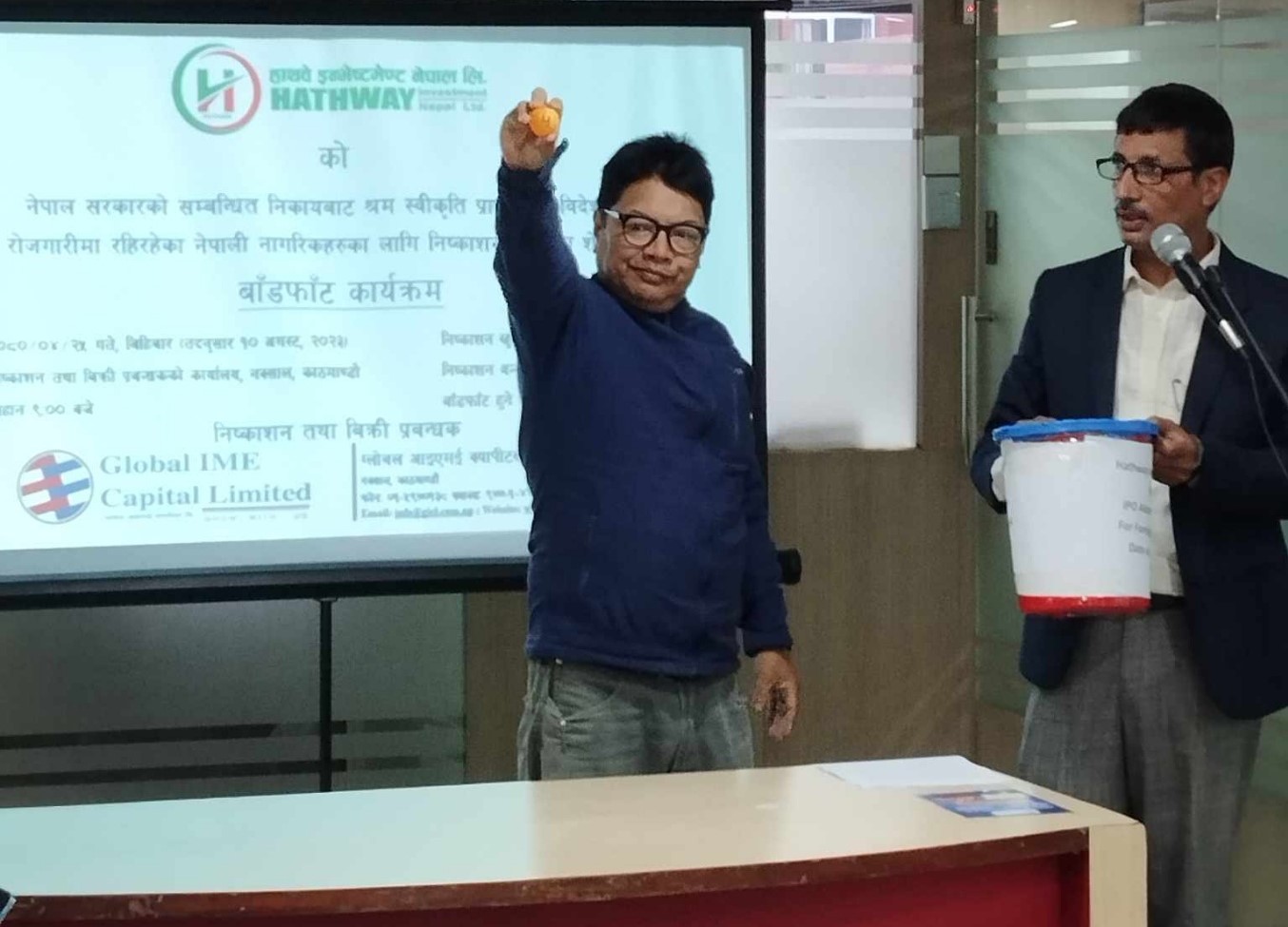
Here is the core mechanic. The total shares on offer are divided by the minimum lot of 10. That tells you how many applicants can possibly be served. If an issue offers, say, 5 lakh units, then at 10 units each, it can satisfy 50,000 applicants. If 5 lakh people applied, only one in ten can win. A computerized draw, supervised by representatives from the company, CDSC, NEPSE, the company registrar’s office, and often the press, selects the winning applications at random. (Santosh K Thapa; pressadda)
Everyone selected gets 10 units. That is the near-universal outcome you have seen on every result screenshot your friends have shared. In a heavily oversubscribed issue, almost nobody gets more than the minimum, because the system’s first priority is breadth: serve the maximum number of distinct applicants before handing anyone a second lot.
Does applying for more units help? Mostly no
This is the question every applicant asks, and the honest answer is uncomfortable for anyone who has been over-applying.
In a heavily oversubscribed issue, applying for more units does very little to improve your odds of getting in, and almost nothing to improve how much you get. The allotment is driven by the number of applicants the pool can serve, and the lottery selects applications. Some descriptions of the Nepali system state flatly that each valid application has an equal chance regardless of how many units it requested above the minimum, which would make a 10-unit application and a 100-unit application equally likely to be drawn. Even on the more generous reading, where larger applications get marginally better treatment, the practical outcome in a 20x or 50x oversubscribed issue is the same for nearly everyone: 10 units if you win, zero if you do not.
So what does a 100-unit application actually buy you? It buys you NPR 10,000 of blocked money instead of NPR 1,000, locked up for the duration of the issue and settlement, for a payoff that is, for most applicants, identical. That is a bad trade for a small investor. The cash you tie up could have been blocked across several different IPO applications instead, each one its own independent lottery ticket.
We will not invent a probability for you, because it depends entirely on each issue’s size and applicant count. The durable point is structural: in Nepal’s design, breadth beats depth. The system is engineered so that a thousand small applicants beat one large one.
How and when your result and money settle
After the issue closes, CDSC processes the allotment and publishes results, typically within a couple of weeks of closing. You check your result two ways: on the CDSC IPO result portal by entering your BOID or inside Meroshare under your application report.
If you are allotted, the shares land directly in your demat account, the blocked amount equal to the allotted value is released to the company, and any excess block is freed. If you are not allotted, the entire blocked amount is unblocked and available to you again, with no separate refund request needed. Because ASBA never moved your money to a third party, there is rarely anything to chase. When an unblock is genuinely delayed, the fix is to contact your bank, not the issue manager, because the hold sits on the bank’s side. (Chittorgarh; Finowings)
The verdict: treat it as a small lottery, and behave accordingly
Here is the take an incumbent how-to site will not give you.
Nepal’s 10-unit floor turns the IPO into a near-guaranteed small lottery rather than a wealth-building strategy. If you win a par-value issue and it lists higher, your gross gain on 10 units is the listing premium times 10 shares, often a few hundred to a couple of thousand rupees before you sell and pay any tax. That is real money for a student or a first-time investor, and it is why the egalitarian design is genuinely good for financial inclusion. But it is not a path to serious returns, and pretending otherwise is how people fool themselves.
Three practical consequences follow.
First, apply for the minimum in heavily oversubscribed issues. For the typical hot IPO, 10 units is the rational application size. Blocking more is tying up cash for no proportional reward. Keep the rest free.
Second, breadth is the only edge you control. Because each application is its own draw, the way a small investor improves expected outcomes is by applying across many issues over time, family member by family member, account by account, within the rules. The maths of many cheap, independent tickets beats one expensive ticket. This is exactly why “apply to everything” became the national reflex, and on this narrow point the crowd is right.
Third, do not confuse an allotment with an investment thesis. Winning the lottery on a company tells you nothing about whether the company is worth holding. The discipline of deciding whether to flip on listing day or hold is separate from the luck of getting in, and it is where the tax actually bites. Before you sell, understand what you will owe: see our explainer on capital gains tax on NEPSE shares. And if you are still unclear on how an IPO differs from an FPO or a rights issue, which changes the allotment logic entirely, read the difference between IPO, FPO and rights shares.
The 10-unit floor is one of the more quietly radical features of Nepal’s capital market. It chooses inclusion over efficiency, the small applicant over the big one. For a rational retail investor, the correct response is not to fight that design with a fat application. It is to lean into it: apply small, apply often, and treat each result for what it is, a coin flip with a modest prize, not a strategy.
This is analysis, not financial advice.